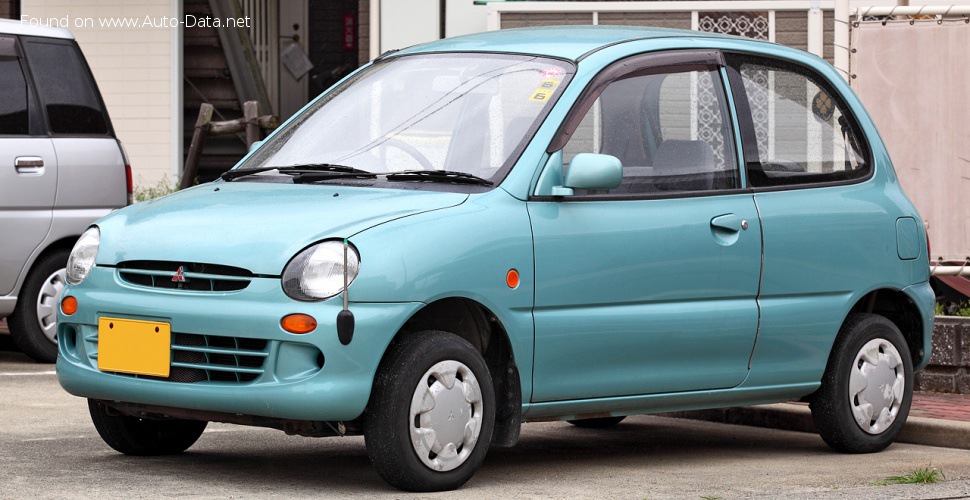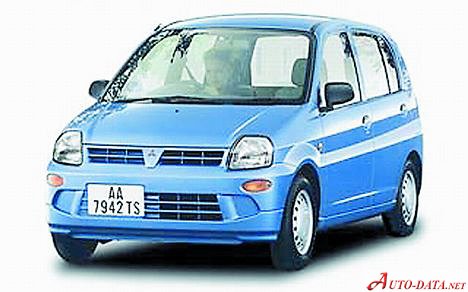
The Mitsubishi Minica VI 0.7 i 12V (50 Hp) represents the sixth generation of Mitsubishi’s long-running Minica line, a vehicle deeply rooted in Japan’s automotive history. Produced from 1999 to 2007, this particular variant, equipped with a 0.7-liter, 12-valve engine, is a prime example of a “Kei car” – a unique vehicle category in Japan defined by strict government regulations concerning size, engine displacement, and power output. These regulations provide significant tax and insurance benefits, making Kei cars exceptionally popular for urban commuting and as economical second vehicles within Japan. Although never officially sold in the United States, the Minica VI played a vital role in providing affordable, efficient, and highly maneuverable transportation in Japan’s often congested cities and narrow streets, embodying the practicality and ingenuity characteristic of the segment.
The Mitsubishi Minica VI: A Kei Car Legacy
The Minica VI generation evolved from a lineage dating back to 1962, consistently serving as Mitsubishi’s entry into the compact, economy-focused segment. The 1999 iteration brought a refreshed design and updated mechanicals, maintaining its core mission as a reliable and cost-effective daily driver. The 0.7 i 12V (50 Hp) model was a mainstream offering, balancing modest performance with exceptional fuel economy and a compact footprint, making it an ideal choice for navigating dense urban environments.
Engine & Performance
The Mitsubishi Minica VI 0.7 i 12V (50 Hp) is powered by a compact, yet highly engineered, internal combustion engine. This powerplant is a 0.7-liter (657 cubic centimeters or 40.09 cubic inches) inline three-cylinder unit with a 12-valve configuration (four valves per cylinder). This design improves airflow and combustion efficiency. The engine is naturally aspirated, relying solely on atmospheric pressure for air intake, prioritizing simplicity and cost-effectiveness.
Power output is rated at 50 horsepower at 6500 revolutions per minute (rpm). This high-revving nature is typical of small displacement engines designed to maximize output within regulatory limits. Torque figures stand at 45.73 lb.-ft. (62 Nm), peaking at 4000 rpm, providing adequate pulling power for city driving. A multi-port manifold injection system ensures precise fuel delivery, contributing to efficiency and smooth operation. The engine has a compression ratio of 10.2:1 and is optimized for regular unleaded gasoline.
The powertrain features a conventional front-engine, front-wheel-drive setup, maximizing packaging efficiency and interior space. Power is transmitted to the front wheels via a 5-speed manual transmission, offering drivers direct control and contributing to economical operation. The lightweight chassis, with a curb weight of just 1521.19 lbs. (690 kg), combined with the engine, results in a weight-to-power ratio of 13.8 kg/Hp (72.5 Hp/tonne) and a weight-to-torque ratio of 11.1 kg/Nm (89.9 Nm/tonne). While these figures may seem modest by American standards, they are well-suited for the Minica’s intended purpose as an agile and efficient urban commuter within the Kei car segment.
Design & Features
The design of the Mitsubishi Minica VI 0.7 i 12V (50 Hp) embodies the “form follows function” principle, heavily influenced by the Kei car category’s dimensional constraints. It features a hatchback body type, available in 3-door or 5-door configurations, offering versatility. Its exterior dimensions are remarkably compact: a length of 133.66 inches (3395 mm), a width of 58.07 inches (1475 mm), and a height of 59.45 inches (1510 mm). These measurements are crucial for navigating narrow city streets and fitting into Japan’s often cramped parking spaces, while the relatively tall stance maximizes interior headroom.
Despite its small exterior, the Minica VI comfortably accommodates five occupants, a remarkable feat of packaging. The interior prioritizes practicality and ergonomics, with straightforward controls and durable materials. The wheelbase measures 92.13 inches (2340 mm), contributing to a stable ride for its class, and a tight minimum turning circle of 29.53 feet (9 meters) highlights its exceptional maneuverability, a critical attribute for urban driving.
The Minica VI employs a common and reliable chassis and suspension setup. Both front and rear suspensions feature coil springs, providing a comfortable ride over varied urban surfaces. The front brakes are ventilated discs, offering effective stopping power, while the rear utilizes drum brakes, a cost-effective solution for a vehicle of this weight and performance class. ABS (Anti-lock Braking System) enhances driver control during emergency braking. Steering is handled by a rack and pinion system, known for its direct feel and responsiveness. The vehicle rides on 135/80 R13 tires, emphasizing its focus on efficiency and low running costs. The fuel tank capacity is 7.93 US gallons (30 liters), providing a decent range for its economical engine.
Technical Specifications
| General Information | |
| Brand | Mitsubishi |
| Model | Minica |
| Generation | Minica VI |
| Type (Engine) | 0.7 i 12V (50 Hp) |
| Start of Production | 1999 |
| End of Production | 2007 |
| Powertrain Architecture | Internal Combustion engine |
| Body type | Hatchback |
| Seats | 5 |
| Doors | 3/5 |
| Performance Specs | |
| Fuel Type | Petrol (Gasoline) |
| Weight-to-power ratio | 13.8 kg/Hp, 72.5 Hp/tonne |
| Weight-to-torque ratio | 11.1 kg/Nm, 89.9 Nm/tonne |
| Engine Specs | |
| Power | 50 Hp @ 6500 rpm |
| Power per liter | 76.1 Hp/l |
| Torque | 45.73 lb.-ft. (62 Nm) @ 4000 rpm |
| Engine layout | Front, Transverse |
| Engine displacement | 0.7 liters (657 cm3, 40.09 cu. in.) |
| Number of cylinders | 3 |
| Engine configuration | Inline |
| Cylinder Bore | 2.56 in. (65 mm) |
| Piston Stroke | 2.6 in. (66 mm) |
| Compression ratio | 10.2:1 |
| Number of valves per cylinder | 4 |
| Fuel injection system | Multi-port manifold injection |
| Engine aspiration | Naturally aspirated engine |
| Space, Volume and Weights | |
| Kerb Weight | 1521.19 lbs. (690 kg) |
| Max. weight | 1785.74 lbs. (810 kg) |
| Max load | 264.55 lbs. (120 kg) |
| Fuel tank capacity | 7.93 US gal (30 l) |
| Dimensions | |
| Length | 133.66 in. (3395 mm) |
| Width | 58.07 in. (1475 mm) |
| Height | 59.45 in. (1510 mm) |
| Wheelbase | 92.13 in. (2340 mm) |
| Front track | 51.18 in. (1300 mm) |
| Rear (Back) track | 50.98 in. (1295 mm) |
| Minimum turning circle (turning diameter) | 29.53 ft. (9 m) |
| Drivetrain, Brakes and Suspension Specs | |
| Drivetrain Architecture | The Internal combustion engine (ICE) drives the front wheels of the vehicle. |
| Drive wheel | Front wheel drive |
| Number of gears and type of gearbox | 5 gears, manual transmission |
| Front suspension | Coil spring |
| Rear suspension | Coil spring |
| Front brakes | Ventilated discs |
| Rear brakes | Drum |
| Assisting systems | ABS (Anti-lock braking system) |
| Steering type | Steering rack and pinion |
| Tires size | 135/80 R13 |
Legacy and Market Impact
The Mitsubishi Minica, and specifically the Minica VI 0.7 i 12V (50 Hp) model, holds a significant place in the Japanese automotive market. Its legacy is intertwined with the Kei car segment, which dictates strict regulations for vehicle dimensions and engine displacement (maximum 660 cm3 or 0.66 liters, and maximum 64 horsepower). These regulations, designed to promote compact and fuel-efficient vehicles, have shaped the development of models like the Minica for decades. The Minica VI successfully navigated these constraints, offering a practical and affordable solution for urban mobility.
Its market impact in Japan was substantial, providing reliable and economical transportation for a wide demographic. For many Japanese families, a Kei car like the Minica served as an essential second vehicle, ideal for grocery runs, school drop-offs, and navigating tight city spaces. Its low running costs, favorable tax treatment, and ease of parking made it a compelling choice against larger, more expensive vehicles.
The Minica VI faced competition from other established players in the Kei car segment, including the Suzuki Alto, Daihatsu Mira, Honda Life, and Subaru Pleo. Despite this competition, the Minica maintained a strong reputation for dependability, straightforward engineering, and overall value. While not a performance icon, its consistent sales performance and long production run underscore its success in fulfilling its design brief.
Globally, the Minica’s impact was limited, as Kei cars are primarily tailored to the unique Japanese regulatory environment and consumer preferences. However, its engineering principles—maximizing interior space from a minimal footprint, achieving high fuel efficiency from small engines, and prioritizing maneuverability—have influenced compact car design worldwide. The Mitsubishi Minica VI 0.7 i 12V (50 Hp) remains a symbol of Japanese automotive ingenuity, perfectly adapted to its home market’s specific needs and a testament to the enduring appeal of the Kei car.