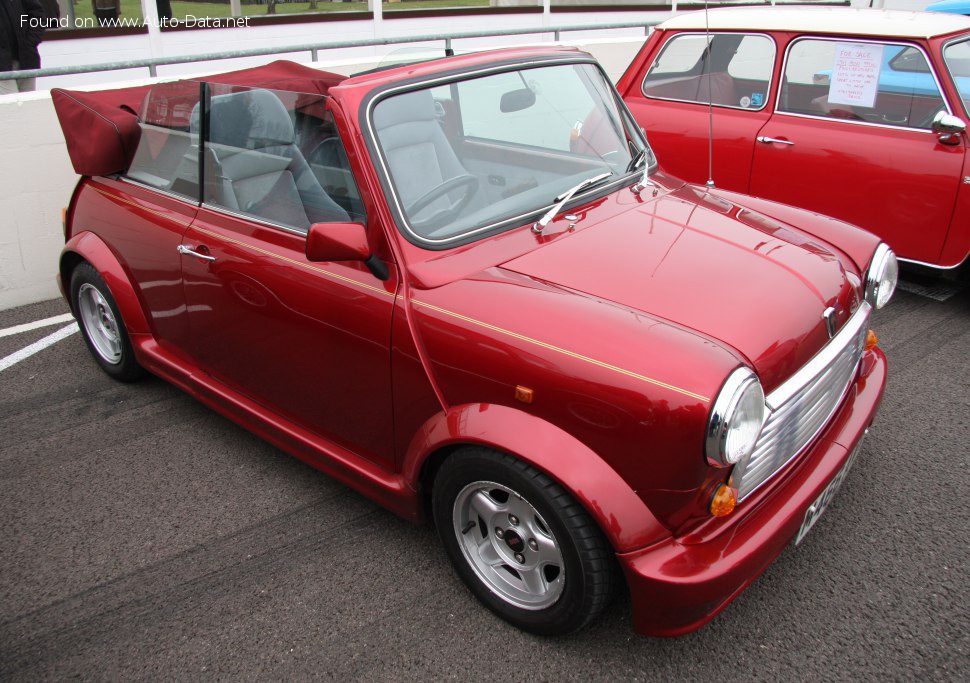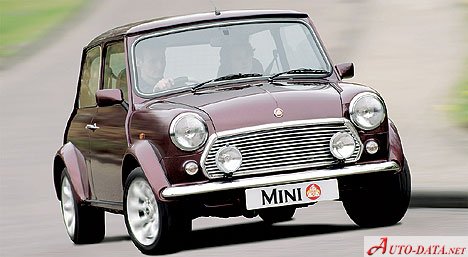
The Rover Mini MK I 1000, produced between 1992 and 1993, represents a late iteration of the iconic Mini, a vehicle that fundamentally altered the landscape of small car design. While not officially sold in the United States during its original production run, the Mini achieved legendary status globally, particularly in Europe, where it became a cultural icon synonymous with the swinging sixties and beyond. The MK I 1000 was a continuation of the original Mini concept, offering affordable transportation in a remarkably compact package. This model, with its 1.0-liter engine producing 41 horsepower, aimed to provide economical motoring for urban environments.
Rover Mini MK I 1000: A Legacy of Compact Design
The original Mini, designed by Sir Alec Issigonis, was a response to the Suez Crisis of 1956 and the subsequent fuel shortages. The brief was to create a small, fuel-efficient car that could transport four adults. Issigonis’s revolutionary design featured transverse engine mounting and front-wheel drive, maximizing interior space within a minimal footprint. The MK I, launched in 1959, established the Mini’s core characteristics. The MK I 1000, produced much later in the Mini’s lifespan, retained these fundamental principles but incorporated incremental improvements in refinement and features. It served as a popular choice in European markets, particularly in the United Kingdom, where it was a common sight on city streets.
Engine & Performance
The Rover Mini MK I 1000 is powered by a 998 cc (60.9 cubic inches) inline-four cylinder engine. This engine, designated the 99H, produces 41 horsepower at 5250 rpm and 68 Nm (50.15 lb-ft) of torque at 2500 rpm. While modest by modern standards, this output was sufficient for the car’s lightweight construction. The engine utilizes a carburettor fuel injection system and a compression ratio of 10.3:1. Power delivery is managed through a four-speed manual transmission, driving the front wheels. Performance figures reflect the car’s modest power: acceleration from 0 to 60 mph takes approximately 16.2 seconds, and the top speed is around 80.16 mph (129 km/h). Fuel economy is a strong point, with combined fuel consumption rated at 38.6 US mpg (46.3 UK mpg or 6.1 l/100 km).
Design & Features
The Rover Mini MK I 1000 retains the classic Mini hatchback body style, characterized by its short wheelbase, large windows, and end-to-end cabin design. It’s a three-door hatchback with seating for five passengers, although space is at a premium. The car’s diminutive size – measuring 3050 mm (120.08 inches) in length and 1410 mm (55.51 inches) in width – makes it exceptionally maneuverable in urban environments. Safety features for the time were basic, with disc brakes on the front wheels and drum brakes on the rear. Later models included ABS (Anti-lock braking system) as an option. The suspension utilizes a wishbone setup at the front and a trailing arm configuration at the rear, providing a surprisingly comfortable ride given the car’s size and simplicity. The interior is functional and minimalist, reflecting the car’s original design ethos. Trunk space is limited to 120 liters (4.24 cubic feet).
Technical Specifications
| Brand | Rover |
| Model | Mini MK |
| Generation | Mini MK I |
| Type (Engine) | 1000 (41 Hp) |
| Start of production | 1992 |
| End of production | 1993 |
| Powertrain Architecture | Internal Combustion engine |
| Body type | Hatchback |
| Seats | 5 |
| Doors | 3 |
| Fuel consumption (urban) | 6.9 l/100 km (34.1 US mpg, 40.9 UK mpg, 14.5 km/l) |
| Fuel consumption (extra urban) | 4.7 l/100 km (50 US mpg, 60.1 UK mpg, 21.3 km/l) |
| Fuel consumption (combined) | 6.1 l/100 km (38.6 US mpg, 46.3 UK mpg, 16.4 km/l) |
| Fuel Type | Petrol (Gasoline) |
| Acceleration 0 – 100 km/h | 17 sec |
| Acceleration 0 – 62 mph | 17 sec |
| Acceleration 0 – 60 mph | 16.2 sec |
| Maximum speed | 129 km/h (80.16 mph) |
| Weight-to-power ratio | 15.2 kg/Hp |
| Weight-to-torque ratio | 9.2 kg/Nm |
| Power | 41 Hp @ 5250 rpm |
| Power per litre | 41.1 Hp/l |
| Torque | 68 Nm @ 2500 rpm (50.15 lb.-ft. @ 2500 rpm) |
| Engine layout | Front, Transverse |
| Engine Model/Code | 99H |
| Engine displacement | 998 cm3 (60.9 cu. in.) |
| Number of cylinders | 4 |
| Engine configuration | Inline |
| Cylinder Bore | 64.58 mm (2.54 in.) |
| Piston Stroke | 76.2 mm (3 in.) |
| Compression ratio | 10.3:1 |
| Number of valves per cylinder | 2 |
| Fuel injection system | Carburettor |
| Engine aspiration | Naturally aspirated |
| Kerb Weight | 625 kg (1377.89 lbs.) |
| Max. weight | 1000 kg (2204.62 lbs.) |
| Max load | 375 kg (826.73 lbs.) |
| Trunk (boot) space (minimum) | 120 l (4.24 cu. ft.) |
| Fuel tank capacity | 34 l (8.98 US gal | 7.48 UK gal) |
| Length | 3050 mm (120.08 in.) |
| Width | 1410 mm (55.51 in.) |
| Height | 1350 mm (53.15 in.) |
| Wheelbase | 2035 mm (80.12 in.) |
| Front track | 1240 mm (48.82 in.) |
| Rear track | 1210 mm (47.64 in.) |
| Minimum turning circle | 8.6 m (28.22 ft.) |
| Drivetrain Architecture | Front wheel drive |
| Number of gears | 4 gears, manual transmission |
| Front suspension | Wishbone |
| Rear suspension | Trailing arm |
| Front brakes | Disc |
| Rear brakes | Drum |
| Assisting systems | ABS (Anti-lock braking system) |
| Steering type | Steering rack and pinion |
| Tires size | 145/70 R12 |
The Rover Mini MK I 1000, while a relatively late model in the Mini’s production run, embodies the spirit of the original design – a clever, economical, and fun-to-drive small car. Its enduring popularity and cultural significance continue to resonate with automotive enthusiasts worldwide, even though it was never officially available in the American market.