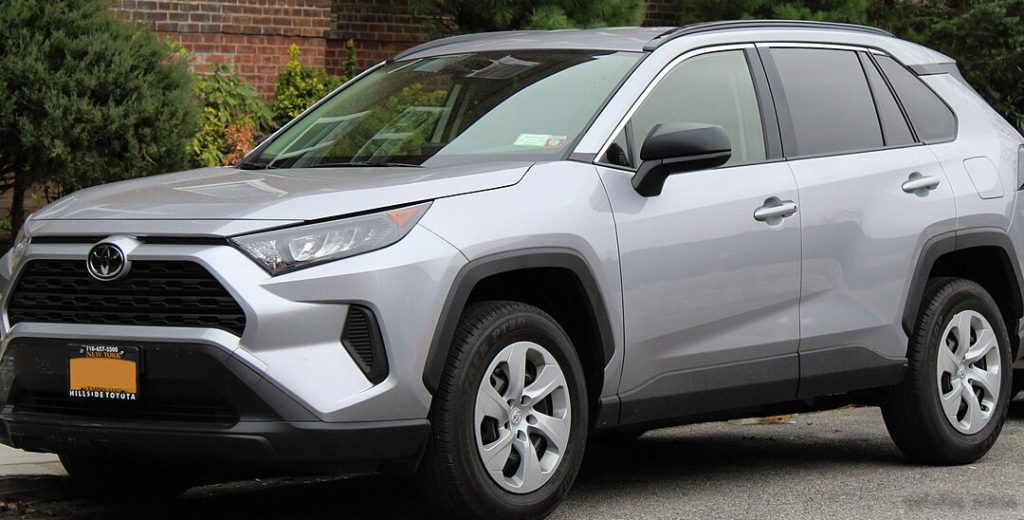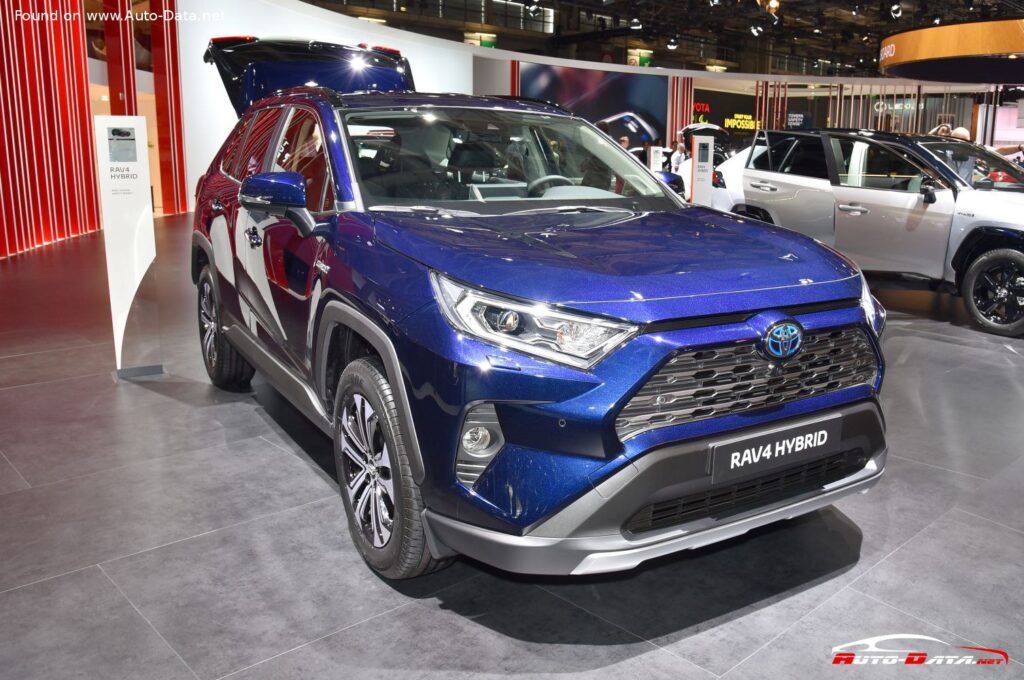
The Toyota RAV4, a pioneer in the compact SUV segment, entered its fifth generation (RAV4 V) in late 2018, marking a significant evolution in design, technology, and powertrain efficiency. Among its most compelling offerings was the Toyota RAV4 V 2.5 Hybrid E-Four e-CVT, a sophisticated full hybrid electric vehicle (FHEV) that seamlessly blended a robust gasoline engine with advanced electric motors to deliver impressive performance, exceptional fuel economy, and intelligent all-wheel-drive capabilities. Produced from November 2018 to September 2021, this variant quickly established itself as a benchmark in its class, appealing to consumers seeking a versatile, environmentally conscious, and reliable family vehicle.
Toyota RAV4 V 2.5 Hybrid E-Four e-CVT: An Overview
Built on the Toyota New Global Architecture (TNGA-K) platform, the fifth-generation RAV4 adopted a more rugged and assertive aesthetic compared to its predecessors, while simultaneously enhancing its on-road dynamics and off-road prowess. The 2.5 Hybrid E-Four e-CVT model, in particular, showcased Toyota’s continued commitment to hybridization, leveraging decades of experience to create a powertrain that was both powerful and remarkably efficient. This iteration of the RAV4 cemented its reputation as a leading choice in the highly competitive compact SUV market, especially for those prioritizing a balance of utility, performance, and reduced environmental impact.
Engine & Performance
At the heart of the Toyota RAV4 V 2.5 Hybrid E-Four e-CVT lies a highly advanced full hybrid electric vehicle (FHEV) architecture, engineered to optimize power delivery and fuel efficiency across various driving conditions. The system combines a 2.5-liter A25A-FXS inline four-cylinder gasoline engine with two electric motors, resulting in a total system output of 222 horsepower. The internal combustion engine, a naturally aspirated unit featuring both direct and multi-port manifold injection, produces 177 horsepower at 6000 rpm and 163 lb.-ft. of torque between 3600-5200 rpm. Its DOHC valvetrain with VVT-iE (Variable Valve Timing-intelligent Electric) ensures optimal valve operation for efficiency and power.
The hybrid system is further augmented by two synchronous electric motors. The primary electric motor, integrated into the transmission and driving the front wheels, contributes 120 horsepower and 148.99 lb.-ft. of torque. A secondary electric motor, transversely mounted on the rear axle, provides 54 horsepower and 89.25 lb.-ft. of torque, enabling the “E-Four” all-wheel-drive system. This intelligent setup allows for dynamic torque distribution, improving traction and stability, especially in adverse conditions or during spirited driving. The system can operate in full electric mode for short distances at low speeds, or in a blended gasoline-electric mode, seamlessly transitioning between power sources to maximize efficiency.
Power is managed by an electronically controlled continuously variable transmission (e-CVT), which ensures smooth and responsive acceleration without traditional gear shifts. This powertrain propels the RAV4 V 2.5 Hybrid from 0 to 60 mph in 7.7 seconds, with a top speed electronically limited to 111.85 mph. Despite its robust performance, the vehicle boasts impressive fuel economy figures, achieving a combined 51.1 to 52.3 US mpg, making it one of the most fuel-efficient SUVs in its class. CO2 emissions are kept low at 102-105 g/km, meeting the stringent Euro 6d-TEMP emission standard. The Nickel-metal hydride (NiMH) battery, with a voltage of 244.8 V, is strategically located under the rear seats, contributing to a lower center of gravity and improved interior packaging without compromising cargo space.
Design & Features
The fifth-generation Toyota RAV4 ushered in a bold new design language, moving away from the softer lines of its predecessors to embrace a more rugged and angular aesthetic. As a five-door SUV with seating for five occupants, the Toyota RAV4 V 2.5 Hybrid E-Four e-CVT projects a strong, confident stance, characterized by its prominent grille, sharp creases, and distinctive LED lighting signature. Its overall dimensions—181.1 inches in length, 73.03 inches in width, and 66.34 inches in height—contribute to a commanding road presence while maintaining maneuverability for urban environments. A wheelbase of 105.91 inches provides a stable ride and generous interior volume.
Practicality is a cornerstone of the RAV4’s design. The vehicle offers a substantial trunk space, ranging from 20.48 cubic feet with all seats in place, expanding to an impressive 59.68 cubic feet when the rear seats are folded down. This versatility makes it ideal for everything from daily commutes to weekend adventures. The ground clearance of 7.48 inches, coupled with approach and departure angles of 17.5° and 20° respectively, provides confidence for light off-road excursions or navigating challenging urban obstacles.
Underneath its sculpted exterior, the RAV4 V is equipped with a sophisticated chassis designed for comfort and control. The front suspension utilizes an independent McPherson strut setup, known for its balance of ride quality and handling precision, while the rear features a double wishbone arrangement, further enhancing stability and passenger comfort. Braking power is supplied by large ventilated discs measuring 328 mm at the front and solid discs measuring 317 mm at the rear, complemented by an Anti-lock Braking System (ABS) for optimal stopping performance. The electric power steering system provides precise feedback and effortless maneuverability. Standard wheel and tire configurations include 225/65 R17 or 225/60 R18, mounted on 7J x 17 or 7J x 18 rims, respectively. These choices balance ride comfort with responsive handling. Inside, the RAV4 V offers a modern cabin with an emphasis on ergonomics and connectivity.
Technical Specifications
| General Information | |
| Brand | Toyota |
| Model | RAV4 |
| Generation | RAV4 V |
| Type (Engine) | 2.5 (222 Hp) Hybrid E-Four e-CVT |
| Production Start | November, 2018 |
| Production End | September, 2021 |
| Powertrain Architecture | FHEV (Full Hybrid Electric Vehicle) |
| Body Type | SUV |
| Seats | 5 |
| Doors | 5 |
| Performance Specifications | |
| Fuel Consumption (City) | 53.5 – 50 US mpg (4.4-4.7 l/100 km) |
| Fuel Consumption (Highway) | 50 US mpg (4.7 l/100 km) |
| Fuel Consumption (Combined) | 52.3 – 51.1 US mpg (4.5-4.6 l/100 km) |
| CO2 Emissions | 102-105 g/km |
| Fuel Type | Gasoline |
| Acceleration 0-60 mph | 7.7 sec |
| Maximum Speed | 111.85 mph (180 km/h) |
| Emission Standard | Euro 6d-TEMP |
| Weight-to-power ratio | 7.4 kg/Hp, 135 Hp/tonne |
| Electric Cars and Hybrids Specifications | |
| Battery Voltage | 244.8 V |
| Battery Technology | Nickel-metal hydride (NiMH) |
| Battery Location | Under the rear seats |
| Electric Motor 1 Power (Front) | 120 Hp |
| Electric Motor 1 Torque (Front) | 148.99 lb.-ft. (202 Nm) |
| Electric Motor 1 Model/Code | 3NM |
| Electric Motor 1 Location | Integrated into the transmission |
| Electric Motor 2 Power (Rear) | 54 Hp |
| Electric Motor 2 Torque (Rear) | 89.25 lb.-ft. (121 Nm) |
| Electric Motor 2 Model/Code | 4NM |
| Electric Motor 2 Location | Rear axle, Transverse |
| System Power | 222 Hp |
| Internal Combustion Engine Specifications | |
| Power | 177 Hp @ 6000 rpm |
| Torque | 163 lb.-ft. @ 3600-5200 rpm (221 Nm) |
| Engine Layout | Front, Transverse |
| Engine Model/Code | A25A-FXS |
| Engine Displacement | 2.5 liters (2487 cm3 / 151.77 cu. in.) |
| Number of Cylinders | 4 |
| Engine Configuration | Inline |
| Compression Ratio | 14:1 |
| Fuel Injection System | Direct injection and Multi-port manifold injection |
| Engine Aspiration | Naturally aspirated |
| Valvetrain | DOHC, VVT-iE |
The Toyota RAV4 V, and particularly the Toyota RAV4 V 2.5 Hybrid E-Four e-CVT variant, represents a pivotal chapter in the RAV4’s storied history and Toyota’s broader strategy. Since its inception, the RAV4 has consistently been a top seller in the compact SUV segment, and the fifth generation further solidified this position. Its rugged new design resonated with a market increasingly looking for vehicles that combine urban practicality with an adventurous spirit. The hybrid model, in particular, was instrumental in reinforcing Toyota’s reputation as a leader in hybrid technology and fuel efficiency.