
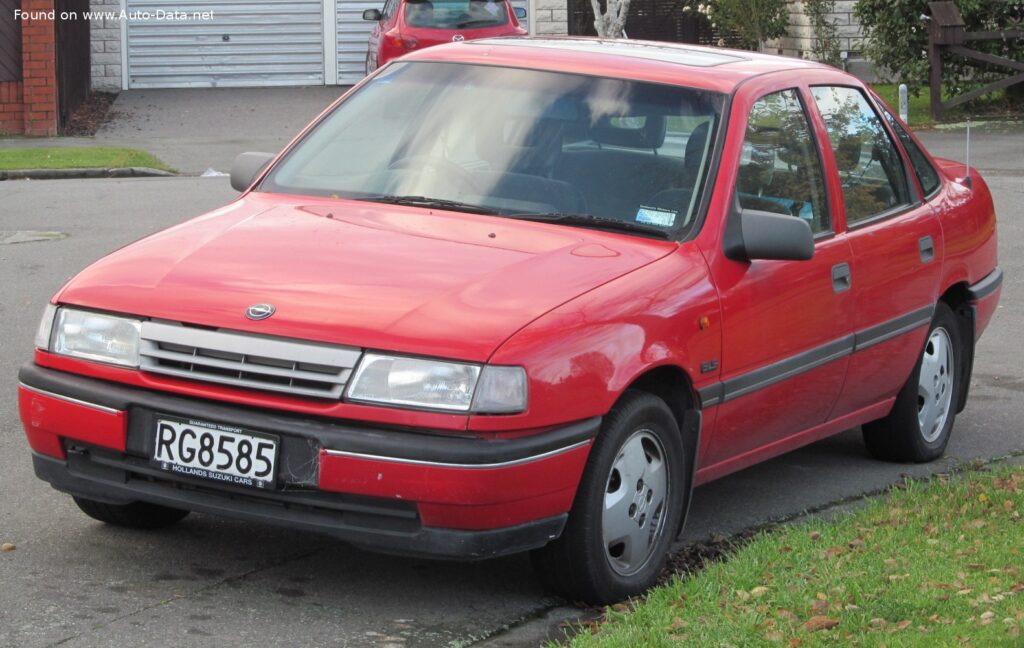
The Opel Vectra A 2.0i 16V (150 Hp) 4×4, produced between 1989 and 1990, represents a notable achievement in Opel’s engineering during the late 1980s. Introduced as part of the first-generation Vectra A lineup, this variant combined a high-performance engine with an all-wheel-drive system, offering a compelling blend of practicality, performance, and enhanced safety. While not marketed in the United States under the Opel brand, the Vectra A was a significant model in the European D-segment (mid-size car category), succeeding the Opel Ascona and establishing itself as a cornerstone of Opel’s product range. Its engineering principles and platform derivatives influenced various General Motors models globally.
The Opel Vectra A: A European Mainstay
The first-generation Opel Vectra, internally designated the Vectra A, was a pivotal model for Opel, embodying the company’s commitment to modern design and engineering. Its sleek, aerodynamic bodywork, achieving a drag coefficient as low as 0.29 in certain configurations, contrasted sharply with the more angular designs of its predecessor and many contemporaries. This focus on aerodynamics improved fuel efficiency and reduced wind noise, enhancing the driving experience. Primarily targeted at the European market, the Vectra A was available in four-door sedan and five-door hatchback (known as the Cavalier in the UK) body styles. Its robust platform provided a solid foundation for both comfort and handling, making it a popular choice for families and business users. Advanced features for the time, such as anti-lock braking systems (ABS) and power steering, further solidified its reputation as a well-equipped and safe vehicle. The 4×4 variant, in particular, showcased Opel’s engineering ambition, integrating a sophisticated drivetrain into a practical family sedan.
Engine & Performance of the Opel Vectra A 2.0i 16V (150 Hp) 4×4
The Opel Vectra A 2.0i 16V (150 Hp) 4×4 was powered by a 2.0-liter (1998 cm³) inline-four engine, designated 20XEJ. This engine was a testament to Opel’s commitment to performance and efficiency, featuring a Double Overhead Camshaft (DOHC) valvetrain with four valves per cylinder – a relatively advanced configuration for a mainstream engine in 1989. Utilizing multi-port fuel injection and naturally aspirated induction, it produced 150 horsepower at 6000 rpm, equating to 75.1 horsepower per liter. Peak torque of 144.56 lb.-ft. (196 Nm) was achieved at 4600 rpm, providing strong mid-range acceleration.
The engine was paired with a 5-speed manual transmission, offering drivers precise control. The defining feature of this variant was its all-wheel-drive (4×4) system, providing superior grip and stability, particularly beneficial in adverse weather conditions. This combination allowed the Vectra A 2.0i 16V (150 Hp) 4×4 to accelerate from 0 to 60 mph in 9 seconds, reaching a top speed of 129.25 mph (208 km/h). These figures positioned it within the performance sedan category for its time, offering a balance of practicality and excitement. Despite its performance focus, Opel prioritized fuel economy, achieving a combined fuel consumption of 28.3 US mpg (8.3 l/100 km), with urban consumption at 20.5 US mpg (11.5 l/100 km) and extra-urban at 34.6 US mpg (6.8 l/100 km). These figures were competitive for a powerful AWD sedan of the era.
Engineering for Agility and Traction
The all-wheel-drive system employed in the Vectra A 2.0i 16V 4×4 was a significant engineering achievement for Opel. The system utilized a viscous coupling to distribute torque between the front and rear axles, automatically adjusting the power split based on available traction. This ensured optimal grip in a variety of driving conditions, enhancing stability and control. The system was designed to be largely transparent to the driver, operating seamlessly in the background without requiring any manual intervention. This made the Vectra A 4×4 a particularly appealing option for drivers in regions prone to snow, ice, or wet roads.
Design & Features
The Opel Vectra A’s design language represented a departure from the more traditional lines of its predecessors. Its smooth, rounded contours and flush-fitting windows contributed to its modern aesthetic and excellent aerodynamic properties. The four-door sedan body style provided a classic and timeless appeal, balancing elegance with functionality. The car measured 174.49 inches (4432 mm) in length, 67.17 inches (1706 mm) in width, and 55.12 inches (1400 mm) in height, with a wheelbase of 102.36 inches (2600 mm).
Inside, the Vectra A prioritized practicality and comfort, comfortably seating five occupants with ample head and legroom. Trunk space ranged from 13.42 cubic feet (380 liters) to 24.37 cubic feet (690 liters) with the rear seats folded. The 16.64 US gallon (63 liter) fuel tank provided a good cruising range. The Vectra A 2.0i 16V 4×4 included features considered advanced for its time, such as an Anti-lock Braking System (ABS) and hydraulic power steering. The suspension system, featuring coil springs at both the front and rear, was tuned for a comfortable ride without compromising handling. The braking system comprised ventilated discs at the front and solid discs at the rear, and the car rode on 205/55 R15 tires fitted to 15-inch wheel rims.
Technical Specifications: Opel Vectra A 2.0i 16V (150 Hp) 4×4
| Category | Specification |
| General Information | Opel |
| Model | Vectra |
| Generation | Vectra A |
| Type (Engine) | 2.0i 16V (150 Hp) 4×4 |
| Start of Production | 1989 year |
| End of Production | 1990 year |
| Powertrain Architecture | Internal Combustion engine |
| Body type | Sedan |
| Seats | 5 |
| Doors | 4 |
| Performance Specs | |
| Fuel consumption (urban) | 20.5 US mpg (11.5 l/100 km) |
| Fuel consumption (extra urban) | 34.6 US mpg (6.8 l/100 km) |
| Fuel consumption (combined) | 28.3 US mpg (8.3 l/100 km) |
| Fuel Type | Petrol (Gasoline) |
| Acceleration 0 – 60 mph | 9 sec |
| Maximum speed | 129.25 mph (208 km/h) |
| Weight-to-power ratio | 8.7 kg/Hp, 114.5 Hp/tonne |
| Engine Specs | |
| Power | 150 Hp @ 6000 rpm |
| Power per liter | 75.1 Hp/l |
| Torque | 144.56 lb.-ft. (196 Nm) @ 4600 rpm |
| Engine layout | Front, Transverse |
| Engine Model/Code | 20XEJ |
| Engine displacement | 121.93 cu. in. (1998 cm³) |
| Number of cylinders | 4 |
| Engine configuration | Inline |
| Cylinder Bore | 3.39 in. (86 mm) |
| Piston Stroke | 3.39 in. (86 mm) |
| Compression ratio | 10.5:1 |
| Number of valves per cylinder | 4 |
| Fuel injection system | Multi-port manifold injection |
| Engine aspiration | Naturally aspirated engine |
| Valvetrain | DOHC |
| Engine oil capacity | 4.76 US qt (4.5 l) |
| Coolant capacity | 7.61 US qt (7.2 l) |
| Space, Volume and Weights | |
| Kerb Weight | 2888.06 lbs. (1310 kg) |
| Max. weight | 3979.34 lbs. (1805 kg) |
| Max load | 1091.29 lbs. (495 kg) |
| Trunk (boot) space – minimum | 13.42 cu. ft. (380 l) |
| Trunk (boot) space – maximum | 24.37 cu. ft. (690 l) |
| Fuel tank capacity | 16.64 US gal (63 l) |
| Dimensions | |
| Length | 174.49 in. (4432 mm) |
| Width | 67.17 in. (1706 mm) |
| Height | 55.12 in. (1400 mm) |
| Wheelbase | 102.36 in. (2600 mm) |
