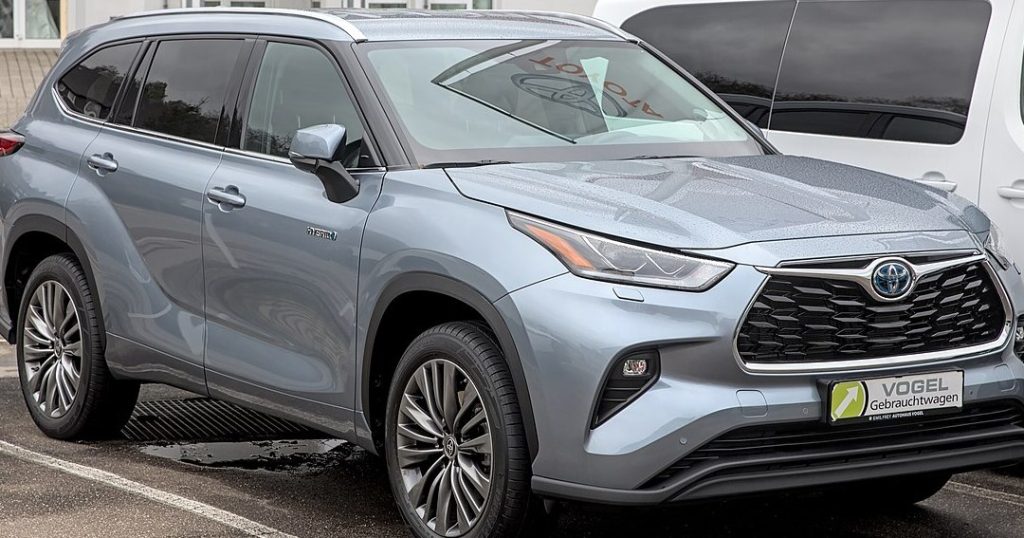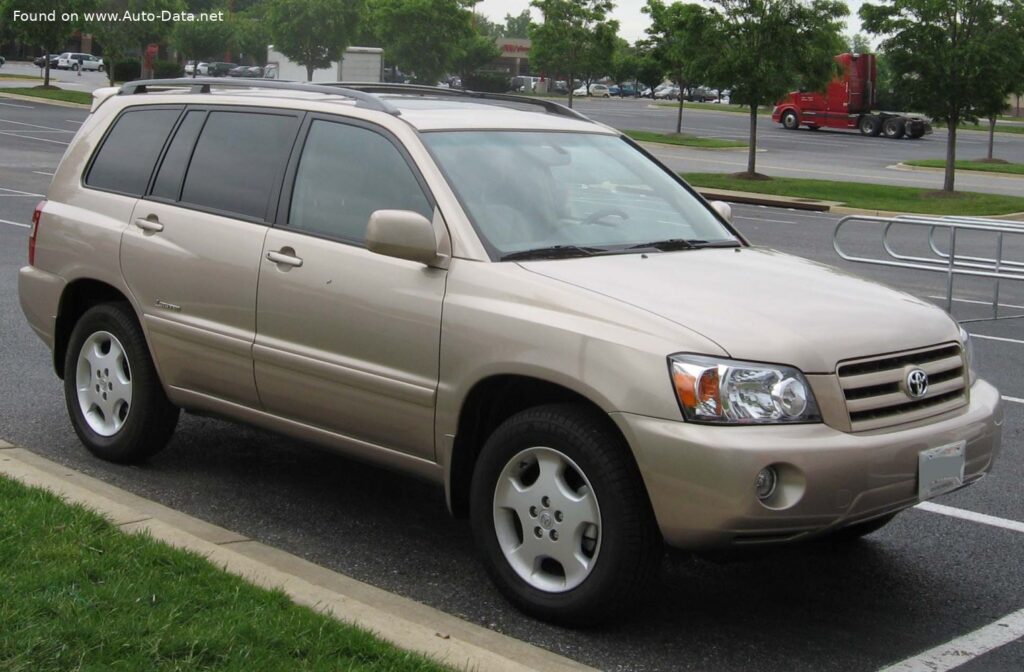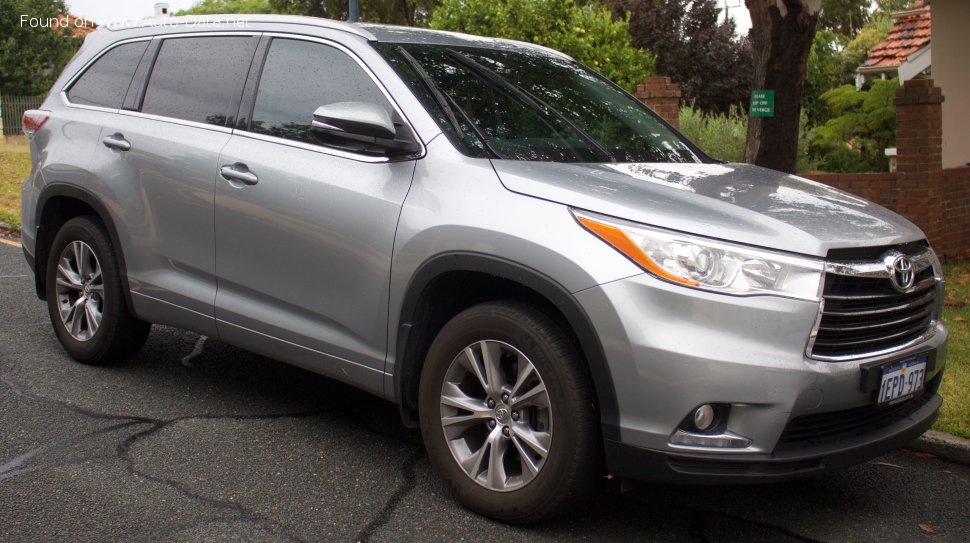
The Toyota Highlander III, produced between 2013 and 2016, represents the third generation of Toyota’s popular mid-size crossover SUV. Sold primarily in North America, Asia, and Australia, the Highlander III offered a compelling blend of family practicality, reliability, and available all-wheel drive. This generation marked a significant step forward in refinement and features compared to its predecessors, aiming to compete directly with vehicles like the Honda Pilot and Ford Explorer. The 3.5 V6 4×4 Automatic model, detailed here, was a popular configuration, offering a balance of performance and capability for a wide range of drivers.
Toyota Highlander III: A Detailed Overview
The Highlander III was designed to address the growing demand for three-row SUVs capable of comfortably seating seven passengers. Toyota focused on improving interior space, ride quality, and fuel efficiency while maintaining the brand’s reputation for dependability. The third generation also saw an increase in standard features and available technology, making it a more competitive offering in the crowded SUV market. While not initially offered in Europe, the Highlander’s success in other global markets demonstrated Toyota’s ability to cater to diverse consumer needs.
Engine & Performance
The heart of the Highlander III 3.5 V6 4×4 Automatic is Toyota’s 2GR-FE 3.5-liter V6 engine. This naturally aspirated powerplant delivers 249 horsepower at 6,200 rpm and 248.56 lb.-ft. of torque at 4,700 rpm. The engine features a double overhead camshaft (DOHC) valvetrain with Variable Valve Timing with intelligence (VVTi), optimizing performance and efficiency. Power is delivered to all four wheels via a six-speed automatic transmission. This combination allows for a 0-60 mph acceleration time of approximately 8.3 seconds and a top speed of 111.85 mph (180 km/h). The engine’s transverse front-engine layout contributes to a balanced driving experience. Fuel economy is rated at 22.2 US mpg combined (10.6 l/100 km), with 16.3 US mpg (14.4 l/100 km) in urban settings and 28 US mpg (8.4 l/100 km) on the highway. CO2 emissions are rated at 246 g/km, meeting Euro 5 emission standards.
Design & Features
The Highlander III boasts a traditional SUV body style with a five-door configuration and seating for seven passengers. Its design emphasizes a more sculpted and modern aesthetic compared to previous generations. The interior prioritizes comfort and practicality, with ample space for passengers and cargo. Key features include a spacious cabin, comfortable seating, and a user-friendly infotainment system. The 4×4 system provides enhanced traction and stability in various driving conditions, making it suitable for inclement weather and light off-road use. Safety features, crucial for a family-oriented vehicle, include Anti-lock Braking System (ABS) and a comprehensive airbag system. Trunk space is generous, ranging from 13.81 cu. ft. with all seats in place to a substantial 83.7 cu. ft. with the rear seats folded down. The vehicle’s dimensions are 191.54 inches in length, 75.79 inches in width, and 68.11 inches in height, with a wheelbase of 109.84 inches.
Technical Specifications
| Brand | Toyota |
| Model | Highlander |
| Generation | Highlander III |
| Type (Engine) | 3.5 V6 (249 Hp) 4×4 Automatic |
| Start of production | 2013 |
| End of production | 2016 |
| Powertrain Architecture | Internal Combustion engine |
| Body type | SUV |
| Seats | 7 |
| Doors | 5 |
| Fuel consumption (urban) | 14.4 l/100 km (16.3 US mpg, 19.6 UK mpg, 6.9 km/l) |
| Fuel consumption (extra urban) | 8.4 l/100 km (28 US mpg, 33.6 UK mpg, 11.9 km/l) |
| Fuel consumption (combined) | 10.6 l/100 km (22.2 US mpg, 26.6 UK mpg, 9.4 km/l) |
| CO2 emissions | 246 g/km |
| Fuel Type | Petrol (Gasoline) |
| Acceleration 0 – 100 km/h | 8.7 sec |
| Acceleration 0 – 62 mph | 8.7 sec |
| Acceleration 0 – 60 mph | 8.3 sec |
| Maximum speed | 180 km/h (111.85 mph) |
| Emission standard | Euro 5 |
| Weight-to-power ratio | 8.1 kg/Hp, 124.2 Hp/tonne |
| Weight-to-torque ratio | 5.9 kg/Nm, 168.1 Nm/tonne |
| Power | 249 Hp @ 6200 rpm |
| Power per litre | 72 Hp/l |
| Torque | 337 Nm @ 4700 rpm (248.56 lb.-ft. @ 4700 rpm) |
| Engine layout | Front, Transverse |
| Engine Model/Code | 2GR-FE |
| Engine displacement | 3456 cm3 (210.9 cu. in.) |
| Number of cylinders | 6 |
| Engine configuration | V-engine |
| Cylinder Bore | 94 mm (3.7 in.) |
| Piston Stroke | 83 mm (3.27 in.) |
| Compression ratio | 10.8:1 |
| Number of valves per cylinder | 4 |
| Fuel injection system | Multi-port manifold injection |
| Engine aspiration | Naturally aspirated engine |
| Valvetrain | DOHC-VVTi |
| Engine oil capacity | 6.1 l (6.45 US qt | 5.37 UK qt) |
| Coolant | 11.2 l (11.83 US qt | 9.85 UK qt) |
| Kerb Weight | 2005 kg (4420.27 lbs.) |
| Max. weight | 2755 kg (6073.74 lbs.) |
| Max load | 750 kg (1653.47 lbs.) |
| Trunk (boot) space – minimum | 391 l (13.81 cu. ft.) |
| Trunk (boot) space – maximum | 2370 l (83.7 cu. ft.) |
| Fuel tank capacity | 72 l (19.02 US gal | 15.84 UK gal) |
| Length | 4865 mm (191.54 in.) |
| Width | 1925 mm (75.79 in.) |
| Height | 1730 mm (68.11 in.) |
| Wheelbase | 2790 mm (109.84 in.) |
| Front track | 1635 mm (64.37 in.) |
| Rear (Back) track | 1650 mm (64.96 in.) |
| Ride height (ground clearance) | 197 mm (7.76 in.) |
| Drive wheel | All wheel drive (4×4) |
| Number of gears and type of gearbox | 6 gears, automatic transmission |
| Front suspension | Independent, type McPherson with coil spring and anti-roll bar |
| Rear suspension | Independent coil spring |
| Front brakes | Ventilated discs |
| Rear brakes | Disc |
| Assisting systems | ABS (Anti-lock braking system) |
| Steering type | Steering rack and pinion |
| Power steering | Electric Steering |
| Tires size | 245/55 R19 |
| Wheel rims size | 19 |
The Toyota Highlander III 3.5 V6 4×4 Automatic offered a well-rounded package for families seeking a reliable, comfortable, and capable SUV. Its blend of performance, practicality, and safety features cemented its position as a popular choice in the mid-size crossover segment.