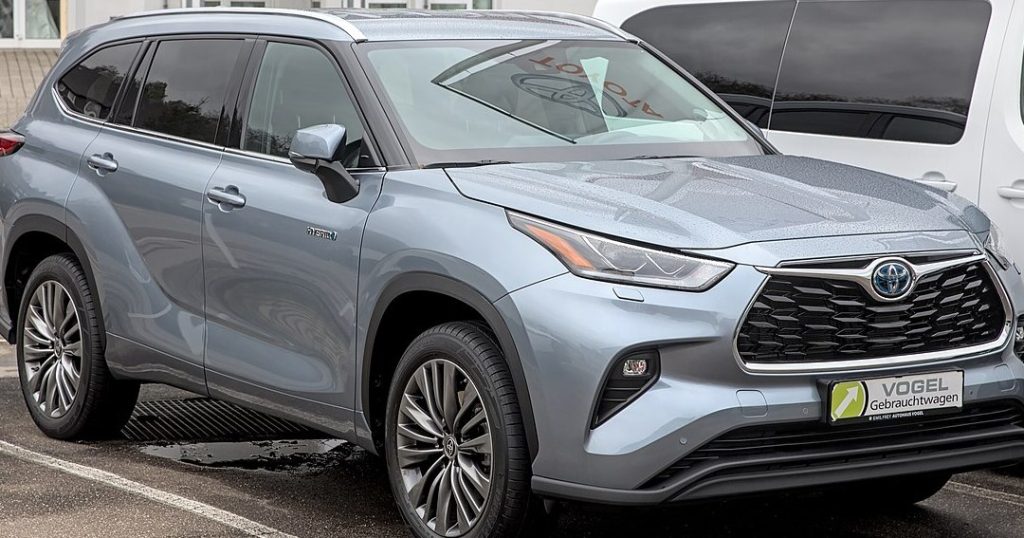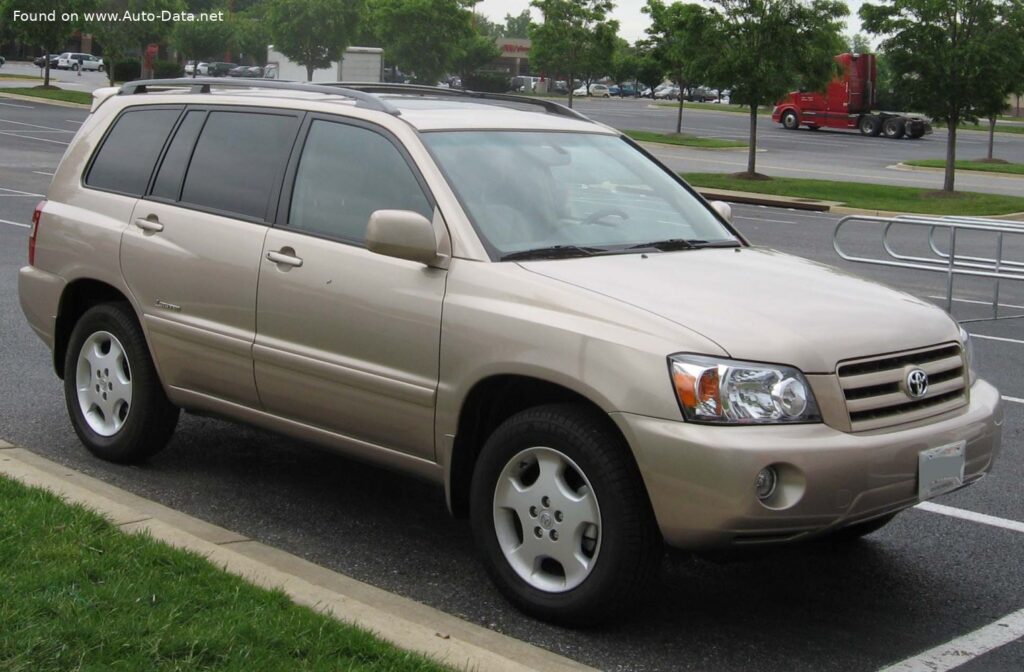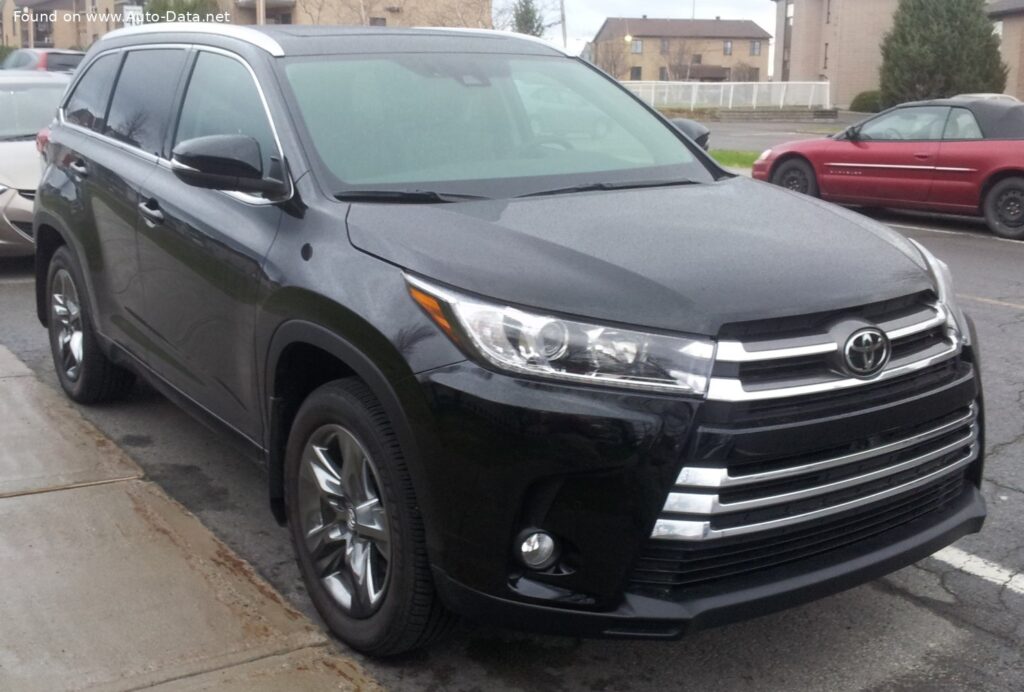
The Toyota Highlander III, particularly the facelifted version introduced in 2016, represents a significant iteration in Toyota’s mid-size SUV lineup. Positioned as a practical and family-oriented vehicle, the Highlander competes with models like the Honda Pilot, Ford Explorer, and Nissan Pathfinder. This generation, sold from 2016 to 2019, offered a blend of comfort, reliability, and available technology, making it a popular choice for North American families. The 2.7-liter engine variant, producing 188 horsepower, was a mainstay offering, providing a balance between fuel efficiency and adequate performance for everyday driving.
Toyota Highlander III (2016-2019) 2.7L: An Overview
The Highlander III, and specifically the 2016 facelift, brought refreshed styling and updated features to the model. While Toyota offers hybrid variants of the Highlander, the 2.7-liter gasoline-powered model remained a core part of the lineup, appealing to buyers who preferred a traditional internal combustion engine. This version of the Highlander focused on providing a comfortable and spacious interior, capable of seating up to seven passengers, along with Toyota’s reputation for dependability. It was primarily sold in North America, with the Highlander family having different iterations and market focuses in other regions like Asia and Europe.
Engine & Performance
The heart of the 2016-2019 Toyota Highlander 2.7 is the 1AR-FE 2.7-liter inline-four cylinder gasoline engine. This naturally aspirated engine delivers 188 horsepower at 5800 rpm and 252 Nm (185.87 lb.-ft.) of torque at 4200 rpm. While not a performance-oriented engine, it provides sufficient power for typical driving conditions, including highway cruising and moderate towing. The engine features a double overhead camshaft (DOHC) valvetrain with Toyota’s Variable Valve Timing-intelligent (D-VVT-i) system, optimizing efficiency and responsiveness. Power is delivered to the front wheels via a six-speed automatic transmission. The weight-to-power ratio stands at 10.1 kg/Hp, and the weight-to-torque ratio is 7.5 kg/Nm, indicating a reasonable balance for its intended purpose. Fuel economy is rated at 10.7 l/100 km combined (22 US mpg, 26.4 UK mpg, 9.3 km/l).
Design & Features
The Highlander III maintains the SUV body style, offering five doors and seating for seven passengers across three rows. The 2016 facelift brought subtle but noticeable changes to the exterior, including a revised front fascia with a bolder grille, updated headlights, and redesigned taillights. Inside, the Highlander prioritizes comfort and practicality. The interior features a spacious cabin with ample headroom and legroom, even for third-row passengers. Standard features typically included air conditioning, a touchscreen infotainment system, Bluetooth connectivity, and a rearview camera. Higher trim levels offered upgrades such as leather upholstery, a sunroof, and advanced safety features like lane departure alert and adaptive cruise control. Safety was a key consideration, with standard features like Anti-lock Braking System (ABS) and a comprehensive airbag system. The vehicle’s dimensions – 4890 mm (192.52 in) in length, 1925 mm (75.79 in) in width, and 1770 mm (69.69 in) in height – contribute to its spaciousness and comfortable ride.
Technical Specifications
| Specification | Value |
| Brand | Toyota |
| Model | Highlander |
| Generation | Highlander III (facelift 2016) |
| Type (Engine) | 2.7 (188 Hp) Automatic |
| Start of production | 2016 |
| End of production | 2019 |
| Powertrain Architecture | Internal Combustion engine |
| Body type | SUV |
| Seats | 7 |
| Doors | 5 |
| Fuel consumption (urban) | 11.8 l/100 km (19.9 US mpg, 23.9 UK mpg, 8.5 km/l) |
| Fuel consumption (extra urban) | 9.8 l/100 km (24 US mpg, 28.8 UK mpg, 10.2 km/l) |
| Fuel consumption (combined) | 10.7 l/100 km (22 US mpg, 26.4 UK mpg, 9.3 km/l) |
| Fuel Type | Petrol (Gasoline) |
| Emission standard | Euro 5 |
| Weight-to-power ratio | 10.1 kg/Hp |
| Weight-to-torque ratio | 7.5 kg/Nm |
| Power | 188 Hp @ 5800 rpm |
| Torque | 252 Nm @ 4200 rpm (185.87 lb.-ft. @ 4200 rpm) |
| Engine layout | Front, Transverse |
| Engine Model/Code | 1AR-FE |
| Engine displacement | 2672 cm3 (163.06 cu. in.) |
| Number of cylinders | 4 |
| Engine configuration | Inline |
| Cylinder Bore | 90 mm (3.54 in.) |
| Piston Stroke | 105 mm (4.13 in.) |
| Compression ratio | 10:1 |
| Number of valves per cylinder | 4 |
| Fuel injection system | Multi-port manifold injection |
| Engine aspiration | Naturally aspirated engine |
| Valvetrain | DOHC, D-VVT-i |
| Engine oil capacity | 4.4 l (4.65 US qt | 3.87 UK qt) |
| Coolant capacity | 9.4 l (9.93 US qt | 8.27 UK qt) |
| Kerb Weight | 1890 kg (4166.74 lbs.) |
| Max. weight | 2570 kg (5665.88 lbs.) |
| Max load | 680 kg (1499.14 lbs.) |
| Trunk (boot) space – minimum | 269 l (9.5 cu. ft.) |
| Trunk (boot) space – maximum | 813 l (28.71 cu. ft.) |
| Fuel tank capacity | 72 l (19.02 US gal | 15.84 UK gal) |
| Length | 4890 mm (192.52 in.) |
| Width | 1925 mm (75.79 in.) |
| Height | 1770 mm (69.69 in.) |
| Wheelbase | 2790 mm (109.84 in.) |
| Front track | 1635 mm (64.37 in.) |
| Rear (Back) track | 1650 mm (64.96 in.) |
| Ride height (ground clearance) | 200 mm (7.87 in.) |
| Drag coefficient (Cd) | 0.34 |
| Approach angle | 18.0° |
| Departure angle | 23.1° |
| Drivetrain Architecture | Front wheel drive |
| Number of gears | 6 |
| Gearbox type | Automatic transmission |
| Front suspension | Independent, type McPherson with coil spring and anti-roll bar |
| Rear suspension | Independent coil spring |
| Front brakes | Ventilated discs |
| Rear brakes | Disc |
| Steering type | Steering rack and pinion |
| Power steering | Electric Steering |
| Tires size | 245/60 R18; 245/55 R19 |
| Wheel rims size | 18; 19 |
The Toyota Highlander III (2016-2019) 2.7L represents a well-rounded SUV offering a comfortable ride, ample space, and Toyota’s renowned reliability. While not the most powerful or fuel-efficient option in its class, it provides a practical and dependable choice for families seeking a versatile vehicle for everyday use.