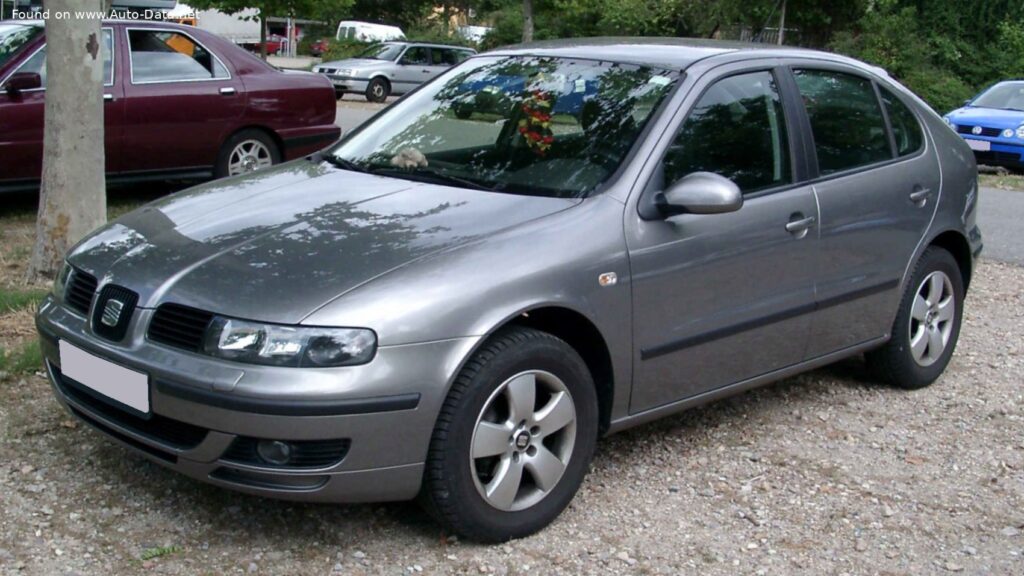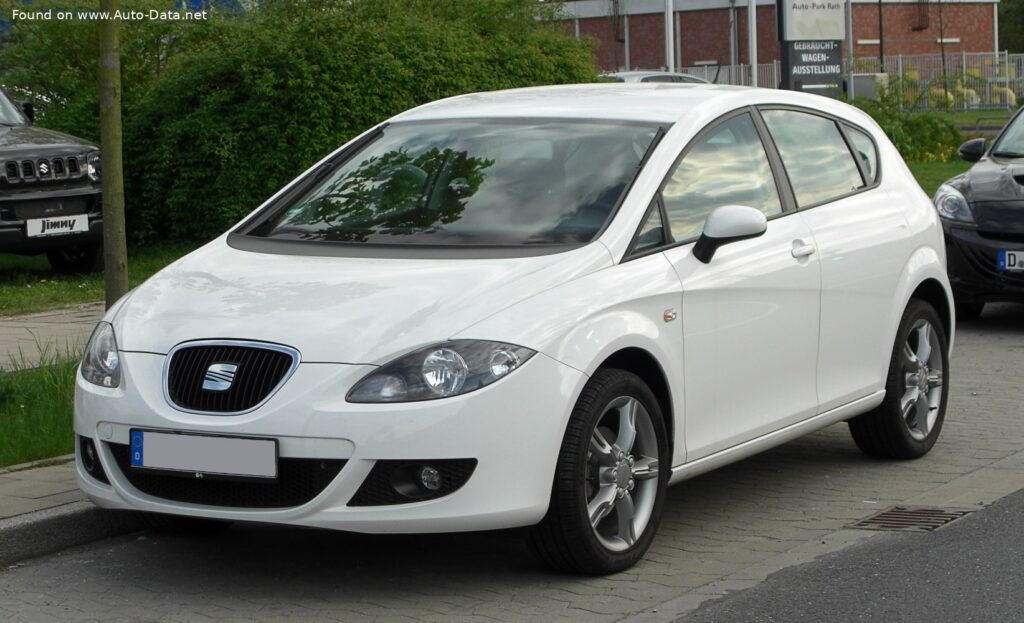
The SEAT León II (1P) 1.4 MPI, produced from 2006 to 2009, represents a significant evolution in SEAT’s compact hatchback offerings. While SEAT is a Spanish automobile manufacturer, it operates as part of the Volkswagen Group, and the León shares its platform (PQ35) with the Volkswagen Golf Mk5, Škoda Octavia, and Audi A3. The 1.4 MPI variant, equipped with an 85 horsepower engine, was primarily aimed at the European market, offering an affordable and economical entry point into the compact class. It was designed to appeal to buyers seeking a practical, stylish, and relatively fuel-efficient vehicle for daily commuting and urban driving. This model wasn’t officially sold in the United States, but understanding its specifications provides insight into the European small car market of the mid-2000s.
SEAT León II (1P) 1.4 MPI: Overview and Market Position
The second generation León (1P) marked a departure from its predecessor, adopting a more mature and sophisticated design language. It moved away from the Giugiaro-designed first generation and embraced a more contemporary aesthetic. The 1.4 MPI engine option was positioned as the base engine in the León lineup, prioritizing fuel economy and affordability over outright performance. It competed with other small hatchbacks like the Ford Focus, Opel/Vauxhall Astra, and Renault Mégane in the European market. The León II aimed to offer a blend of practicality, style, and value, appealing to a broad range of buyers.
Engine & Performance
The heart of the León II 1.4 MPI is a 1.4-liter, inline-four cylinder gasoline engine. This naturally aspirated engine produces 85 horsepower at 5000 rpm and 97.36 lb-ft of torque at 3800 rpm. While not a powerhouse, the engine provides adequate performance for everyday driving. The engine utilizes multi-port fuel injection and a compression ratio of 10.5:1. Power is delivered to the front wheels via a five-speed manual transmission. Acceleration from 0 to 62 mph (0-100 km/h) takes 13.7 seconds, and the car has a top speed of 106.88 mph (172 km/h). Fuel economy is a key strength, with combined fuel consumption rated at 33.6 US mpg (7.0 l/100 km). The engine’s modest output results in a weight-to-power ratio of 15 kg/Hp.
Design & Features
The SEAT León II (1P) is a five-door hatchback, offering a practical and versatile body style. The design is characterized by clean lines, a sporty stance, and a relatively spacious interior. The car seats five passengers comfortably, and the 12.04 cu. ft. (341 l) trunk provides ample cargo space for everyday needs. Safety features for the era included ABS (Anti-lock Braking System). The suspension utilizes an independent McPherson strut setup at the front and a torsion beam at the rear, providing a balance between ride comfort and handling. The steering is rack and pinion with electric power assistance. Standard tire sizes were 195/65 R15 or 205/55 R16, mounted on 15 or 16-inch wheels. The car’s dimensions are 169.88 inches (4315 mm) in length, 69.61 inches (1768 mm) in width, and 57.44 inches (1459 mm) in height.
Technical Specifications
| Brand | Seat |
| Model | Leon |
| Generation | Leon II (1P) |
| Type (Engine) | 1.4 MPI (85 Hp) |
| Start of production | 2006 |
| End of production | 2009 |
| Powertrain Architecture | Internal Combustion engine |
| Body type | Hatchback |
| Seats | 5 |
| Doors | 5 |
| Fuel consumption (urban) | 24.8 US mpg |
| Fuel consumption (extra urban) | 42 US mpg |
| Fuel consumption (combined) | 33.6 US mpg |
| CO2 emissions | 168 g/km |
| Fuel Type | Petrol (Gasoline) |
| Acceleration 0 – 100 km/h | 13.7 sec |
| Acceleration 0 – 62 mph | 13.7 sec |
| Acceleration 0 – 60 mph | 13 sec |
| Maximum speed | 106.88 mph |
| Emission standard | Euro 4 |
| Weight-to-power ratio | 15 kg/Hp |
| Weight-to-torque ratio | 9.7 kg/Nm |
| Power | 85 Hp @ 5000 rpm |
| Torque | 132 Nm @ 3800 rpm |
| Engine layout | Front, Transverse |
| Engine Model/Code | BXW, CGGB |
| Engine displacement | 1390 cm3 |
| Number of cylinders | 4 |
| Engine configuration | Inline |
| Cylinder Bore | 76.5 mm |
| Piston Stroke | 75.6 mm |
| Compression ratio | 10.5:1 |
| Number of valves per cylinder | 4 |
| Fuel injection system | Multi-port manifold injection |
| Engine oil capacity | 2.8 l |
| Coolant capacity | 7.5 l |
| Kerb Weight | 2813.1 lbs |
| Max. weight | 3849.27 lbs |
| Max load | 1036.17 lbs |
| Trunk (boot) space – minimum | 12.04 cu. ft |
| Fuel tank capacity | 14.53 US gal |
| Max. roof load | 165.35 lbs |
| Permitted trailer load with brakes (12%) | 2204.62 lbs |
| Permitted trailer load without brakes | 1366.87 lbs |
| Length | 169.88 in |
| Width | 69.61 in |
| Height | 57.44 in |
| Wheelbase | 101.5 in |
| Front track | 60.04 – 60.35 in |
| Rear track | 59.41 – 59.72 in |
| Minimum turning circle | 35.1 ft |
| Drivetrain | Front wheel drive |
| Number of gears | 5 gears, manual transmission |
| Front suspension | Independent, McPherson with coil spring and anti-roll bar |
| Rear suspension | Torsion |
| Front brakes | Ventilated discs |
| Rear brakes | Disc |
| Assisting systems | ABS |
| Steering type | Steering rack and pinion |
| Power steering | Electric |
| Tires size | 195/65 R15; 205/55 R16 |
| Wheel rims size | 15; 16 |
The SEAT León II 1.4 MPI, while not a performance leader, offered a compelling package of practicality, economy, and style for European buyers. Its position within the Volkswagen Group allowed it to benefit from shared technology and a reputation for build quality. Although not sold in the US market, it represents a significant example of the compact hatchback segment that dominates European roads.