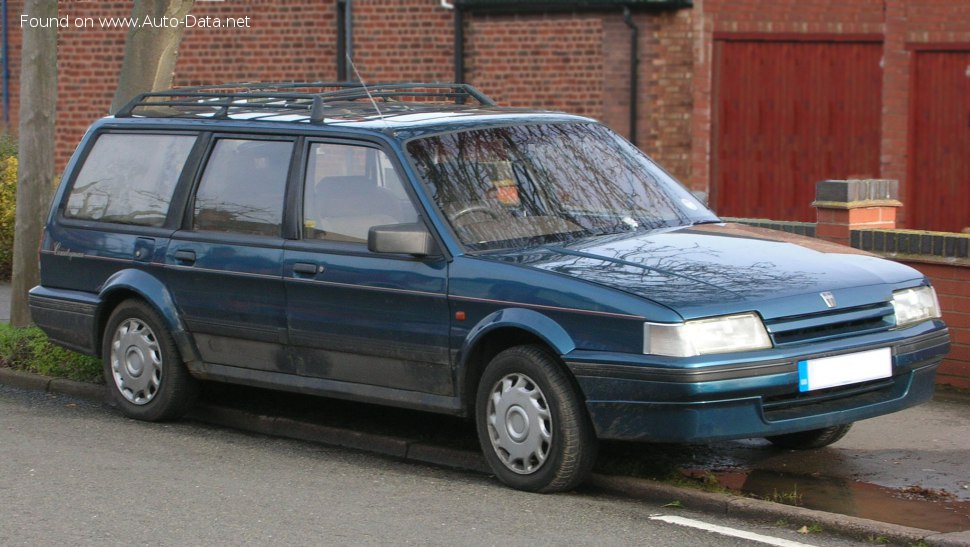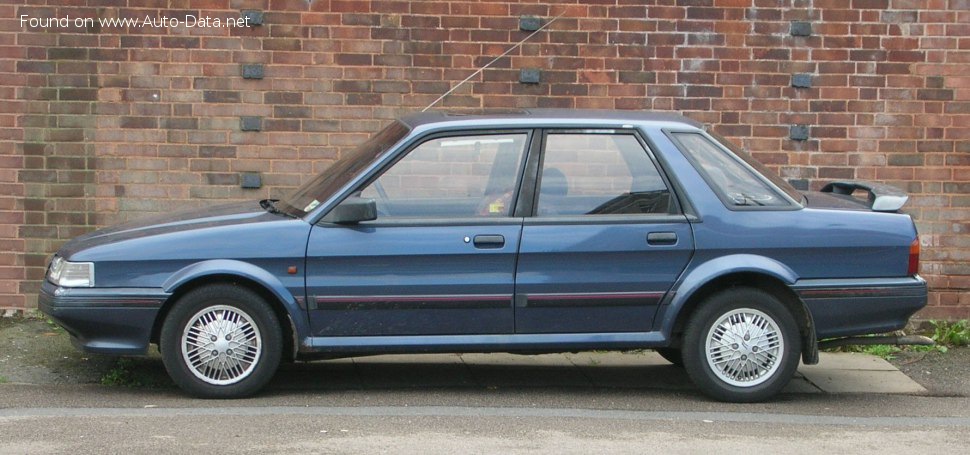
The Rover Montego was a mid-size family car produced by British Leyland (later Rover Group) between 1984 and 1993. Positioned above the Rover SD1 and intended to replace the aging Triumph 2.5 PI, the Montego represented a significant attempt to modernize Rover’s offerings in a competitive market. The 2.0-liter version, producing 104 horsepower, was a mainstay of the range, offering a balance of performance and economy. While not a commercial success on the scale of some of its rivals, the Montego is remembered as a product of a turbulent period in British automotive history and a final expression of traditional Rover styling before the BMW acquisition.
Rover Montego 2.0: An Overview
The Montego was launched as part of a broader effort to revitalize the Rover brand. It was based on the existing SD1 platform, albeit heavily revised, and aimed to provide a more contemporary alternative to cars like the Ford Sierra and Vauxhall Cavalier (Opel Ascona). The 2.0-liter engine variant, introduced in 1987, became a popular choice for buyers seeking a reasonably priced and efficient family saloon. The Montego, despite its shortcomings, offered a spacious interior and a comfortable ride, characteristics valued by British motorists. It was primarily sold in the United Kingdom and limited export markets.
Engine & Performance
The Rover Montego 2.0 was powered by a 1998 cc inline-four cylinder petrol engine. This engine, producing 104 horsepower at 5500 rpm and 164 Nm (120.96 lb-ft) of torque at 3000 rpm, provided adequate performance for everyday driving. While not particularly powerful by contemporary standards, the engine’s relatively high torque output made it tractable and easy to drive. Acceleration from 0 to 60 mph was achieved in approximately 9.3 seconds, and the car had a top speed of 175 km/h (108.74 mph). The engine featured a carburettor fuel injection system, a common technology for the time, and a compression ratio of 9.1:1. Fuel economy figures were respectable for the era, with combined consumption averaging 7.6 l/100 km (30.9 US mpg or 37.2 UK mpg).
Design & Features
The Montego was a four-door saloon (sedan) with a traditional three-box design. Its styling, while conservative, was intended to appeal to a broad range of buyers. The car offered seating for five passengers and a reasonably sized boot (trunk) with a minimum capacity of 520 liters (18.36 cu. ft.). Interior appointments were generally functional rather than luxurious, reflecting the car’s price point. Safety features were limited by the standards of the 1980s, but the Montego did offer an optional Anti-lock Braking System (ABS), a relatively advanced feature for the time. The Montego featured hydraulic power steering and a five-speed manual transmission as standard. Suspension consisted of coil springs all around, providing a comfortable, if somewhat uninspired, ride. The car’s dimensions were substantial for its class, measuring 4470 mm (175.98 in) in length, 1710 mm (67.32 in) in width, and 1420 mm (55.91 in) in height.
Technical Specifications
| Brand | Rover |
| Model | Montego |
| Generation | Montego |
| Type (Engine) | 2.0 (104 Hp) |
| Start of production | 1987 |
| End of production | 1993 |
| Powertrain Architecture | Internal Combustion engine |
| Body type | Sedan |
| Seats | 5 |
| Doors | 4 |
| Fuel consumption (urban) | 10 l/100 km (23.5 US mpg, 28.2 UK mpg, 10 km/l) |
| Fuel consumption (extra urban) | 5.6 l/100 km (42 US mpg, 50.4 UK mpg, 17.9 km/l) |
| Fuel consumption (combined) | 7.6 l/100 km (30.9 US mpg, 37.2 UK mpg, 13.2 km/l) |
| Fuel Type | Petrol (Gasoline) |
| Acceleration 0 – 100 km/h | 9.8 sec |
| Acceleration 0 – 62 mph | 9.8 sec |
| Acceleration 0 – 60 mph | 9.3 sec |
| Maximum speed | 175 km/h (108.74 mph) |
| Power | 104 Hp @ 5500 rpm |
| Power per litre | 52.1 Hp/l |
| Torque | 164 Nm @ 3000 rpm (120.96 lb.-ft. @ 3000 rpm) |
| Engine layout | Front, Transverse |
| Engine displacement | 1998 cm3 (121.93 cu. in.) |
| Number of cylinders | 4 |
| Engine configuration | Inline |
| Cylinder Bore | 84.46 mm (3.33 in.) |
| Piston Stroke | 89 mm (3.5 in.) |
| Compression ratio | 9.1:1 |
| Number of valves per cylinder | 2 |
| Fuel injection system | Carburettor |
| Engine aspiration | Naturally aspirated |
| Trunk (boot) space (minimum) | 520 l (18.36 cu. ft.) |
| Fuel tank capacity | 50 l (13.21 US gal | 11 UK gal) |
| Length | 4470 mm (175.98 in.) |
| Width | 1710 mm (67.32 in.) |
| Height | 1420 mm (55.91 in.) |
| Wheelbase | 2570 mm (101.18 in.) |
| Front track | 1465 mm (57.68 in.) |
| Rear track | 1460 mm (57.48 in.) |
| Drivetrain Architecture | Internal Combustion Engine (ICE) – Front Wheel Drive |
| Drive wheel | Front wheel drive |
| Number of gears & gearbox type | 5 gears, manual transmission |
| Front suspension | Coil spring |
| Rear suspension | Coil spring |
| Front brakes | Disc |
| Rear brakes | Drum |
| Assisting systems | ABS (Anti-lock braking system) |
| Steering type | Steering rack and pinion |
| Power steering | Hydraulic |
| Tires size | 185/65 HR14 |
The Rover Montego 2.0, while not a resounding success in terms of sales, remains a significant vehicle in the history of British motoring. It represents a transitional period for Rover, bridging the gap between the traditional designs of the past and the more modern, globally-focused approach that would characterize the brand under BMW ownership. Its blend of practicality, comfort, and reasonable performance made it a popular choice for families seeking an affordable and reliable saloon.