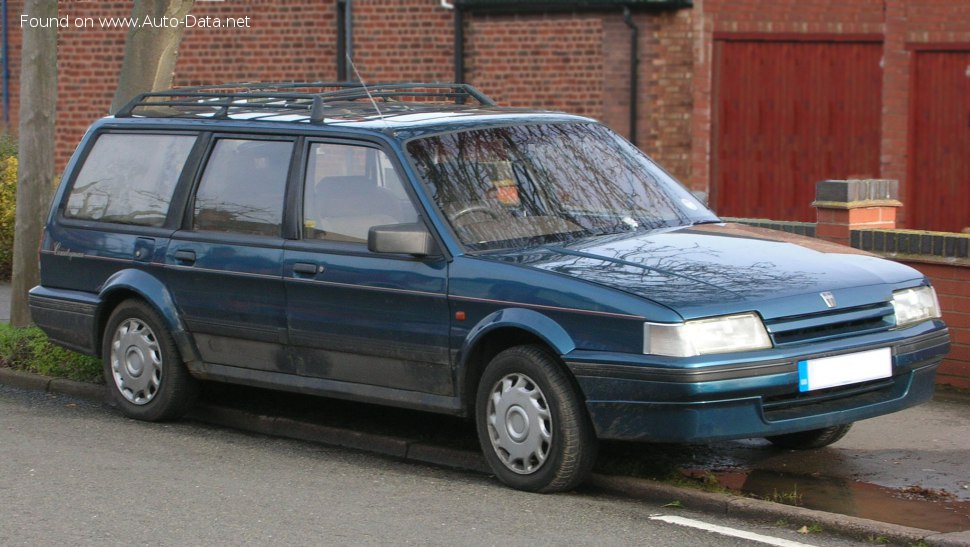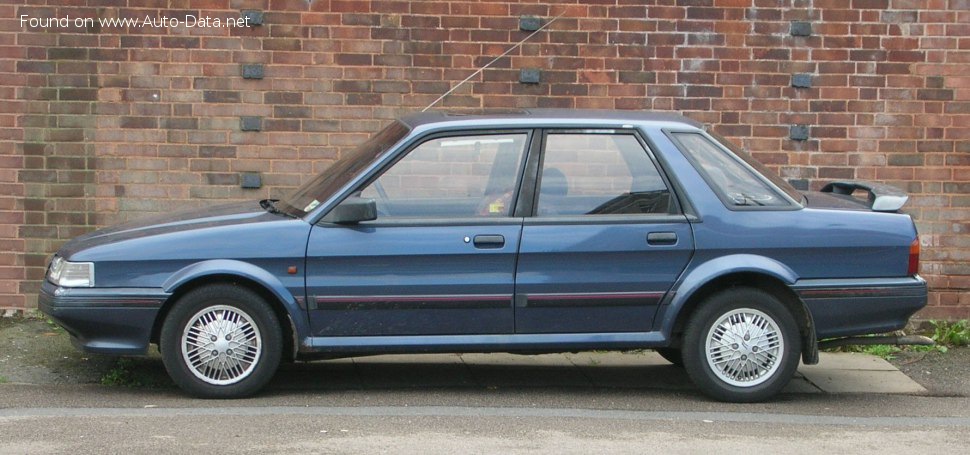
The Rover Montego 2.0 GTi, produced between 1988 and 1991, represents a final attempt by British Leyland (later Rover Group) to compete in the mid-size family car segment. Positioned as a more sporting variant of the Montego range, the 2.0 GTi aimed to offer a blend of practicality, comfort, and performance, though it arrived relatively late in the model’s lifecycle and faced stiff competition from established rivals, particularly Japanese imports. The Montego itself was intended as a replacement for the aging Rover SD1, offering a more modern, albeit somewhat controversial, design and a focus on cost-effectiveness. While not a commercial success in the same vein as some of its competitors, the Montego, and specifically the GTi model, holds a place in automotive history as a product of a turbulent period for the British automotive industry.
Rover Montego 2.0 GTi: A Detailed Overview
The Rover Montego was launched in 1984 as a direct replacement for the Rover SD1. British Leyland, facing financial difficulties and quality control issues, sought to create a more affordable and reliable vehicle. The Montego shared its platform with the Austin Ambassador, a similar vehicle marketed under the Austin brand. The design, penned by David Bache, was distinctly 1980s, characterized by sharp lines and a somewhat boxy silhouette. The 2.0 GTi, introduced in 1988, was a late addition to the range, intended to inject some excitement and appeal to buyers seeking a more dynamic driving experience. It featured a higher-output version of the O-Series engine, along with subtle styling enhancements to differentiate it from the standard models. The Montego was never officially sold in the United States, as it did not meet US safety and emissions standards, and Rover’s presence in the American market was limited during this period.
Origins and Market Context
The Montego was primarily aimed at the European market, specifically the United Kingdom and other European countries where British Leyland had a presence. It competed with vehicles such as the Ford Sierra, Vauxhall Cavalier (Opel Ascona), and increasingly, Japanese imports like the Toyota Camry and Nissan Bluebird. The British car market in the 1980s was undergoing significant change, with increasing competition from foreign manufacturers offering superior build quality and reliability. The Montego, while offering a spacious interior and comfortable ride, struggled to overcome the negative perceptions associated with British Leyland’s past quality issues. The GTi variant was a response to this, attempting to reposition the Montego as a more desirable and engaging vehicle.
Engine & Performance
The heart of the Rover Montego 2.0 GTi is its 2.0-liter, naturally aspirated, inline-four cylinder engine. This engine, part of the Rover O-Series family, was a robust and relatively simple design. In GTi specification, it produced 117 horsepower. While this output may seem modest by modern standards, it was considered respectable for a family car of the late 1980s. The engine featured a single overhead camshaft and a two-barrel carburetor. Power was delivered to the rear wheels via a five-speed manual gearbox, although an automatic transmission was also available as an option.
Performance figures for the Montego 2.0 GTi were adequate, with a 0-60 mph time of around 9.5 seconds and a top speed of approximately 115 mph. The GTi’s suspension was slightly firmer than that of the standard Montego models, providing improved handling and body control. However, the car’s rear-wheel-drive layout and relatively soft suspension settings meant that it was not a particularly sporty vehicle to drive. The focus was more on providing a comfortable and refined driving experience, with a reasonable level of performance for everyday use. Fuel economy was typical for the era, averaging around 25-30 miles per gallon.
Design & Features
The Rover Montego 2.0 GTi is a four-door sedan with a traditional three-box design. The exterior styling is characterized by its sharp lines, rectangular headlights, and relatively simple overall shape. The GTi model featured subtle styling enhancements, including a front spoiler, rear window louvers, and a more prominent grille. These additions were intended to give the car a more sporty appearance. The interior of the Montego was spacious and comfortable, with seating for five adults. The dashboard layout was functional but somewhat dated, even for the late 1980s.
Standard features on the Montego 2.0 GTi included power steering, central locking, and electric windows. Higher-specification models could be equipped with options such as a sunroof, alloy wheels, and a stereo system. Safety features were relatively basic by modern standards, consisting primarily of seatbelts and a collapsible steering column. The Montego’s design prioritized practicality and comfort over cutting-edge technology. The car offered a generous amount of luggage space, making it suitable for family use. The build quality, while improved compared to earlier British Leyland products, was still not on par with that of its Japanese rivals. The Montego’s interior trim materials were generally durable but lacked the refinement of some of its competitors.
Technical Specifications
| Brand | Rover |
| Model | Montego |
| Generation | Montego |
| Type (Engine) | 2.0 GTi (117 Hp) |
| Start of production | 1988 |
| End of production | 1991 |
| Powertrain Architecture | Internal Combustion engine |
| Body type | Sedan |
| Fuel Type | Petrol (Gasoline) |
| Engine specs Power | 117 Hp |
| Engine aspiration | Naturally aspirated engine |