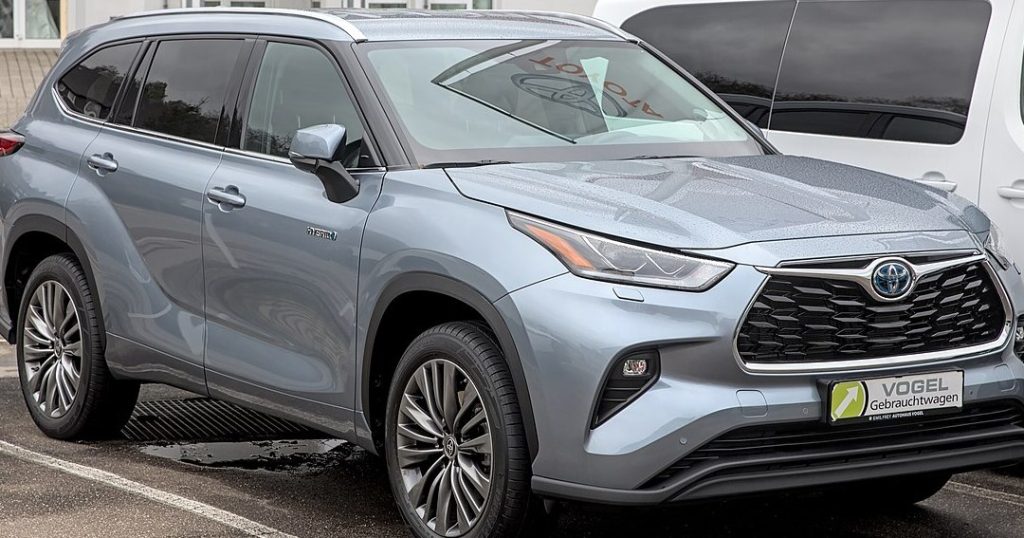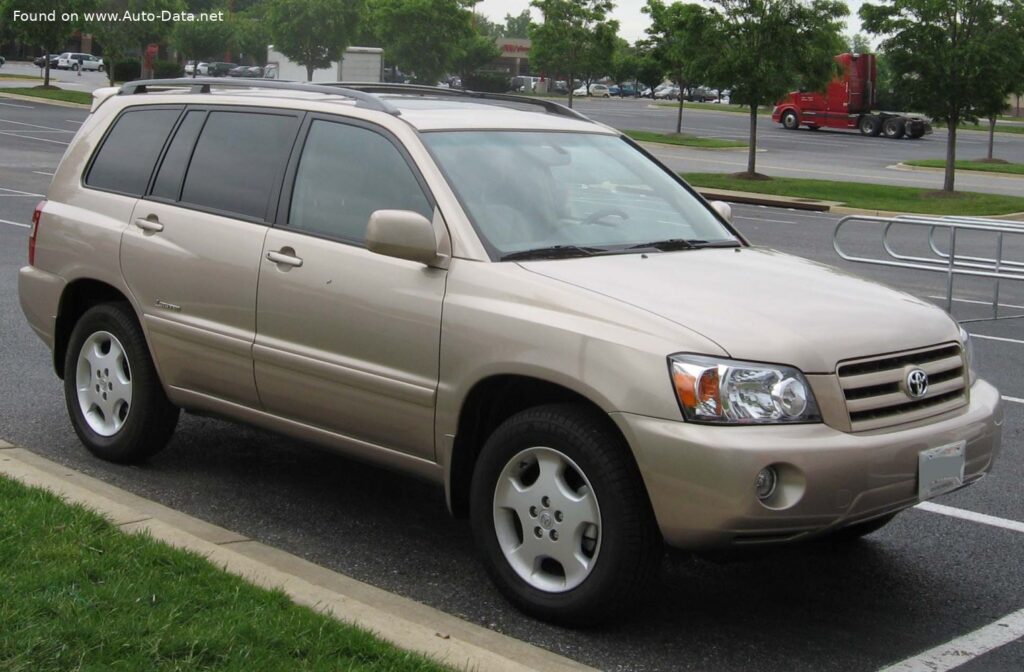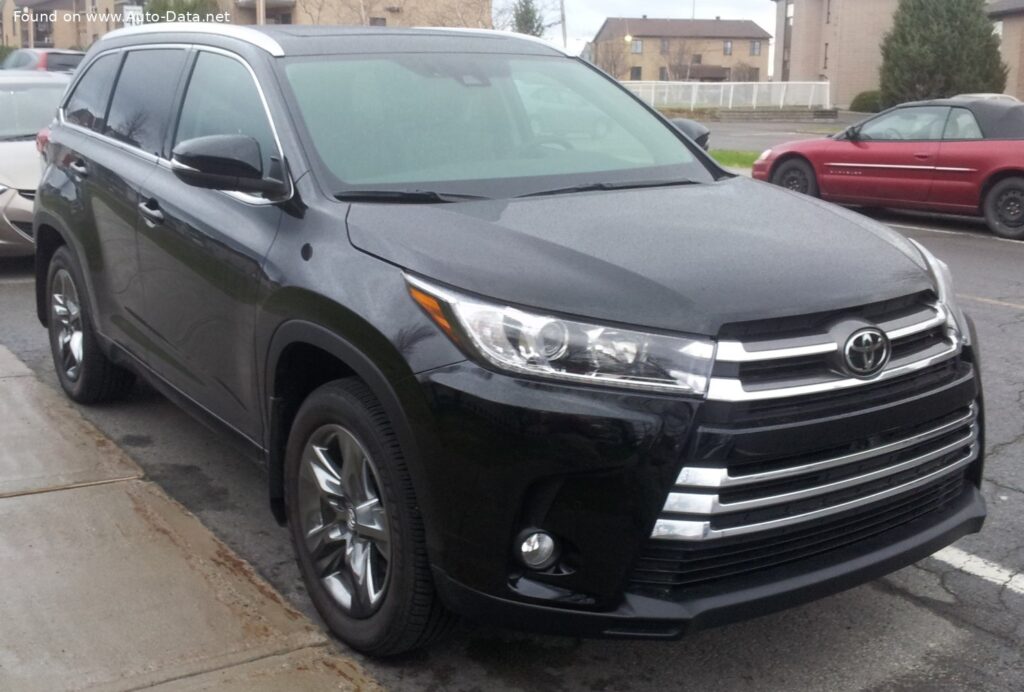
The Toyota Highlander is a mid-size crossover SUV produced by Toyota since 2000. Positioned above the RAV4 but below the Sequoia in Toyota’s North American lineup, the Highlander has become a popular choice for families seeking a comfortable, reliable, and spacious vehicle. The third generation, launched in 2013 and receiving a significant facelift in 2016, continued this trend, offering improved styling, technology, and efficiency. This article details the 2016-2019 facelifted Highlander, specifically the model equipped with the 3.5-liter V6 engine and automatic transmission, a configuration widely available in the North American market.
Toyota Highlander III (Facelift 2016) 3.5 V6: An Overview
The facelifted Highlander III, produced from 2016 to 2019, represented a mid-cycle refresh for the third-generation model. The updates focused on enhancing the vehicle’s exterior styling, interior refinement, and safety features. While the core mechanical components remained largely unchanged from the 2014-2015 models, the revised front fascia, rear styling, and upgraded interior materials contributed to a more modern and appealing vehicle. The 3.5-liter V6 engine remained the top-tier powertrain option, providing ample power for both daily commuting and longer journeys. The Highlander’s eight-passenger seating capacity and versatile cargo area further solidified its position as a practical and family-oriented SUV.
Engine & Performance
The heart of the 2016-2019 Toyota Highlander 3.5 V6 is the 2GR-FKS engine, a 3.5-liter naturally aspirated V6. This engine produces 296 horsepower at 6,600 rpm and 358 Nm (264.05 lb.-ft.) of torque at 4,700 rpm. The engine features a double overhead camshaft (DOHC) valvetrain with Toyota’s Variable Valve Timing-intelligent (D-VVT-i) system, optimizing performance and fuel efficiency across a wide range of driving conditions. Power is delivered to the front wheels via an eight-speed automatic transmission. This combination provides smooth and responsive acceleration, with a weight-to-power ratio of 6.7 kg/Hp. Fuel economy is rated at 10.2 l/100 km (23.1 US mpg) combined, with 11.8 l/100 km (19.9 US mpg) in urban settings and 8.7 l/100 km (27 US mpg) on the highway. The engine’s displacement is 3456 cm3 (210.9 cu. in.), with a bore of 94 mm (3.7 in.) and a stroke of 83 mm (3.27 in.).
Design & Features
The 2016 facelift brought a more aggressive and refined exterior design to the Highlander. The front fascia was updated with a bolder grille, redesigned headlights, and a more sculpted bumper. The rear end received new taillights and a revised liftgate. The Highlander maintains a traditional SUV body style with five doors and seating for up to eight passengers. Inside, the cabin features a focus on comfort and practicality. Standard features include a touchscreen infotainment system, Bluetooth connectivity, and a rearview camera. Higher trim levels offer upgrades such as leather upholstery, a premium sound system, and advanced safety technologies. Safety features are a key aspect of the Highlander, with standard equipment including Anti-lock Braking System (ABS) and a comprehensive airbag system. The vehicle’s dimensions are 4890 mm (192.52 in.) in length, 1925 mm (75.79 in.) in width, and 1770 mm (69.69 in.) in height, with a wheelbase of 2790 mm (109.84 in.). Trunk space ranges from 269 liters (9.5 cu. ft.) with all seats in use to 813 liters (28.71 cu. ft.) with the third-row seats folded down.
Technical Specifications
| Brand | Toyota |
| Model | Highlander |
| Generation | Highlander III (facelift 2016) |
| Type (Engine) | 3.5 V6 (296 Hp) Automatic |
| Start of production | 2016 |
| End of production | 2019 |
| Powertrain Architecture | Internal Combustion engine |
| Body type | SUV |
| Seats | 8 |
| Doors | 5 |
| Fuel consumption (urban) | 11.8 l/100 km (19.9 US mpg) |
| Fuel consumption (extra urban) | 8.7 l/100 km (27 US mpg) |
| Fuel consumption (combined) | 10.2 l/100 km (23.1 US mpg) |
| Fuel Type | Petrol (Gasoline) |
| Emission standard | Euro 5 |
| Weight-to-power ratio | 6.7 kg/Hp |
| Weight-to-torque ratio | 5.5 kg/Nm |
| Power | 296 Hp @ 6600 rpm |
| Torque | 358 Nm @ 4700 rpm (264.05 lb.-ft. @ 4700 rpm) |
| Engine layout | Front, Transverse |
| Engine Model/Code | 2GR-FKS |
| Engine displacement | 3456 cm3 (210.9 cu. in.) |
| Number of cylinders | 6 |
| Engine configuration | V-engine |
| Cylinder Bore | 94 mm (3.7 in.) |
| Piston Stroke | 83 mm (3.27 in.) |
| Compression ratio | 10.8:1 |
| Number of valves per cylinder | 4 |
| Fuel injection system | Multi-port manifold injection |
| Engine aspiration | Naturally aspirated engine |
| Valvetrain | DOHC, D-VVT-i |
| Engine oil capacity | 5.5 l (5.81 US qt | 4.84 UK qt) |
| Coolant capacity | 11.6 l (12.26 US qt | 10.21 UK qt) |
| Kerb Weight | 1984 kg (4373.97 lbs.) |
| Max. weight | 2651 kg (5844.45 lbs.) |
| Max load | 667 kg (1470.48 lbs.) |
| Trunk (boot) space – minimum | 269 l (9.5 cu. ft.) |
| Trunk (boot) space – maximum | 813 l (28.71 cu. ft.) |
| Fuel tank capacity | 72 l (19.02 US gal | 15.84 UK gal) |
| Length | 4890 mm (192.52 in.) |
| Width | 1925 mm (75.79 in.) |
| Height | 1770 mm (69.69 in.) |
| Wheelbase | 2790 mm (109.84 in.) |
| Front track | 1635 mm (64.37 in.) |
| Rear track | 1650 mm (64.96 in.) |
| Ride height (ground clearance) | 200 mm (7.87 in.) |
| Drag coefficient (Cd) | 0.33 |
| Approach angle | 18.0° |
| Departure angle | 23.1° |
| Drive wheel | Front wheel drive |
| Number of gears | 8 |
| Gearbox type | Automatic transmission |
| Front suspension | Independent, type McPherson with coil spring and anti-roll bar |
| Rear suspension | Independent coil spring |
| Front brakes | Ventilated discs |
| Rear brakes | Disc |
| Steering type | Steering rack and pinion |
| Power steering | Electric Steering |
| Tires size | 245/60 R18; 245/55 R19 |
| Wheel rims size | 18; 19 |
The 2016-2019 Toyota Highlander 3.5 V6 remains a competitive option in the mid-size SUV segment, offering a blend of practicality, reliability, and performance. Its spacious interior, comfortable ride, and available features make it a compelling choice for families and individuals alike.