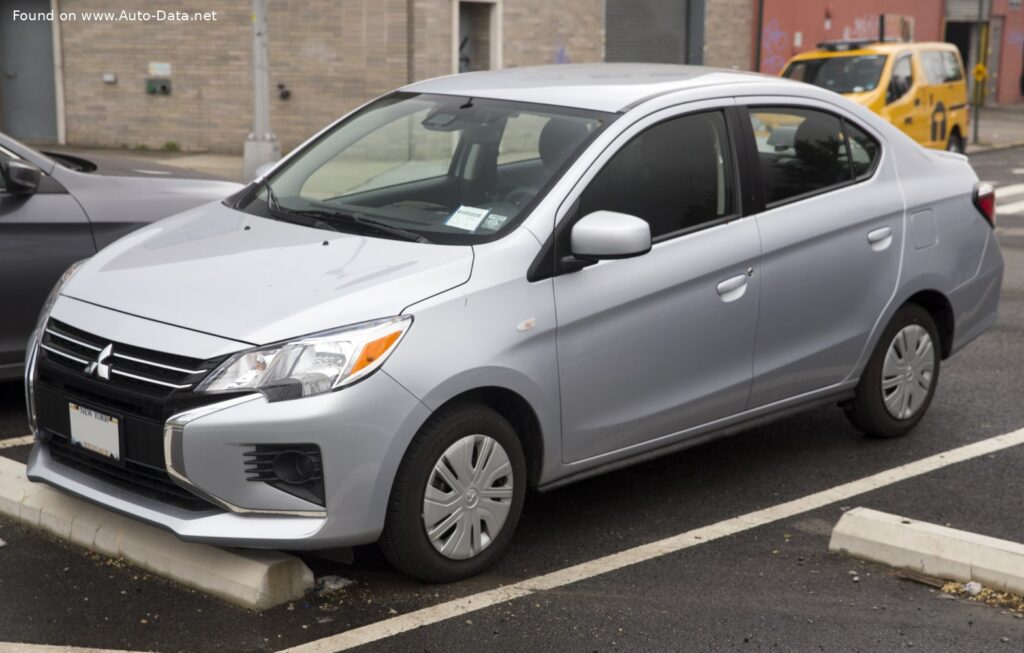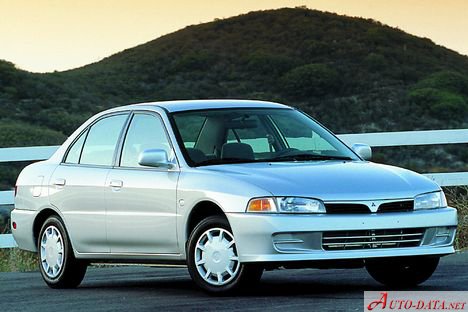
The Mitsubishi Mirage V (CJO), produced between 1995 and 2002, represents a significant evolution in Mitsubishi’s compact car offerings. This generation, largely unseen in the North American market, was primarily aimed at European and Asian consumers seeking an affordable and reliable sedan. The “V” designation signified a value-oriented approach, offering a practical and efficient vehicle within the competitive B-segment. While Mitsubishi was establishing a foothold in the US with models like the Eclipse and Galant, the Mirage V catered to different market demands, emphasizing fuel economy and compact dimensions.
Mitsubishi Mirage V (CJO): A Detailed Overview
The Mirage V (CJO) occupied a crucial space in Mitsubishi’s global lineup during the late 1990s and early 2000s. It was designed to provide a comfortable and economical transportation solution for families and individuals. Unlike its predecessors, the Mirage V featured a more modern design and a more powerful engine option, the 1.6-liter 16-valve unit, which produced 175 horsepower. This engine allowed for a surprisingly spirited driving experience for a car in its class. The CJO model was a key part of Mitsubishi’s strategy to offer a diverse range of vehicles to meet varying consumer needs across different regions.
Engine & Performance
The heart of the Mirage V (CJO) 1.6 i 16V is a 1.6-liter inline four-cylinder engine. This naturally aspirated powerplant delivers 175 horsepower at 7500 rpm and 167 Nm (123.17 lb.-ft.) of torque at 7000 rpm. This translates to a power-to-weight ratio of 5.5 kg/Hp and 180.4 Hp/tonne, providing reasonably brisk acceleration. The engine utilizes a multi-port fuel injection system and a double overhead camshaft (DOHC) valvetrain, contributing to its efficient operation and respectable power output. The engine’s 97.45 cubic inch displacement and 109.6 horsepower per liter demonstrate a focus on maximizing performance within a compact package. Power is delivered to the front wheels via a five-speed manual transmission, offering drivers a direct and engaging driving experience. The front-engine, transverse layout is typical for vehicles in this segment, optimizing space utilization and handling characteristics.
Design & Features
The Mitsubishi Mirage V (CJO) is a four-door sedan designed to comfortably accommodate five passengers. Its dimensions – 4290 mm (168.9 in.) in length, 1690 mm (66.54 in.) in width, and 1395 mm (54.92 in.) in height – place it squarely within the compact sedan category. The wheelbase of 2500 mm (98.43 in.) contributes to a stable ride, while the front and rear tracks of 1450 mm (57.09 in.) and 1460 mm (57.48 in.) respectively, enhance handling. The vehicle’s kerb weight of 970 kg (2138.48 lbs.) is relatively light, further contributing to its agility.
Safety features for the time included an Anti-lock Braking System (ABS), which was becoming increasingly common on vehicles in this class. The braking system consists of ventilated discs at the front and drum brakes at the rear. Steering is handled by a hydraulic power steering rack and pinion system, providing responsive and precise control. The Mirage V rode on 195/55 R15V tires, offering a balance of grip and ride comfort. While not boasting the advanced infotainment systems of modern vehicles, the Mirage V offered a practical and functional interior, focused on providing a comfortable and reliable driving experience. The 50-liter (13.21 US gal) fuel tank provided a reasonable driving range, reflecting the vehicle’s emphasis on efficiency.
Technical Specifications
| Brand | Mitsubishi |
| Model | Mirage |
| Generation | Mirage V (CJO) |
| Type (Engine) | 1.6 i 16V (175 Hp) |
| Start of production | 1995 |
| End of production | 2002 |
| Powertrain Architecture | Internal Combustion engine |
| Body type | Sedan |
| Seats | 5 |
| Doors | 4 |
| Fuel Type | Petrol (Gasoline) |
| Weight-to-power ratio | 5.5 kg/Hp |
| Weight-to-torque ratio | 5.8 kg/Nm |
| Power | 175 Hp @ 7500 rpm |
| Power per litre | 109.6 Hp/l |
| Torque | 167 Nm @ 7000 rpm / 123.17 lb.-ft. @ 7000 rpm |
| Engine layout | Front, Transverse |
| Engine displacement | 1597 cm3 / 97.45 cu. in. |
| Number of cylinders | 4 |
| Engine configuration | Inline |
| Number of valves per cylinder | 4 |
| Fuel injection system | Multi-port manifold injection |
| Engine aspiration | Naturally aspirated engine |
| Valvetrain | DOHC |
| Kerb Weight | 970 kg / 2138.48 lbs |
| Fuel tank capacity | 50 l / 13.21 US gal | 11 UK gal |
| Length | 4290 mm / 168.9 in |
| Width | 1690 mm / 66.54 in |
| Height | 1395 mm / 54.92 in |
| Wheelbase | 2500 mm / 98.43 in |
| Front track | 1450 mm / 57.09 in |
| Rear track | 1460 mm / 57.48 in |
| Drivetrain Architecture | ICE drives front wheels |
| Drive wheel | Front wheel drive |
| Number of gears and type of gearbox | 5 gears, manual transmission |
| Front suspension | Coil spring |
| Rear suspension | Coil spring |
| Front brakes | Ventilated discs |
| Rear brakes | Drum |
| Assisting systems | ABS |
| Steering type | Steering rack and pinion |
| Power steering | Hydraulic Steering |
| Tires size | 195/55 R15V |
In conclusion, the Mitsubishi Mirage V (CJO) 1.6 i 16V was a well-rounded compact sedan that offered a compelling combination of performance, efficiency, and practicality. While it may not have achieved widespread recognition in the North American market, it played a significant role in Mitsubishi’s global success during the late 1990s and early 2000s, providing a valuable transportation option for consumers in Europe and Asia.