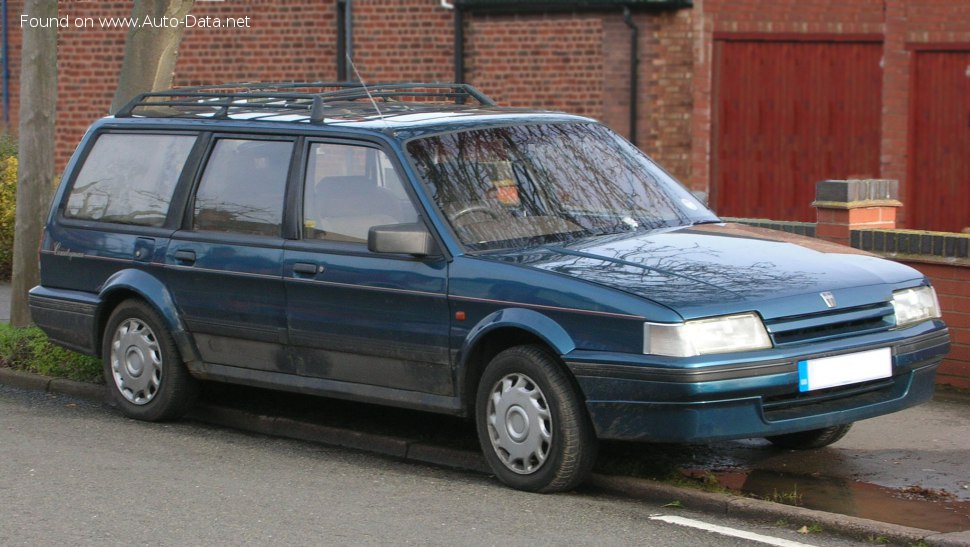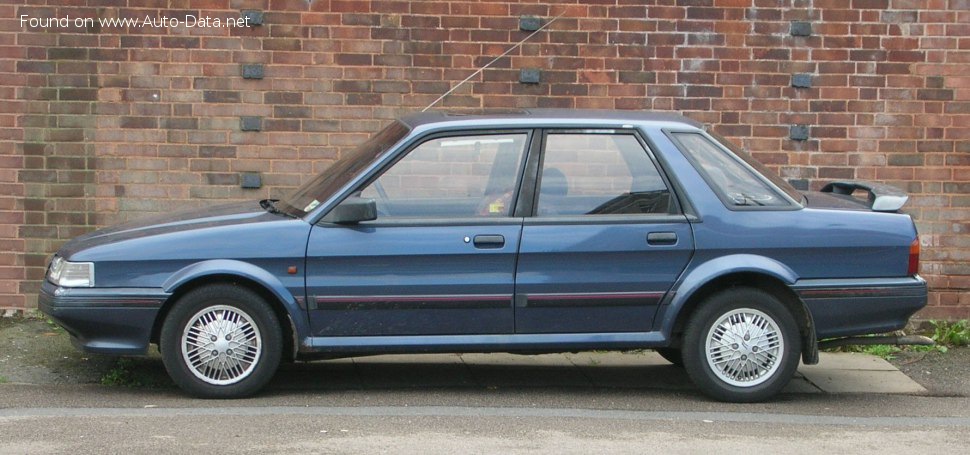
The Rover Montego was a mid-size family car produced by British Leyland (later Rover Group) between 1984 and 1992. Positioned above the Rover SD1 and intended to replace the aging Triumph 2.5 PI, the Montego represented a significant attempt to modernize Rover’s offerings in a competitive market. While not a commercial success in the same vein as some of its contemporaries, the Montego offered a blend of practicality, comfort, and – in the 2.0 TD variant – reasonable fuel economy. This article focuses on the 2.0 TD model, a diesel-powered version primarily sold in Europe, and details its technical specifications and place within the Rover lineup.
Rover Montego 2.0 TD: An Overview
The Montego was conceived as part of a larger plan to revitalize Rover’s image and product range. Launched in 1984, it was based on the existing Honda Accord platform, a result of the partnership between British Leyland and Honda. However, the Montego featured significant styling differences and was tailored to the preferences of the European market. The 2.0 TD model, introduced in 1985, offered a diesel engine option, appealing to buyers prioritizing fuel efficiency. It was a relatively uncommon variant, particularly in comparison to the petrol-powered versions, but it served a niche market seeking economical transportation.
Engine & Performance
The Rover Montego 2.0 TD was powered by the Perkins Prima 80T, a 1,994 cc (121.68 cu. in.) inline-four cylinder diesel engine. This engine produced 81 horsepower (Hp) at 4,500 rpm and 158 Nm (116.53 lb.-ft.) of torque at 2,500 rpm. While not a performance-oriented engine, the Prima 80T provided adequate power for everyday driving. The engine featured precombustion chamber injection and was turbocharged, enhancing its efficiency and torque output. The Montego 2.0 TD achieved a combined fuel consumption of 5.5 l/100 km (42.8 US mpg / 51.4 UK mpg / 18.2 km/l), making it a relatively economical vehicle for its time. Acceleration from 0 to 100 km/h (0-62 mph) took 12.7 seconds, and it had a top speed of 163 km/h (101.28 mph). The engine’s power-to-weight ratio was 14 kg/Hp, and its torque-to-weight ratio was 7.2 kg/Nm.
Design & Features
The Rover Montego was a four-door sedan with a relatively conservative design. It featured a boxy silhouette typical of 1980s automotive styling. The interior was designed with practicality in mind, offering seating for five passengers. The 2.0 TD model typically included features such as hydraulic power steering, disc brakes on the front wheels, and drum brakes on the rear. The inclusion of an Anti-lock Braking System (ABS) was a notable safety feature for the era, though not standard on all models. The trunk (boot) offered a minimum capacity of 520 liters (18.36 cu. ft.), providing ample space for luggage. The Montego’s suspension utilized coil springs on both the front and rear axles, providing a comfortable ride. The vehicle’s dimensions were: length 4,470 mm (175.98 in), width 1,710 mm (67.32 in), and height 1,420 mm (55.91 in). The wheelbase measured 2,570 mm (101.18 in).
Technical Specifications
| Brand | Rover |
| Model | Montego |
| Generation | Montego |
| Type (Engine) | 2.0 TD (81 Hp) |
| Start of production | 1985 |
| End of production | 1992 |
| Powertrain Architecture | Internal Combustion engine |
| Body type | Sedan |
| Seats | 5 |
| Doors | 4 |
| Fuel consumption (urban) | 5.8 l/100 km (40.6 US mpg / 48.7 UK mpg / 17.2 km/l) |
| Fuel consumption (extra urban) | 3.8 l/100 km (61.9 US mpg / 74.3 UK mpg / 26.3 km/l) |
| Fuel consumption (combined) | 5.5 l/100 km (42.8 US mpg / 51.4 UK mpg / 18.2 km/l) |
| Fuel Type | Diesel |
| Acceleration 0 – 100 km/h | 12.7 sec |
| Acceleration 0 – 62 mph | 12.7 sec |
| Acceleration 0 – 60 mph | 12.1 sec |
| Maximum speed | 163 km/h (101.28 mph) |
| Weight-to-power ratio | 14 kg/Hp |
| Weight-to-torque ratio | 7.2 kg/Nm |
| Power | 81 Hp @ 4500 rpm |
| Power per litre | 40.6 Hp/l |
| Torque | 158 Nm @ 2500 rpm (116.53 lb.-ft. @ 2500 rpm) |
| Engine layout | Front, Transverse |
| Engine Model/Code | Perkins Prima 80T |
| Engine displacement | 1994 cm3 (121.68 cu. in.) |
| Number of cylinders | 4 |
| Engine configuration | Inline |
| Cylinder Bore | 84.46 mm (3.33 in.) |
| Piston Stroke | 89 mm (3.5 in.) |
| Compression ratio | 18:1 |
| Number of valves per cylinder | 2 |
| Fuel injection system | Precombustion chamber injection |
| Engine aspiration | Turbocharger |
| Engine oil capacity | 5.1 l (5.39 US qt | 4.49 UK qt) |
| Kerb Weight | 1135 kg (2502.25 lbs.) |
| Max. weight | 1560 kg (3439.21 lbs.) |
| Max load | 425 kg (936.96 lbs.) |
| Trunk (boot) space – minimum | 520 l (18.36 cu. ft.) |
| Fuel tank capacity | 50 l (13.21 US gal | 11 UK gal) |
| Length | 4470 mm (175.98 in.) |
| Width | 1710 mm (67.32 in.) |
| Height | 1420 mm (55.91 in.) |
| Wheelbase | 2570 mm (101.18 in.) |
| Front track | 1465 mm (57.68 in.) |
| Rear (Back) track | 1440 mm (56.69 in.) |
| Drivetrain Architecture | The Internal combustion engine (ICE) drives the front wheels of the vehicle. |
| Drive wheel | Front wheel drive |
| Number of gears and type of gearbox | 5 gears, manual transmission |
| Front suspension | Coil spring |
| Rear suspension | Coil spring |
| Front brakes | Disc |
| Rear brakes | Drum |
| Assisting systems | ABS (Anti-lock braking system) |
| Steering type | Steering rack and pinion |
| Power steering | Hydraulic Steering |
| Tires size | 185/65 SR14 |
Despite its shortcomings in terms of outright performance and market appeal, the Rover Montego 2.0 TD represented a practical and economical option for buyers in the late 1980s and early 1990s. It remains a relatively rare example of British automotive engineering from this period, and a testament to Rover’s attempts to compete in a rapidly changing automotive landscape.