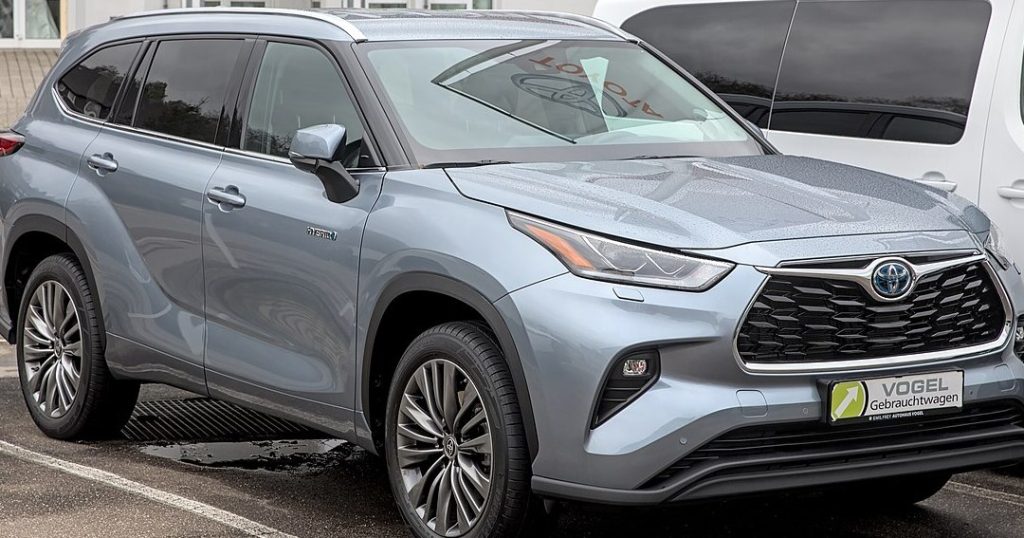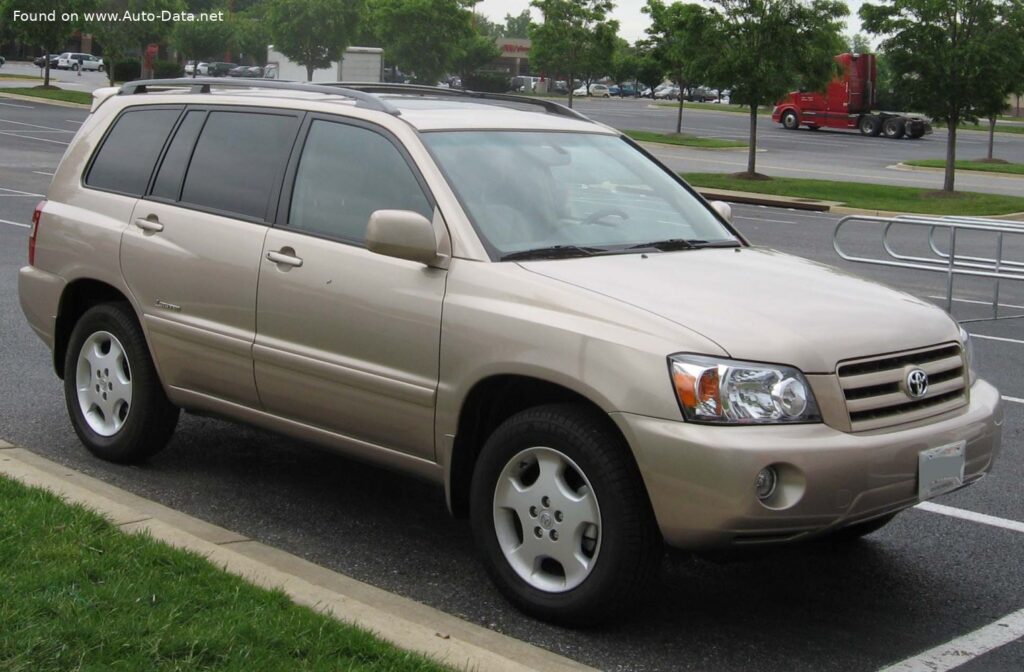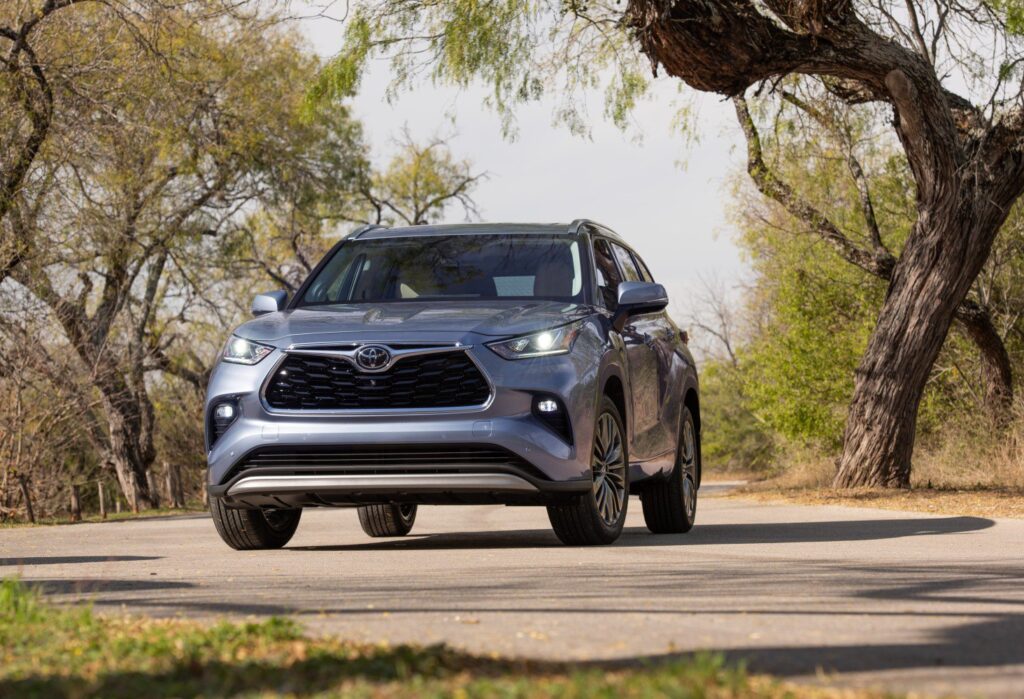
The Toyota Highlander IV 2.5 Hybrid AWD e-CVT, introduced in 2020, represents the fourth generation of Toyota’s popular mid-size SUV. Positioned as a family-focused vehicle, the Highlander IV offers seating for seven to eight passengers and combines a gasoline engine with an electric motor for improved fuel efficiency. This generation marked a significant step forward in technology and refinement for the Highlander, appealing to buyers seeking a practical and environmentally conscious SUV. While primarily sold in North America, the Highlander, and this generation specifically, also sees strong sales in markets like Canada and parts of Asia, competing with vehicles like the Honda Pilot, Ford Explorer, and Hyundai Palisade.
Toyota Highlander IV: A Detailed Overview
The fourth-generation Highlander (designated as the XU80 series) underwent a complete redesign, moving to the Toyota New Global Architecture (TNGA-K) platform. This new platform provides a more rigid body structure, improved handling characteristics, and enhanced interior space. The 2.5-liter Hybrid AWD e-CVT model is a key variant, emphasizing fuel economy and all-weather capability through its hybrid powertrain and all-wheel-drive system. The e-CVT (electronically controlled continuously variable transmission) is central to the hybrid system’s efficiency, providing seamless power delivery.
Engine & Performance
The Highlander IV 2.5 Hybrid utilizes a 2.5-liter inline-four cylinder gasoline engine (A25A-FXS) paired with a hybrid system. The gasoline engine produces 186 horsepower at 6000 rpm and 174.8 lb-ft of torque at 4400 rpm. However, the combined system output, incorporating the electric motors, reaches a total of 243 horsepower. The powertrain architecture is a Full Hybrid Electric Vehicle (FHEV), meaning it can operate on electric power alone for short distances and at lower speeds. A key component is the integration of two electric motors: one positioned to assist the front wheels, delivering 182 horsepower and 270 Nm (199.14 lb-ft) of torque, and a second, smaller motor driving the rear axle with 54 horsepower and 121 Nm (89.25 lb-ft) of torque. This dual-motor setup enables true all-wheel drive capability and enhances fuel efficiency. The weight-to-power ratio is 8.3 kg/Hp, translating to 120 Hp/tonne, while the weight-to-torque ratio is 8.5 kg/Nm, or 117 Nm/tonne. Fuel economy is rated at 6.7 l/100 km combined (35.1 US mpg, 42.2 UK mpg, 14.9 km/l).
Design & Features
The Highlander IV features a modern and sophisticated exterior design, characterized by bold lines and a prominent grille. The body style is a classic SUV, offering five doors and seating for seven or eight passengers depending on the configuration. Inside, the Highlander prioritizes comfort and practicality. Standard features include a touchscreen infotainment system, Apple CarPlay and Android Auto compatibility, and a suite of Toyota Safety Sense (TSS) 2.5+ safety technologies. These technologies include pre-collision system with pedestrian detection, lane departure alert with steering assist, full-speed range dynamic radar cruise control, and automatic high beams. The interior also boasts ample cargo space, with a minimum of 453 liters (16 cu. ft.) behind the third row and a maximum of 2387 liters (84.3 cu. ft.) with all rear seats folded down. The battery, utilizing Nickel-metal hydride (NiMH) technology and a voltage of 288V, is strategically located under the rear seats to minimize intrusion into passenger or cargo space.
Technical Specifications
| Brand | Toyota |
| Model | Highlander |
| Generation | Highlander IV |
| Type (Engine) | 2.5 (243 Hp) Hybrid AWD e-CVT |
| Start of production | 2020 |
| Powertrain Architecture | FHEV (Full Hybrid Electric Vehicle) |
| Body type | SUV |
| Seats | 7-8 |
| Doors | 5 |
| Fuel consumption (economy) – urban | 6.7 l/100 km (35.1 US mpg, 42.2 UK mpg, 14.9 km/l) |
| Fuel consumption (economy) – extra urban | 6.7-6.9 l/100 km (35.1 – 34.1 US mpg, 42.2 – 40.9 UK mpg, 14.9 – 14.5 km/l) |
| Fuel consumption (economy) – combined | 6.7 l/100 km (35.1 US mpg, 42.2 UK mpg, 14.9 km/l) |
| Fuel Type | Petrol (Gasoline) |
| Weight-to-power ratio | 8.3 kg/Hp (120 Hp/tonne) |
| Weight-to-torque ratio | 8.5 kg/Nm (117 Nm/tonne) |
| Battery voltage | 288 V |
| Battery technology | Nickel-metal hydride (NiMH) |
| Battery location | Under the rear seats |
| Electric motor 1 power | 182 Hp |
| Electric motor 1 Torque | 270 Nm (199.14 lb.-ft.) |
| Electric motor 1 location | Integrated into the transmission |
| Electric motor 1 type | Synchronous |
| Electric motor 2 power | 54 Hp |
| Electric motor 2 Torque | 121 Nm (89.25 lb.-ft.) |
| Electric motor 2 location | Rear axle, Transverse |
| Electric motor 2 type | Synchronous |
| System power | 243 Hp |
| Power | 186 Hp @ 6000 rpm |
| Torque | 237 Nm @ 4400 rpm (174.8 lb.-ft. @ 4400 rpm) |
| Engine layout | Front, Transverse |
| Engine Model/Code | A25A-FXS |
| Engine displacement | 2487 cm3 (151.77 cu. in.) |
| Number of cylinders | 4 |
| Engine configuration | Inline |
| Cylinder Bore | 87.5 mm (3.44 in.) |
| Piston Stroke | 103.4 mm (4.07 in.) |
| Compression ratio | 14:1 |
| Number of valves per cylinder | 4 |
| Fuel injection system | Direct injection and Multi-port manifold injection |
| Engine aspiration | Naturally aspirated engine |
| Valvetrain | DOHC |
| Engine oil capacity | 4.5 l (4.76 US qt | 3.96 UK qt) |
| Coolant | 9.9 l (10.46 US qt | 8.71 UK qt) |
| Kerb Weight | 2025-2084 kg (4464.36 – 4594.43 lbs.) |
| Max. weight | 2722 kg (6000.98 lbs.) |
| Max load | 638-697 kg (1406.55 – 1536.62 lbs.) |
| Trunk (boot) space – minimum | 453 l (16 cu. ft.) |
| Trunk (boot) space – maximum | 2387 l (84.3 cu. ft.) |
| Fuel tank capacity | 65 l (17.17 US gal | 14.3 UK gal) |
| Permitted trailer load with brakes (12%) | 1588 kg (3500.94 lbs.) |
| Length | 4950 mm (194.88 in.) |
| Width | 1930 mm (75.98 in.) |
| Height | 1730 mm (68.11 in.) |
| Wheelbase | 2850 mm (112.2 in.) |
| Front track | 1659 mm (65.31 in.) |
| Rear (Back) track | 1661 mm (65.39 in.) |
| Ride height (ground clearance) | 203 mm (7.99 in.) |
| Minimum turning circle (turning diameter) | 11.4 m (37.4 ft.) |
| Front brakes | Ventilated discs, 338 mm |
| Rear brakes | Disc, 338 mm |
| Drive wheel | All wheel drive (4×4) |
| Number of gears and type of gearbox | automatic transmission e-CVT |
| Tires size | 235/65 R18; 235/55 R20 |