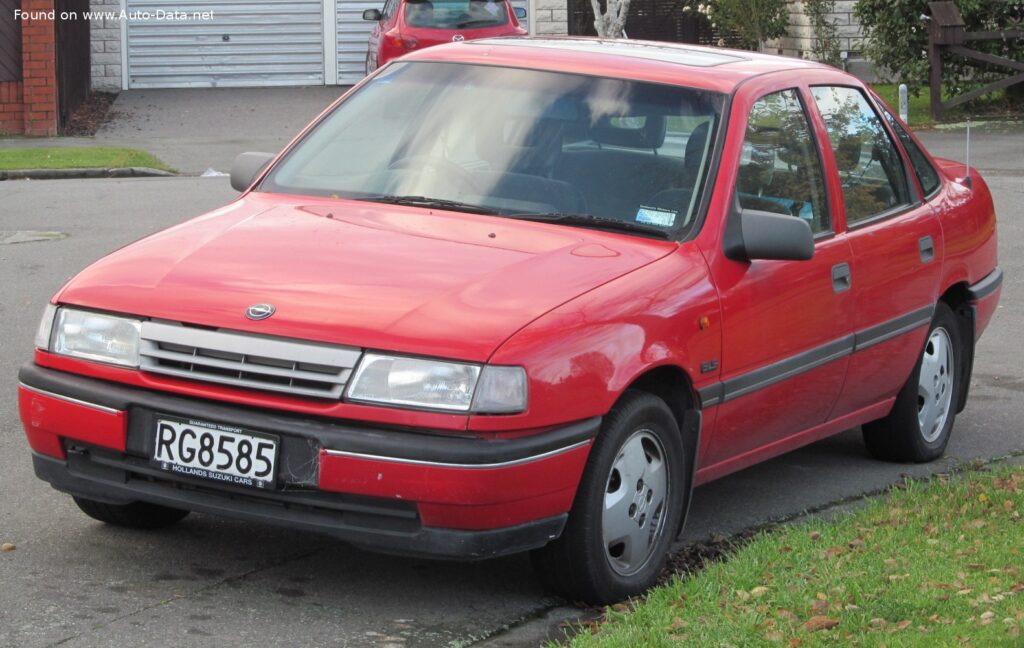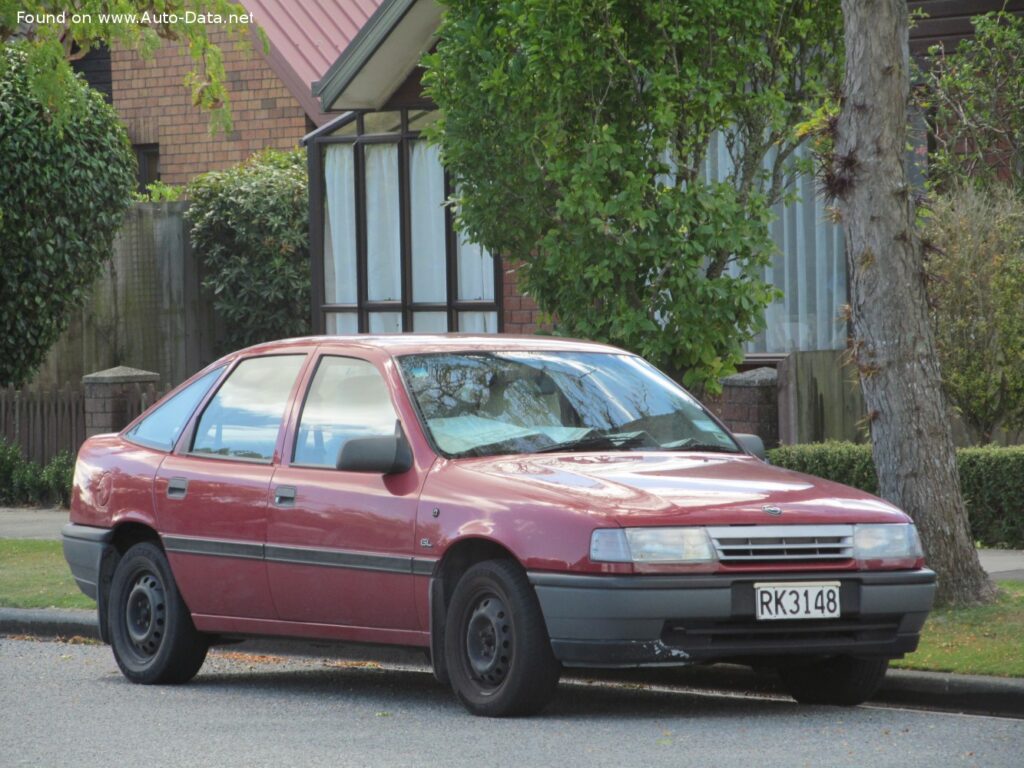
The Opel Vectra A CC 1.7 D is a compact hatchback that represented a significant step forward for Opel in the late 1980s. Produced from October 1988 to March 1989, this variant of the Vectra A series was primarily aimed at the European market, offering a fuel-efficient diesel option in a practical, five-door body style. While not officially sold in the United States, the Vectra A played a crucial role in establishing Opel as a major player in the competitive European family car segment. It bridged the gap between the aging Ascona and the more modern, globally-focused Vectra B that followed.
Opel Vectra A CC 1.7 D: A Detailed Overview
The Vectra A, launched in 1988, was Opel’s replacement for the Ascona and Manta models. The “CC” designation stands for “Caravan Coupe,” indicating a hatchback body style. The 1.7 D variant, powered by a naturally aspirated diesel engine, was designed for economy and reliability, appealing to drivers prioritizing fuel efficiency over outright performance. This model offered a practical and affordable transportation solution for families and commuters in Europe.
Engine & Performance
The heart of the Vectra A CC 1.7 D is a 1.7-liter inline-four cylinder diesel engine, designated the 17D. This engine produces 57 horsepower at 4600 rpm and 105 Nm (77.44 lb.-ft.) of torque at 2400 rpm. While its power output is modest by modern standards, the engine’s strength lies in its fuel efficiency. The Vectra 1.7 D achieves a combined fuel consumption of 6.0 liters per 100 kilometers (39.2 US mpg or 47.1 UK mpg). The engine utilizes a precombustion chamber injection system, a common diesel technology of the era, and features an overhead camshaft (OHC) valvetrain with two valves per cylinder. Acceleration from 0 to 100 km/h (0-62 mph) takes approximately 20 seconds, and the vehicle has a top speed of 152 km/h (94.45 mph). The weight-to-power ratio is 19.2 kg/Hp, and the weight-to-torque ratio is 10.4 kg/Nm.
Design & Features
The Opel Vectra A CC is a five-door hatchback, offering a practical and versatile body style. Its design was contemporary for the late 1980s, featuring a relatively aerodynamic silhouette and a spacious interior for its class. The interior comfortably seats five passengers and provides a trunk volume ranging from 460 liters (16.24 cu. ft.) with the rear seats up to 1290 liters (45.56 cu. ft.) with the rear seats folded down. Safety features for the time included disc brakes on all four wheels and, notably, an Anti-lock Braking System (ABS), which was becoming increasingly common on European vehicles. Hydraulic power steering was also standard, enhancing driving comfort and maneuverability. The vehicle rides on 14-inch wheels with 175/70 R14 tires. The overall length of the vehicle is 4352 mm (171.34 in), with a width of 1706 mm (67.17 in) and a height of 1400 mm (55.12 in).
Technical Specifications
| Brand | Opel |
| Model | Vectra |
| Generation | Vectra A CC |
| Type (Engine) | 1.7 D (57 Hp) |
| Start of production | October, 1988 |
| End of production | March, 1989 |
| Powertrain Architecture | Internal Combustion engine |
| Body type | Hatchback |
| Seats | 5 |
| Doors | 5 |
| Fuel consumption (urban) | 6.7 l/100 km (35.1 US mpg, 42.2 UK mpg, 14.9 km/l) |
| Fuel consumption (extra urban) | 4.4 l/100 km (53.5 US mpg, 64.2 UK mpg, 22.7 km/l) |
| Fuel consumption (combined) | 6 l/100 km (39.2 US mpg, 47.1 UK mpg, 16.7 km/l) |
| Fuel Type | Diesel |
| Acceleration 0 – 100 km/h | 20 sec |
| Acceleration 0 – 62 mph | 20 sec |
| Acceleration 0 – 60 mph | 19 sec |
| Maximum speed | 152 km/h (94.45 mph) |
| Weight-to-power ratio | 19.2 kg/Hp |
| Weight-to-torque ratio | 10.4 kg/Nm |
| Power | 57 Hp @ 4600 rpm |
| Power per litre | 33.5 Hp/l |
| Torque | 105 Nm @ 2400 rpm (77.44 lb.-ft. @ 2400 rpm) |
| Engine layout | Front, Transverse |
| Engine Model/Code | 17D |
| Engine displacement | 1700 cm3 (103.74 cu. in.) |
| Number of cylinders | 4 |
| Engine configuration | Inline |
| Cylinder Bore | 82.5 mm (3.25 in.) |
| Piston Stroke | 79.5 mm (3.13 in.) |
| Compression ratio | 23:1 |
| Number of valves per cylinder | 2 |
| Fuel injection system | Precombustion chamber injection |
| Engine aspiration | Naturally aspirated engine |
| Valvetrain | OHC |
| Engine oil capacity | 4.75 l (5.02 US qt | 4.18 UK qt) |
| Coolant | 9.1 l (9.62 US qt | 8.01 UK qt) |
| Kerb Weight | 1095 kg (2414.06 lbs.) |
| Max. weight | 1610 kg (3549.44 lbs.) |
| Max load | 515 kg (1135.38 lbs.) |
| Trunk (boot) space – minimum | 460 l (16.24 cu. ft.) |
| Trunk (boot) space – maximum | 1290 l (45.56 cu. ft.) |
| Fuel tank capacity | 61 l (16.11 US gal | 13.42 UK gal) |
| Length | 4352 mm (171.34 in.) |
| Width | 1706 mm (67.17 in.) |
| Height | 1400 mm (55.12 in.) |
| Wheelbase | 2600 mm (102.36 in.) |
| Front track | 1420 mm (55.91 in.) |
| Rear (Back) track | 1423 mm (56.02 in.) |
| Drivetrain Architecture | ICE, Front wheel drive |
| Drive wheel | Front wheel drive |
| Number of gears and type of gearbox | 5 gears, manual transmission |
| Front suspension | Coil spring |
| Rear suspension | Coil spring |
| Front brakes | Disc |
| Rear brakes | Disc |
| Assisting systems | ABS (Anti-lock braking system) |
| Power steering | Hydraulic Steering |
| Tires size | 175/70 R14 |
| Wheel rims size | 14 |
The Opel Vectra A CC 1.7 D, while not a performance icon, represents a significant vehicle in Opel’s history. It offered a blend of practicality, fuel efficiency, and affordability that resonated with European buyers in the late 1980s. Its introduction helped solidify Opel’s position in the competitive family car market and paved the way for the more advanced Vectra B that followed.