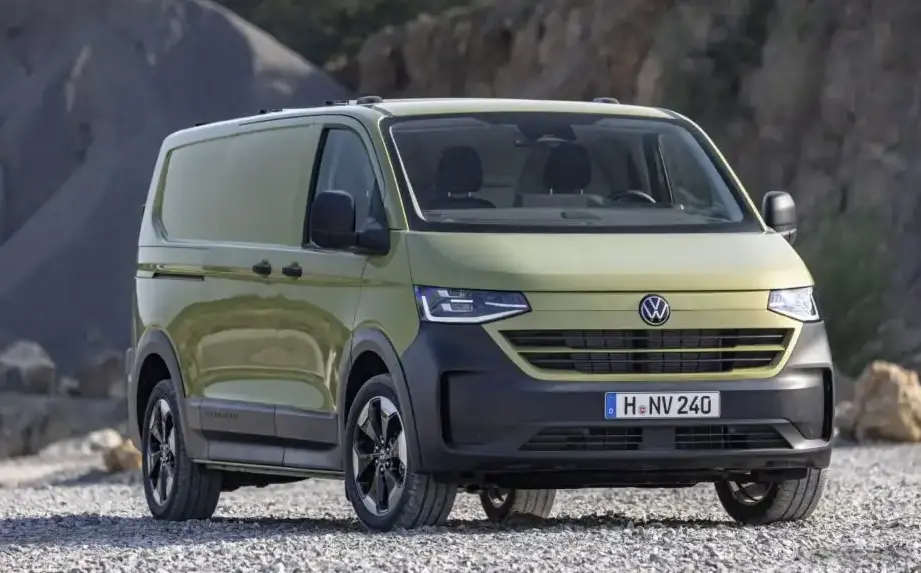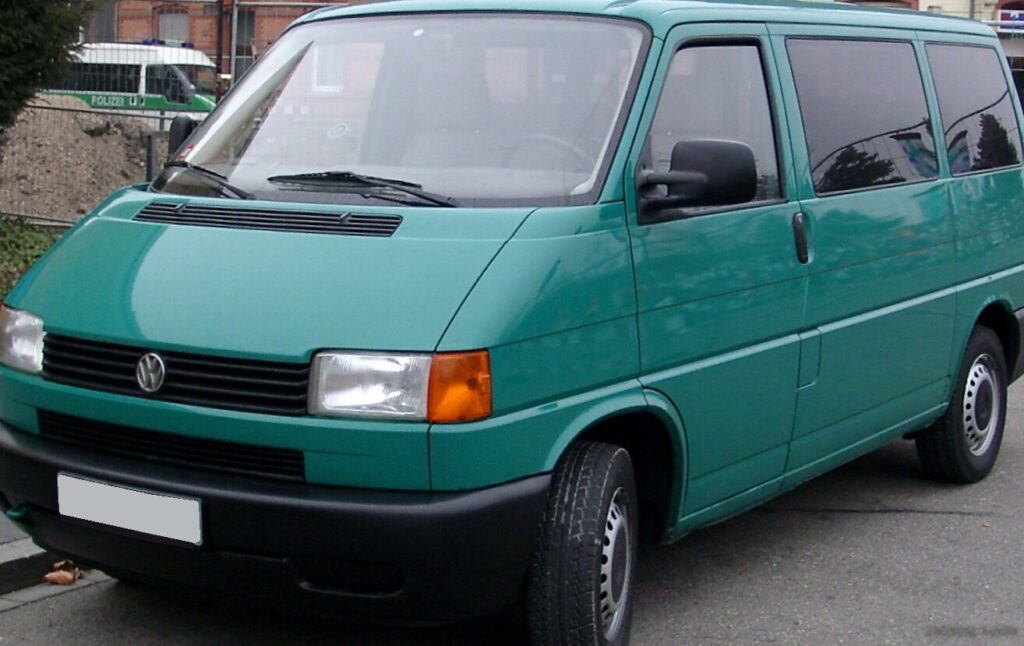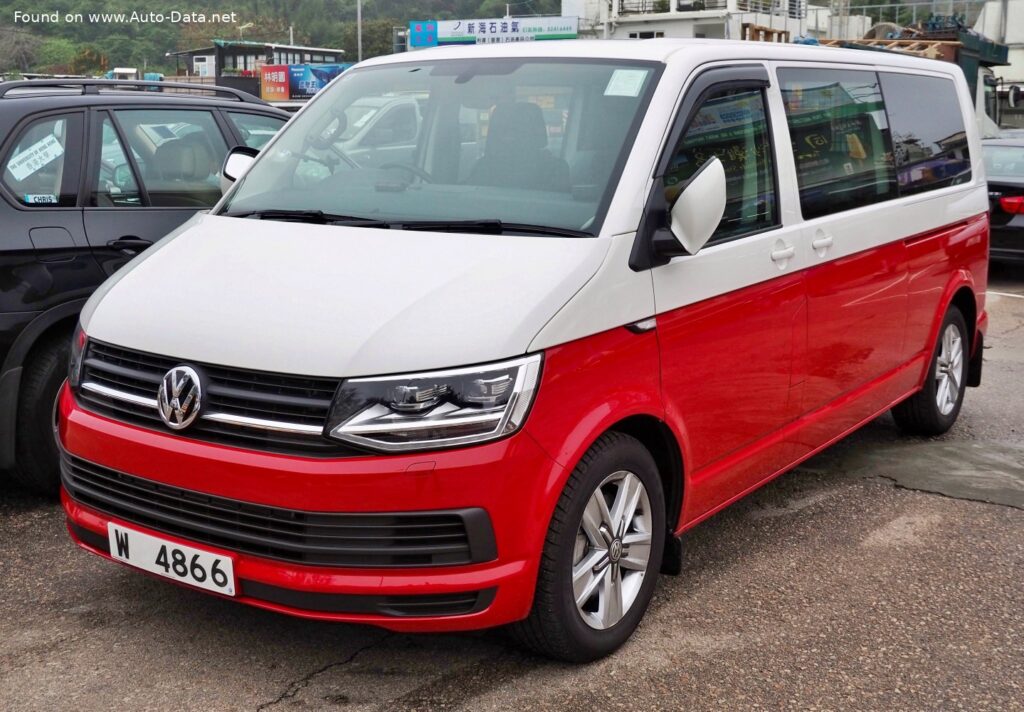
The Volkswagen Transporter (T6) Kombi 2.0 TDI, specifically the 150 horsepower variant designated L1H2, represents a significant iteration in the long and storied history of Volkswagen’s commercial vehicle line. Produced from 2015 to 2019, the T6 generation continued the Transporter’s role as a versatile panel van, passenger carrier (Kombi), and platform for various conversions. While not officially sold in the United States in this specific configuration, the Transporter has a substantial following among van enthusiasts and is often imported as a grey market vehicle. The T6 aimed to balance practicality, efficiency, and modern technology, building upon the success of its predecessors while addressing evolving emissions standards and customer expectations.
Volkswagen Transporter (T6) Kombi: An Overview
The Transporter T6 Kombi, in its 2.0 TDI 150 Hp L1H2 guise, is categorized as a light commercial vehicle, specifically a panel van adapted for passenger transport. The “Kombi” designation indicates a multi-passenger configuration, typically seating between four and nine occupants. The “L1H2” code refers to the vehicle’s body length and roof height – L1 denoting a shorter wheelbase and H2 indicating a raised roof, offering increased cargo and passenger space. This model was primarily marketed in Europe and other international markets, serving as a workhorse for businesses, families, and adventure seekers alike.
Engine & Performance
Powering the T6 Kombi 2.0 TDI is a 2.0-liter four-cylinder diesel engine, part of Volkswagen’s EA288 engine family. This engine, identified by codes CXFA or CXHA, produces 150 horsepower at 3250-3750 rpm and 340 Nm (250.77 lb.-ft.) of torque between 1500 and 3000 rpm. The engine features a turbocharger with intercooling and a diesel common rail fuel injection system, contributing to both power output and fuel efficiency. The engine’s transverse mounting and front-wheel-drive configuration are typical for this class of vehicle. Performance figures include a 0-100 km/h (0-62 mph) acceleration time of 12 seconds and a maximum speed of 176 km/h (109.36 mph). Fuel economy, measured using the NEDC standard, ranges from 6.0 to 8.2 liters per 100 kilometers (39.2 to 28.7 US mpg), with CO2 emissions between 157 and 188 g/km. The inclusion of a Start & Stop system and a particulate filter demonstrates Volkswagen’s commitment to reducing emissions and improving fuel economy.
Design & Features
The Volkswagen Transporter T6 Kombi L1H2 boasts a functional and practical design. Its body style is a van, offering a large interior volume optimized for both passenger comfort and cargo capacity. The raised roof (H2) provides ample headroom, while the shorter wheelbase (L1) enhances maneuverability in urban environments. Key features include a robust chassis, independent suspension on both front and rear axles (McPherson struts at the front and a wishbone setup at the rear), and ventilated disc brakes on all four wheels. Safety features, crucial in modern commercial vehicles, include ABS (Anti-lock Braking System). The interior is designed for durability and ease of cleaning, with a focus on practicality. The Kombi configuration offers flexible seating arrangements, allowing for customization to suit various needs. The vehicle’s dimensions – 4904 mm (193.07 in) in length, 1904 mm (74.96 in) in width, and 2177 mm (85.71 in) in height – provide a substantial interior space within a relatively compact footprint.
Technical Specifications
| Brand | Volkswagen |
| Model | Transporter |
| Generation | Transporter (T6) Kombi |
| Type (Engine) | 2.0 TDI (150 Hp) L1H2 |
| Start of production | 2015 year |
| End of production | 2019 year |
| Powertrain Architecture | Internal Combustion engine |
| Body type | Van |
| Seats | 4-9 |
| Doors | 4-5 |
| Fuel consumption (economy) – urban (NEDC) | 7.2-8.8 l/100 km |
| Fuel consumption (economy) – extra urban (NEDC) | 5.3-6.4 l/100 km |
| Fuel consumption (economy) – combined (NEDC) | 6-8.2 l/100 km |
| CO2 emissions (NEDC) | 157-188 g/km |
| Fuel Type | Diesel |
| Acceleration 0 – 100 km/h | 12 sec |
| Acceleration 0 – 62 mph | 12 sec |
| Acceleration 0 – 60 mph | 11.4 sec |
| Maximum speed | 176 km/h (109.36 mph) |
| Emission standard | Euro 6 |
| Weight-to-power ratio | 12 kg/Hp |
| Weight-to-torque ratio | 5.3 kg/Nm |
| Power | 150 Hp @ 3250-3750 rpm |
| Torque | 340 Nm @ 1500-3000 rpm (250.77 lb.-ft.) |
| Engine layout | Front, Transverse |
| Engine Model/Code | EA288 / CXFA, CXHA |
| Engine displacement | 1968 cm3 (120.09 cu. in.) |
| Number of cylinders | 4 |
| Engine configuration | Inline |
| Cylinder Bore | 81 mm (3.19 in.) |
| Piston Stroke | 95.5 mm (3.76 in.) |
| Compression ratio | 15.5:1 |
| Number of valves per cylinder | 4 |
| Fuel injection system | Diesel Commonrail |
| Engine aspiration | Turbocharger, Intercooler |
| Valvetrain | DOHC |
| Engine oil capacity | 7.4 l (7.82 US qt | 6.51 UK qt) |
| Kerb Weight | 1793-2199 kg (3952.89 – 4847.97 lbs.) |
| Max. weight | 2800-3200 kg (6172.94 – 7054.79 lbs.) |
| Max load | 1001-1007 kg (2206.83 – 2220.05 lbs.) |
| Trunk (boot) space – maximum | 6700 l (236.61 cu. ft.) |
| Fuel tank capacity | 70 l (18.49 US gal | 15.4 UK gal) |
| AdBlue tank | 13 l (3.43 US gal | 2.86 UK gal) |
| Max. roof load | 100 kg (220.46 lbs.) |
| Permitted trailer load with brakes (12%) | 2500 kg (5511.56 lbs.) |
| Permitted trailer load without brakes | 750 kg (1653.47 lbs.) |
| Permitted towbar download | 100 kg (220.46 lbs.) |
| Length | 4904 mm (193.07 in.) |
| Width | 1904 mm (74.96 in.) |
| Width including mirrors | 2297 mm (90.43 in.) |
| Height | 2177 mm (85.71 in.) |
| Wheelbase | 3000 mm (118.11 in.) |
| Front overhang | 908 mm (35.75 in.) |
| Rear overhang | 993 mm (39.09 in.) |
| Ride height (ground clearance) | 201 mm (7.91 in.) |
| Minimum turning circle (turning diameter) | 11.9 m (39.04 ft.) |
| Drivetrain Architecture | Front wheel drive |
| Number of gears and type of gearbox | 6 gears, manual transmission |
| Front brakes | Ventilated discs, 308×29.5 mm |
| Rear brakes | Ventilated discs, 294×22 mm |
| Tires size | 205/65 R16; 215/65 R16 |
| Wheel rims size | 6.5J x 16 |
The Volkswagen Transporter T6 Kombi 2.0 TDI (150 Hp) L1H2 remains a popular choice for those seeking a versatile and reliable commercial vehicle, offering a blend of practicality, efficiency, and modern features. Its enduring appeal lies in its adaptability and robust construction, making it a valuable asset for a wide range of applications.