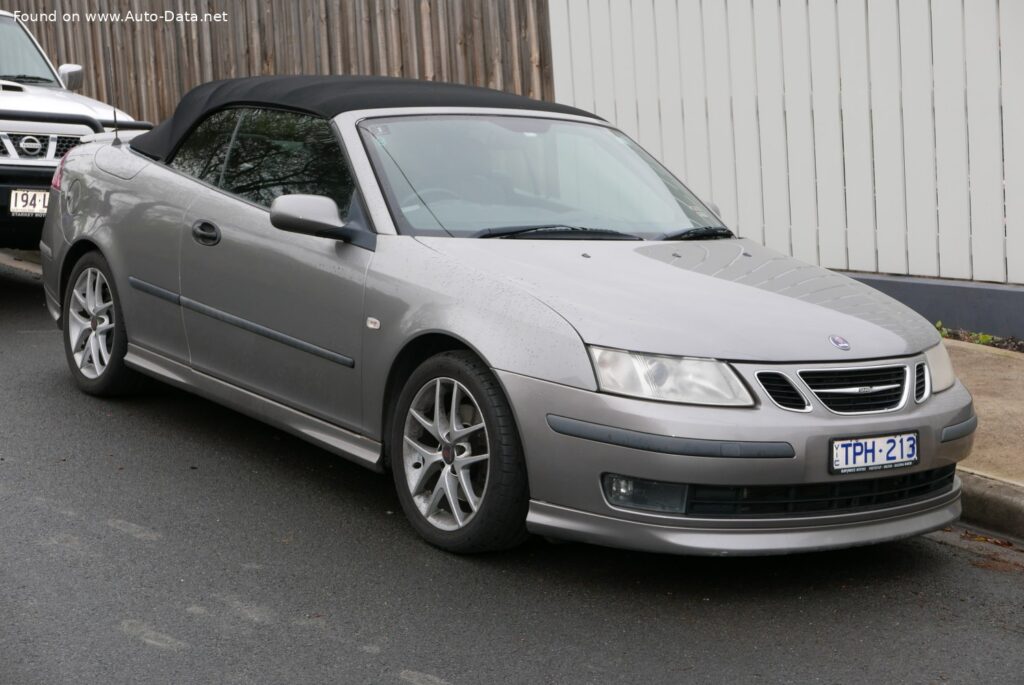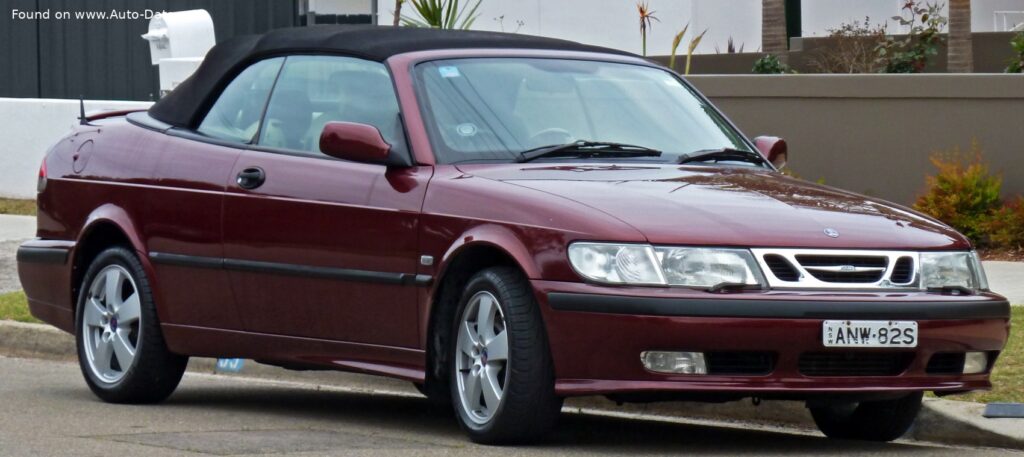
The Saab 9-3 Convertible I 2.0 T, produced between 2000 and 2002, represents a significant offering from the Swedish automaker in the premium compact convertible segment. This generation of the 9-3 Convertible aimed to blend Saab’s reputation for innovative engineering and safety with the open-air driving experience. While Saab as a brand ultimately faced challenges, the 9-3 Convertible I offered a distinctive alternative to more mainstream competitors, particularly in the European market where it found its largest customer base. The 2.0 T variant, equipped with a turbocharged engine producing 205 horsepower, was a popular choice, balancing performance with reasonable fuel economy.
Saab 9-3 Convertible I 2.0 T: A Detailed Overview
The 9-3 Convertible I was part of the first generation of the 9-3 series, which itself was based on the GM2900 platform shared with the Opel Vectra. Saab distinguished itself through unique styling and a focus on driver-centric design. The convertible variant, introduced to broaden the 9-3’s appeal, offered a retractable soft top and a four-seat configuration. It was positioned as a stylish and practical option for those seeking a premium open-top experience.
Engine & Performance
The heart of the 9-3 Convertible I 2.0 T is a 1.985-liter, inline-four cylinder engine equipped with a Mitsubishi TD04HL-13C turbocharger and multi-port fuel injection. This engine delivers a power output of 205 horsepower at 5500 rpm and 280 Nm (206.52 lb.-ft.) of torque at 2200 rpm. The turbocharger provides a noticeable boost in power, contributing to a 0-60 mph acceleration time of approximately 6.9 seconds and a top speed of 235 km/h (146.02 mph). The engine’s power-to-weight ratio of 6.8 kg/Hp and torque-to-weight ratio of 5 kg/Nm contribute to its responsive driving characteristics. The engine, designated B205E, features a double overhead camshaft (DOHC) valvetrain with four valves per cylinder and a compression ratio of 8.8:1. A five-speed manual transmission is standard, delivering power to the front wheels.
Design & Features
The Saab 9-3 Convertible I boasts a classic cabriolet design with a two-door configuration and seating for four passengers. The soft top is electronically operated, allowing for convenient open-air driving. Stylistically, the car features Saab’s signature design cues, including a wraparound dashboard and a distinctive front grille. Interior features focused on comfort and functionality, with a driver-oriented cockpit and supportive seats. Safety features, while typical for the early 2000s, included an Anti-lock Braking System (ABS). The car’s dimensions – 4629 mm (182.24 in) in length, 1711 mm (67.36 in) in width, and 1423 mm (56.02 in) in height – position it within the compact convertible class. Trunk space ranges from 295 liters (10.42 cu. ft.) with the top up to 378 liters (13.35 cu. ft.) with the top down. The kerb weight of 1400 kg (3086.47 lbs) contributes to the car’s handling balance.
Technical Specifications
| Brand | Saab |
| Model | 9-3 |
| Generation | 9-3 Convertible I |
| Type (Engine) | 2.0 T (205 Hp) |
| Start of production | 2000 |
| End of production | 2002 |
| Powertrain Architecture | Internal Combustion engine |
| Body type | Cabriolet |
| Seats | 4 |
| Doors | 2 |
| Fuel consumption (urban) | 13.5 l/100 km (17.4 US mpg, 20.9 UK mpg) |
| Fuel consumption (extra urban) | 6.9 l/100 km (34.1 US mpg, 40.9 UK mpg) |
| Fuel Type | Petrol (Gasoline) |
| Acceleration 0 – 100 km/h | 7.3 sec |
| Acceleration 0 – 62 mph | 7.3 sec |
| Acceleration 0 – 60 mph | 6.9 sec |
| Maximum speed | 235 km/h (146.02 mph) |
| Weight-to-power ratio | 6.8 kg/Hp |
| Weight-to-torque ratio | 5 kg/Nm |
| Power | 205 Hp @ 5500 rpm |
| Power per litre | 103.3 Hp/l |
| Torque | 280 Nm @ 2200 rpm (206.52 lb.-ft. @ 2200 rpm) |
| Engine layout | Front, Transverse |
| Engine Model/Code | B205E |
| Engine displacement | 1985 cm3 (121.13 cu. in.) |
| Number of cylinders | 4 |
| Engine configuration | Inline |
| Cylinder Bore | 90 mm (3.54 in.) |
| Piston Stroke | 78 mm (3.07 in.) |
| Compression ratio | 8.8:1 |
| Number of valves per cylinder | 4 |
| Fuel injection system | Multi-port manifold injection |
| Engine aspiration | Turbocharger |
| Valvetrain | DOHC |
| Engine oil capacity | 4 l (4.23 US qt | 3.52 UK qt) |
| Coolant | 8.5 l (8.98 US qt | 7.48 UK qt) |
| Kerb Weight | 1400 kg (3086.47 lbs.) |
| Max. weight | 1810 kg (3990.37 lbs.) |
| Max load | 410 kg (903.9 lbs.) |
| Trunk (boot) space – minimum | 295 l (10.42 cu. ft.) |
| Trunk (boot) space – maximum | 378 l (13.35 cu. ft.) |
| Fuel tank capacity | 64 l (16.91 US gal | 14.08 UK gal) |
| Length | 4629 mm (182.24 in.) |
| Width | 1711 mm (67.36 in.) |
| Height | 1423 mm (56.02 in.) |
| Wheelbase | 2605 mm (102.56 in.) |
| Front track | 1452 mm (57.17 in.) |
| Rear (Back) track | 1442 mm (56.77 in.) |
| Drivetrain Architecture | Front wheel drive |
| Number of gears and type of gearbox | 5 gears, manual transmission |
| Front suspension | Spring Strut |
| Rear suspension | Coil spring |
| Front brakes | Ventilated discs |
| Rear brakes | Disc |
| Assisting systems | ABS (Anti-lock braking system) |
| Steering type | Steering rack and pinion |
| Power steering | Hydraulic Steering |
| Tires size | 205/50 R16 |
| Wheel rims size | 16 |
The Saab 9-3 Convertible I 2.0 T, while no longer in production, remains a desirable vehicle for enthusiasts seeking a unique and stylish convertible experience. Its blend of Swedish design, turbocharged performance, and practical features continues to appeal to those who appreciate Saab’s distinctive approach to automotive engineering.