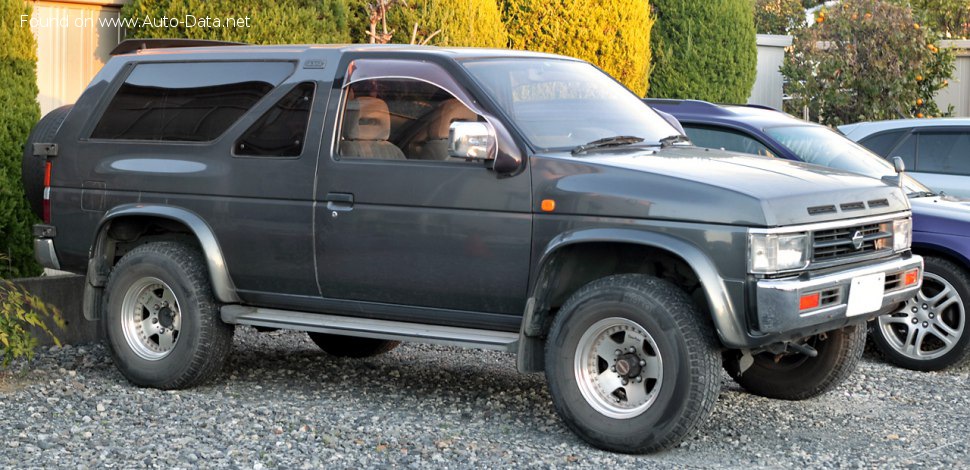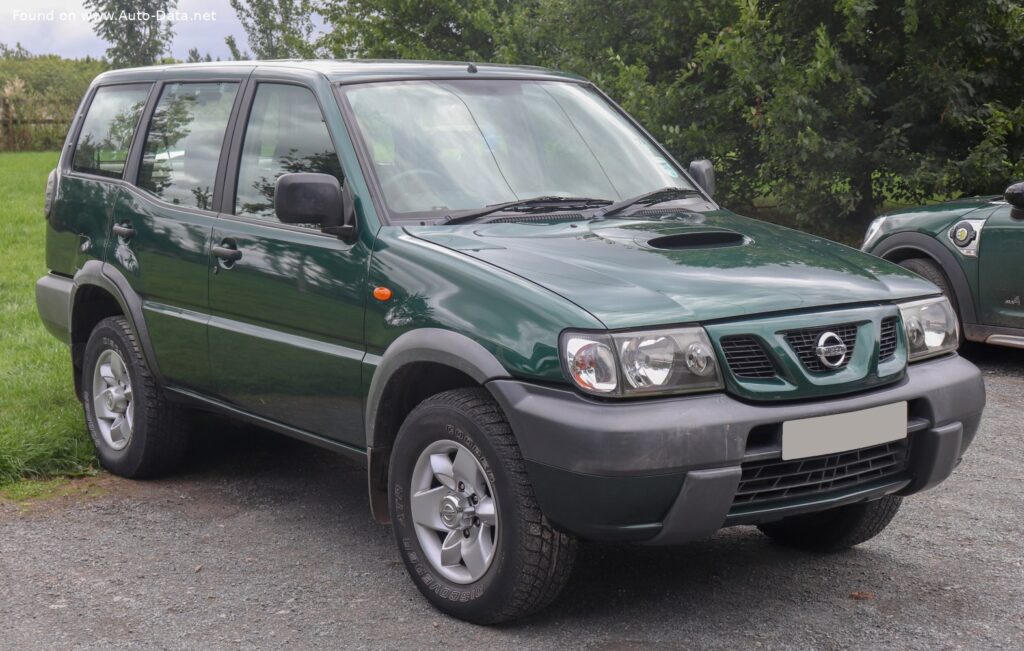
The Nissan Terrano II (R20) 2.7 TD (3 dr), produced from 1993 to 1996, represents a significant evolution in Nissan’s compact SUV offerings. While not officially sold in the United States during its production run, the Terrano II was a popular vehicle in Europe, Australia, and parts of Asia, serving as a robust and practical choice for both on-road and off-road driving. It built upon the success of the original Terrano (known as the Mistral in some markets) and offered a blend of affordability, durability, and capability in a relatively compact package. This three-door variant, powered by a 2.7-liter turbocharged diesel engine, was particularly favored for its fuel efficiency and torque, making it suitable for a variety of terrains and applications.
Nissan Terrano II (R20): A Detailed Overview
The Terrano II, designated as the R20 series, was designed to compete in the growing segment of compact SUVs. It shared its platform with the Ford Maverick, a result of the joint venture between Nissan and Ford during the late 1980s and early 1990s. This collaboration allowed both manufacturers to reduce development costs and expand their product lineups. The Terrano II offered a more modern and refined experience compared to its predecessor, with improvements in ride quality, interior comfort, and available features. The three-door configuration, like the one equipped with the 2.7 TD engine, catered to buyers seeking a more agile and compact SUV, often prioritizing off-road capability over rear passenger space.
Engine & Performance
The heart of the Terrano II 2.7 TD (3 dr) is the TD27T 2.7-liter inline-four cylinder diesel engine. This engine produces 100 horsepower at 4000 rpm and 221 Nm (163 lb.-ft.) of torque at 2200 rpm. While the horsepower figure might seem modest by modern standards, the engine’s strength lies in its low-end torque, which provides ample pulling power for off-road adventures and towing. The engine utilizes a precombustion chamber injection system and is equipped with a turbocharger to enhance performance. The engine’s longitudinal front-engine layout contributes to a balanced weight distribution. Acceleration from 0 to 100 km/h (0-62 mph) takes approximately 19 seconds, and it reaches a maximum speed of 145 km/h (90.1 mph). Fuel economy is a strong point, with combined cycle consumption rated at 10.9 l/100 km (21.6 US mpg), varying between 8.5 l/100 km (27.7 US mpg) on the extra urban cycle and 12 l/100 km (19.6 US mpg) in urban conditions.
Design & Features
The Nissan Terrano II 2.7 TD (3 dr) is a classic example of early 1990s SUV design. Its body-on-frame construction provides a robust and durable platform, ideal for tackling rough terrain. The three-door configuration offers a more compact footprint, enhancing maneuverability in tight spaces. The vehicle seats five passengers, although rear seat space is somewhat limited due to the shorter wheelbase. Key features include a part-time four-wheel-drive system, allowing drivers to switch between two-wheel drive for fuel efficiency and four-wheel drive for enhanced traction. Safety features for the era included hydraulic power steering and an Anti-lock Braking System (ABS), which were becoming increasingly common on vehicles of this class. The interior is functional and utilitarian, prioritizing durability and practicality over luxury. Trunk space is versatile, ranging from 335 liters (11.83 cu. ft.) with the rear seats up to 1650 liters (58.27 cu. ft.) with the rear seats folded down. The vehicle’s dimensions are 4105 mm (161.61 in) in length, 1735 mm (68.31 in) in width, and 1805 mm (71.06 in) in height.
Technical Specifications
| Brand | Nissan |
| Model | Terrano |
| Generation | Terrano II (R20) |
| Type (Engine) | 2.7 TD (3 dr) (100 Hp) |
| Start of production | 1993 |
| End of production | 1996 |
| Powertrain Architecture | Internal Combustion engine |
| Body type | SUV |
| Seats | 5 |
| Doors | 3 |
| Fuel consumption (urban) | 12 l/100 km (19.6 US mpg) |
| Fuel consumption (extra urban) | 8.5 l/100 km (27.7 US mpg) |
| Fuel consumption (combined) | 10.9 l/100 km (21.6 US mpg) |
| Fuel Type | Diesel |
| Acceleration 0 – 100 km/h | 19 sec |
| Acceleration 0 – 62 mph | 19 sec |
| Acceleration 0 – 60 mph | 18.1 sec |
| Maximum speed | 145 km/h (90.1 mph) |
| Weight-to-power ratio | 17.3 kg/Hp |
| Weight-to-torque ratio | 7.8 kg/Nm |
| Power | 100 Hp @ 4000 rpm |
| Torque | 221 Nm @ 2200 rpm (163 lb.-ft. @ 2200 rpm) |
| Engine layout | Front, Longitudinal |
| Engine Model/Code | TD27T |
| Engine displacement | 2663 cm3 (162.51 cu. in.) |
| Number of cylinders | 4 |
| Engine configuration | Inline |
| Cylinder Bore | 96 mm (3.78 in.) |
| Piston Stroke | 92 mm (3.62 in.) |
| Compression ratio | 21.9:1 |
| Number of valves per cylinder | 2 |
| Fuel injection system | Precombustion chamber injection |
| Engine aspiration | Turbocharger |
| Engine oil capacity | 6.2 l (6.55 US qt | 5.46 UK qt) |
| Coolant | 10 l (10.57 US qt | 8.8 UK qt) |
| Kerb Weight | 1730 kg (3814 lbs.) |
| Max. weight | 2300 kg (5070.63 lbs.) |
| Max load | 570 kg (1256.63 lbs.) |
| Trunk (boot) space – minimum | 335 l (11.83 cu. ft.) |
| Trunk (boot) space – maximum | 1650 l (58.27 cu. ft.) |
| Fuel tank capacity | 72 l (19.02 US gal | 15.84 UK gal) |
| Length | 4105 mm (161.61 in.) |
| Width | 1735 mm (68.31 in.) |
| Height | 1805 mm (71.06 in.) |
| Wheelbase | 2450 mm (96.46 in.) |
| Front track | 1455 mm (57.28 in.) |
| Rear (Back) track | 1430 mm (56.3 in.) |
| Drive wheel | All wheel drive (4×4) |
| Number of gears and type of gearbox | 5 gears, manual transmission |
| Front suspension | Double wishbone |
| Rear suspension | Coil spring |
| Front brakes | Ventilated discs |
| Rear brakes | Drum |
| Assisting systems | ABS (Anti-lock braking system) |
| Power steering | Hydraulic Steering |
| Tires size | 215/80 R15 S |
The Nissan Terrano II (R20) 2.7 TD (3 dr) remains a popular choice among enthusiasts and collectors, appreciated for its ruggedness, reliability, and off-road capability. While it may not offer the refinement or technology of modern SUVs, it represents a significant chapter in Nissan’s history and a testament to the enduring appeal of a well-built, capable, and practical vehicle.