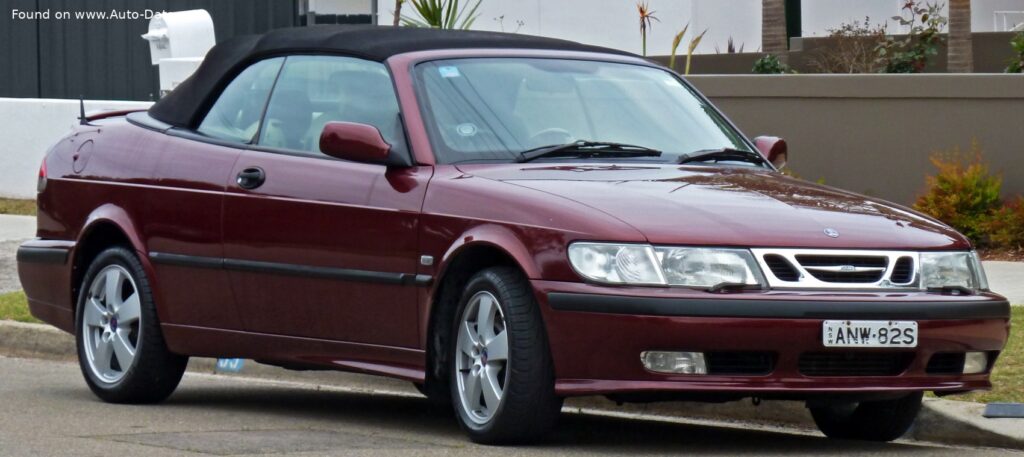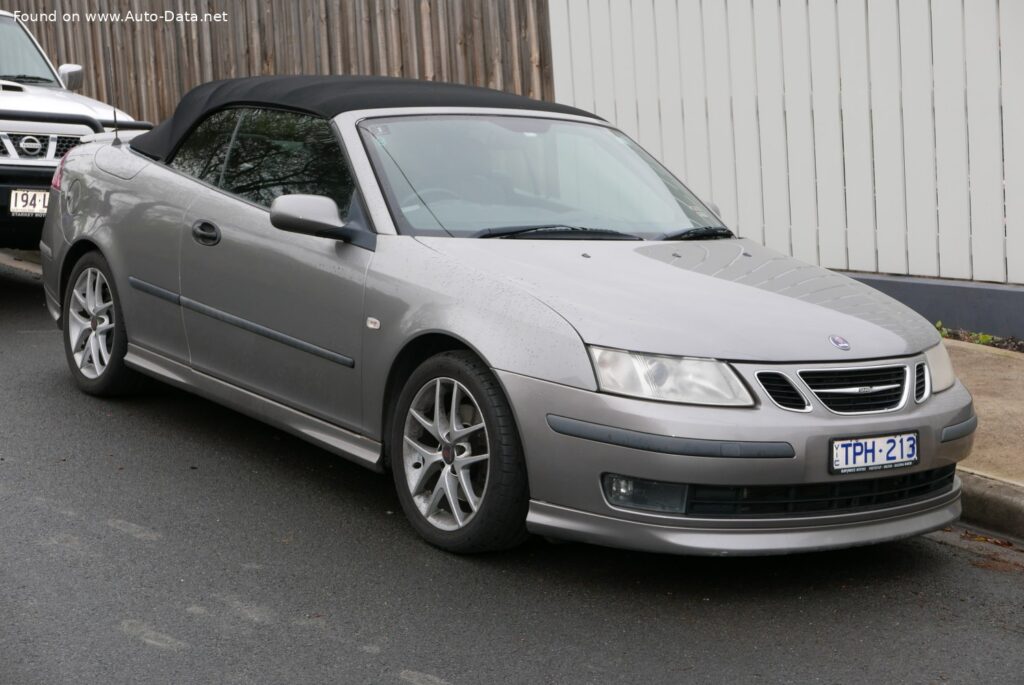
The Saab 9-3 Convertible II 2.0t (150 Hp), produced between 2004 and 2007, represents a refined iteration of Saab’s popular compact convertible. This generation, built upon the GM Epsilon platform shared with other vehicles like the Opel Vectra, aimed to blend Scandinavian design with accessible performance and open-air driving enjoyment. While Saab as a brand held a niche position in the US market, the 9-3 Convertible II was primarily targeted towards the European market, where convertibles enjoyed consistent popularity. It offered a distinctive alternative to more mainstream offerings, emphasizing safety, practicality, and a unique driving experience.
Saab 9-3 Convertible II: A Detailed Overview
The 9-3 Convertible II was positioned as a premium compact convertible, competing with models like the BMW 3 Series Convertible, Audi A4 Cabriolet, and Volvo C70. It distinguished itself through its distinctive styling, robust build quality, and a focus on driver comfort. The “II” designation signifies a significant update to the original 9-3 Convertible, incorporating revised styling, improved safety features, and updated engine options. The 2.0t model, equipped with a turbocharged four-cylinder engine, was a popular choice, offering a balance of performance and fuel efficiency.
Engine & Performance
The heart of the Saab 9-3 Convertible II 2.0t is a 1.998-liter (121.93 cubic inches) inline-four cylinder engine, designated the B207E. This engine utilizes a turbocharger and intercooler to boost power output to 150 horsepower at 5500 rpm and 240 Newton-meters (177.01 lb-ft) of torque at 2500 rpm. This configuration provides a respectable power-to-weight ratio of 10.6 kg/Hp (94.6 Hp/tonne) and a torque-to-weight ratio of 6.6 kg/Nm (151.4 Nm/tonne). The engine features multi-port fuel injection and a double overhead camshaft (DOHC) valvetrain with four valves per cylinder. Power is delivered to the front wheels via a five-speed manual transmission.
Performance figures indicate a 0-100 km/h (0-62 mph) acceleration time of 10.5 seconds, and a 0-60 mph time of approximately 10 seconds. The vehicle achieves a maximum speed of 205 km/h (127.38 mph). Fuel consumption is rated at 11.7 liters per 100 km (20.1 US mpg, 24.1 UK mpg, 8.5 km/l) in urban driving and 6.7 liters per 100 km (35.1 US mpg, 42.2 UK mpg, 14.9 km/l) in extra-urban conditions. The engine’s power-to-litre ratio is 75.1 Hp/l, demonstrating the effectiveness of the turbocharging system.
Design & Features
The Saab 9-3 Convertible II is a two-door, four-seater cabriolet. Its design incorporates Saab’s signature styling cues, including a wraparound dashboard and a distinctive front grille. The convertible top is a fully automatic, multi-layered fabric roof designed for all-weather use. The interior emphasizes Scandinavian minimalism, with a focus on functionality and ergonomics.
Safety features were a key consideration in the design of the 9-3 Convertible II. It includes an Anti-lock Braking System (ABS) as standard, along with ventilated disc brakes on the front wheels and disc brakes on the rear. The vehicle’s chassis was engineered to provide a high level of structural rigidity, crucial for maintaining safety in the event of a collision. The kerb weight of 1585 kg (3494.33 lbs) and a maximum weight of 2040 kg (4497.43 lbs) contribute to its stability. Practicality is addressed with a trunk space ranging from 235 liters (8.3 cu. ft.) to 352 liters (12.43 cu. ft.), depending on whether the convertible top is up or down. The fuel tank capacity is 62 liters (16.38 US gal, 13.64 UK gal).
Technical Specifications
| Brand | Saab |
| Model | 9-3 |
| Generation | 9-3 Convertible II |
| Type (Engine) | 2.0 t (150 Hp) |
| Start of production | 2004 |
| End of production | 2007 |
| Powertrain Architecture | Internal Combustion engine |
| Body type | Cabriolet |
| Seats | 4 |
| Doors | 2 |
| Fuel consumption (urban) | 11.7 l/100 km (20.1 US mpg, 24.1 UK mpg) |
| Fuel consumption (extra urban) | 6.7 l/100 km (35.1 US mpg, 42.2 UK mpg) |
| Fuel Type | Petrol (Gasoline) |
| Acceleration 0 – 100 km/h | 10.5 sec |
| Acceleration 0 – 62 mph | 10.5 sec |
| Acceleration 0 – 60 mph | 10 sec |
| Maximum speed | 205 km/h (127.38 mph) |
| Weight-to-power ratio | 10.6 kg/Hp |
| Weight-to-torque ratio | 6.6 kg/Nm |
| Power | 150 Hp @ 5500 rpm |
| Torque | 240 Nm @ 2500 rpm (177.01 lb.-ft. @ 2500 rpm) |
| Engine layout | Front, Transverse |
| Engine Model/Code | B207E |
| Engine displacement | 1998 cm3 (121.93 cu. in.) |
| Number of cylinders | 4 |
| Engine configuration | Inline |
| Cylinder Bore | 86 mm (3.39 in.) |
| Piston Stroke | 86 mm (3.39 in.) |
| Compression ratio | 9.5:1 |
| Number of valves per cylinder | 4 |
| Fuel injection system | Multi-port manifold injection |
| Engine aspiration | Turbocharger, Intercooler |
| Valvetrain | DOHC |
| Engine oil capacity | 6 l (6.34 US qt | 5.28 UK qt) |
| Coolant | 7.5 l (7.93 US qt | 6.6 UK qt) |
| Kerb Weight | 1585 kg (3494.33 lbs.) |
| Max. weight | 2040 kg (4497.43 lbs.) |
| Max load | 455 kg (1003.1 lbs.) |
| Trunk (boot) space – minimum | 235 l (8.3 cu. ft.) |
| Trunk (boot) space – maximum | 352 l (12.43 cu. ft.) |
| Fuel tank capacity | 62 l (16.38 US gal | 13.64 UK gal) |
| Length | 4635 mm (182.48 in.) |
| Width | 1762 mm (69.37 in.) |
| Height | 1434 mm (56.46 in.) |
| Wheelbase | 2675 mm (105.31 in.) |
| Front track | 1524 mm (60 in.) |
| Rear (Back) track | 1506 mm (59.29 in.) |
| Drivetrain Architecture | Front wheel drive |
| Number of gears and type of gearbox | 5 gears, manual transmission |
| Front suspension | Spring Strut |
| Rear suspension | Coil spring |
| Front brakes | Ventilated discs |
| Rear brakes | Disc |
| Assisting systems | ABS (Anti-lock braking system) |
| Steering type | Steering rack and pinion |
| Tires size | 215/60 R15 |
| Wheel rims size | 15 |
The Saab 9-3 Convertible II 2.0t, despite the eventual demise of the Saab brand, remains a fondly remembered vehicle. It offered a unique blend of Scandinavian design, turbocharged performance, and open-air driving pleasure, appealing to those seeking an alternative to more conventional convertible options.