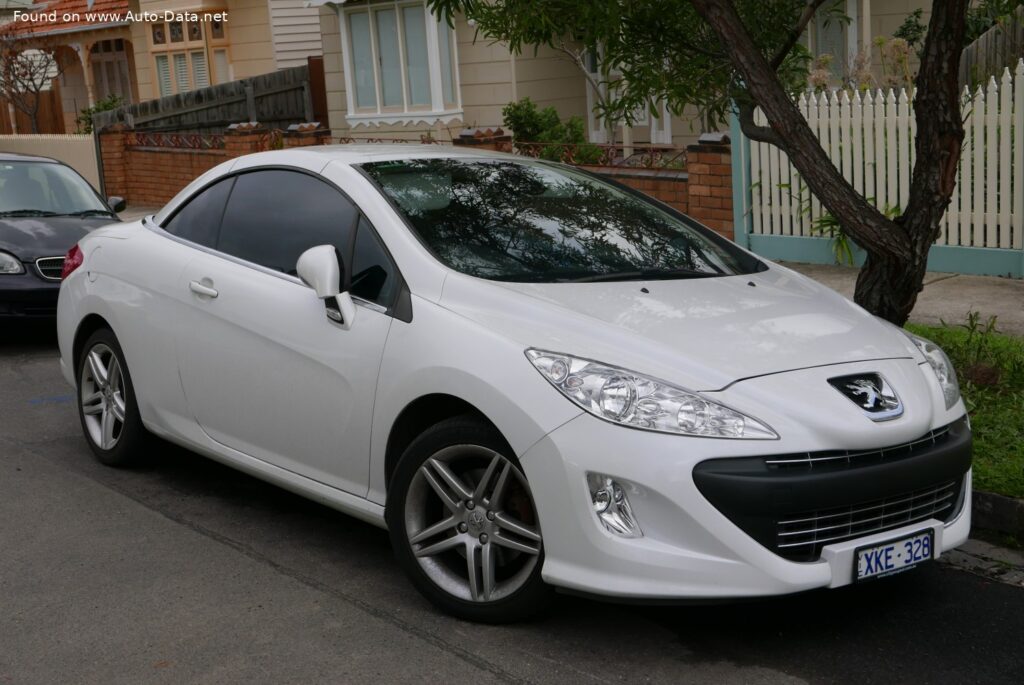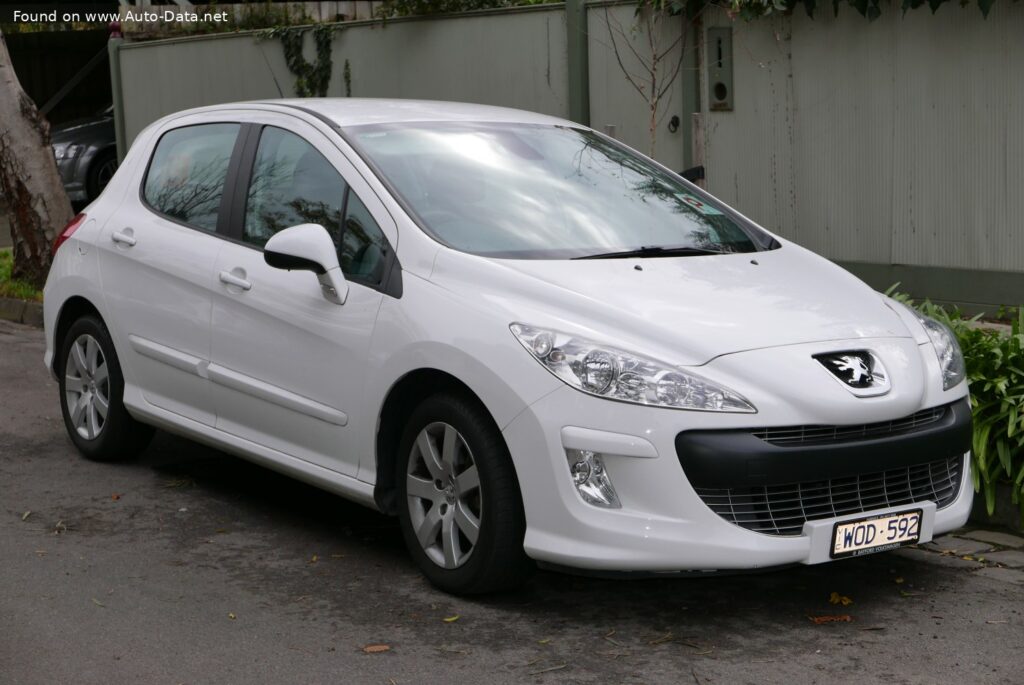
The Peugeot 308 I (Phase I) is a compact hatchback that was produced by the French manufacturer Peugeot between 2007 and 2010. Representing the first generation of the 308 model, it succeeded the Peugeot 307 and aimed to offer a more refined and modern driving experience. This particular variant, the 1.6 16V THP (150 Hp) 3d, was a popular choice in the European market, offering a balance of performance, fuel efficiency, and practicality. While not officially sold in the United States, the 308 I provides a representative example of the European compact car segment, emphasizing fuel economy and nimble handling.
Peugeot 308 I (Phase I): Overview and Market Position
The 308 I was designed to compete with established rivals like the Volkswagen Golf, Ford Focus, and Opel/Vauxhall Astra. Peugeot positioned the 308 as a more premium offering within the compact class, focusing on interior quality and driving dynamics. The “Phase I” designation refers to the initial production run, which featured specific styling and equipment levels. The three-door body style, as featured in this 1.6 THP variant, catered to buyers prioritizing a sportier aesthetic and often appealing to younger drivers. The 308 was a significant model for Peugeot, representing a shift towards more contemporary design and engineering.
Engine & Performance
The heart of the 308 I 1.6 16V THP is a 1.6-liter inline-four cylinder engine, designated the 5FX EP6DT. This engine is notable for its direct injection and turbocharging, technologies that contribute to both power and efficiency. Producing 150 horsepower at 5800 rpm and 177.01 lb-ft of torque at 1600 rpm, the engine delivers a responsive driving experience. The turbocharger and intercooler work in tandem to maximize air intake, boosting performance across the rev range. Acceleration from 0 to 60 mph is achieved in approximately 8.4 seconds, while top speed is rated at 132.35 mph. Fuel economy figures are respectable for its time, with combined consumption rated at 33.1 US mpg. The engine’s power-to-weight ratio of 9.3 kg/Hp contributes to its lively character.
Design & Features
The Peugeot 308 I Phase I features a distinctive hatchback design, characterized by its sloping roofline and relatively compact dimensions. The three-door configuration emphasizes a sportier profile compared to the five-door model. Inside, the cabin is designed with a focus on ergonomics and practicality. The 308 I offered a range of features, including air conditioning, power windows, and a basic audio system. Safety features, while not as comprehensive as modern vehicles, included ABS (Anti-lock Braking System). The interior space is optimized for five passengers, with a trunk capacity ranging from 12.29 to 42.41 cubic feet depending on the rear seats’ configuration. The vehicle’s dimensions – 168.35 inches in length and 71.46 inches in width – make it well-suited for navigating urban environments.
Technical Specifications
| Brand | Peugeot |
| Model | 308 |
| Generation | 308 I (Phase I, 2007) |
| Type (Engine) | 1.6 16V THP (150 Hp) 3d |
| Start of production | 2007 |
| End of production | 2010 |
| Powertrain Architecture | Internal Combustion engine |
| Body type | Hatchback |
| Seats | 5 |
| Doors | 3 |
| Fuel consumption (urban) | 9.8 l/100 km (24 US mpg) |
| Fuel consumption (extra urban) | 5.6 l/100 km (42 US mpg) |
| Fuel consumption (combined) | 7.1 l/100 km (33.1 US mpg) |
| Fuel Type | Petrol (Gasoline) |
| Acceleration 0 – 100 km/h | 8.8 sec |
| Acceleration 0 – 62 mph | 8.8 sec |
| Acceleration 0 – 60 mph | 8.4 sec |
| Maximum speed | 213 km/h (132.35 mph) |
| Emission standard | Euro 4 |
| Weight-to-power ratio | 9.3 kg/Hp |
| Weight-to-torque ratio | 5.8 kg/Nm |
| Power | 150 Hp @ 5800 rpm |
| Torque | 240 Nm @ 1600 rpm (177.01 lb.-ft. @ 1600 rpm) |
| Engine layout | Front, Transverse |
| Engine Model/Code | 5FX EP6DT |
| Engine displacement | 1598 cm3 (97.52 cu. in.) |
| Number of cylinders | 4 |
| Engine configuration | Inline |
| Cylinder Bore | 77 mm (3.03 in.) |
| Piston Stroke | 85.8 mm (3.38 in.) |
| Compression ratio | 10.5:1 |
| Number of valves per cylinder | 4 |
| Fuel injection system | Direct injection |
| Engine aspiration | Turbocharger, Intercooler |
| Valvetrain | DOHC |
| Engine oil capacity | 4.3 l (4.54 US qt | 3.78 UK qt) |
| Coolant | 6.2 l (6.55 US qt | 5.46 UK qt) |
| Kerb Weight | 1389 kg (3062.22 lbs.) |
| Max. weight | 1813 kg (3996.98 lbs.) |
| Max load | 424 kg (934.76 lbs.) |
| Trunk (boot) space – minimum | 348 l (12.29 cu. ft.) |
| Trunk (boot) space – maximum | 1201 l (42.41 cu. ft.) |
| Fuel tank capacity | 60 l (15.85 US gal | 13.2 UK gal) |
| Length | 4276 mm (168.35 in.) |
| Width | 1815 mm (71.46 in.) |
| Height | 1498 mm (58.98 in.) |
| Wheelbase | 2608 mm (102.68 in.) |
| Front track | 1526 mm (60.08 in.) |
| Rear (Back) track | 1521 mm (59.88 in.) |
| Drivetrain Architecture | Front wheel drive |
| Number of gears and type of gearbox | 5 gears, manual transmission |
| Front suspension | Wishbone |
| Rear suspension | Trailing arm |
| Front brakes | Ventilated discs |
| Rear brakes | Disc |
| Assisting systems | ABS (Anti-lock braking system) |
| Steering type | Steering rack and pinion |
| Power steering | Hydraulic Steering |
| Tires size | 195/65R15 91T; 205/55R16 91T; 225/45R17; 225/40R18 |
| Wheel rims size | 6.5Jx15; 7Jx16; 7.5J x 17; 7.5J x 18 |