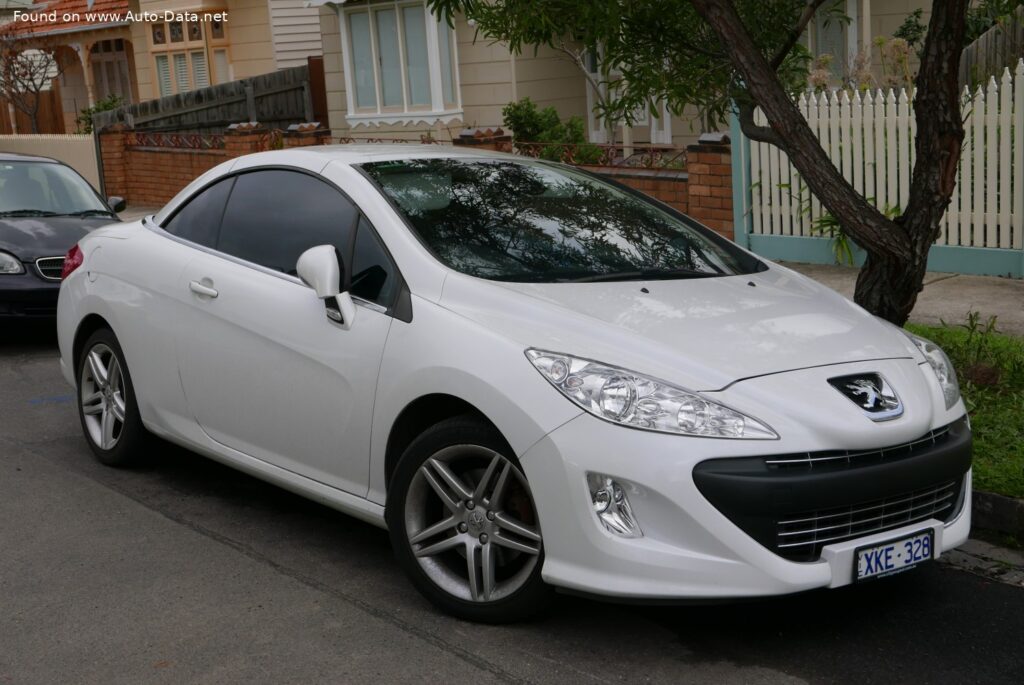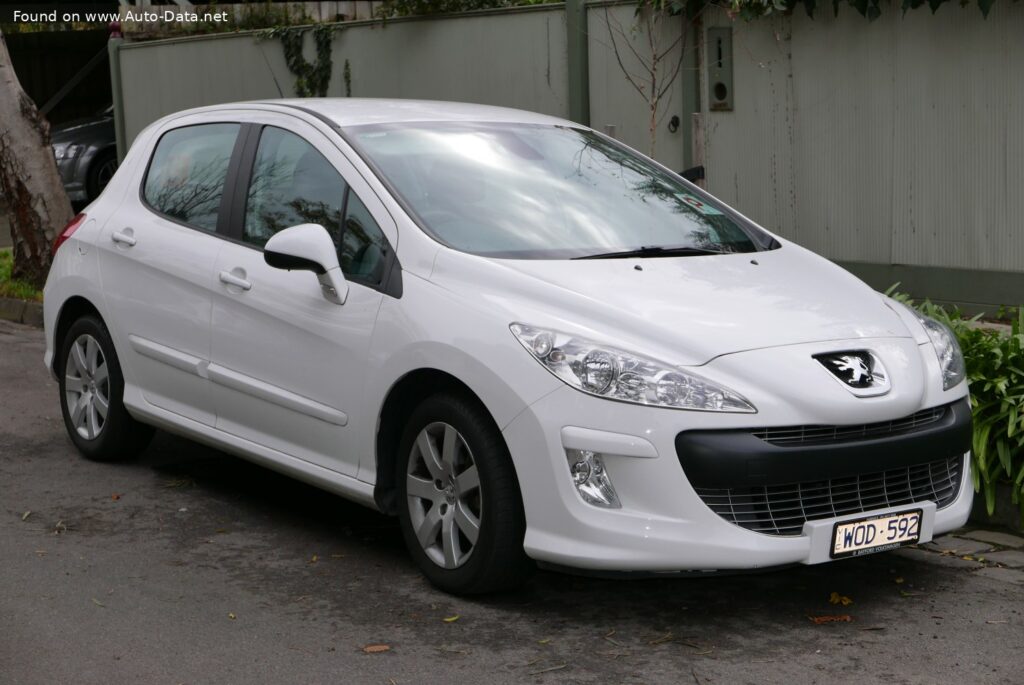
The Peugeot 308 I (Phase I) is a compact family car produced by the French manufacturer Peugeot from 2007 to 2010. Representing the first generation of the 308 model, it succeeded the Peugeot 307, offering a more refined and modern package. Positioned within the competitive C-segment, the 308 aimed to provide a balance of practicality, comfort, and style, appealing to a broad range of European buyers. While not officially sold in the United States, the 308 was a significant model for Peugeot, contributing to their market share in Europe and establishing a new design language for the brand.
Peugeot 308 I (Phase I): Overview and Market Position
The 308 Phase I marked a departure from its predecessor, the 307, with a focus on improved build quality, a more sophisticated interior, and enhanced driving dynamics. It was available in both hatchback and station wagon (SW) body styles, catering to different lifestyle needs. The Phase I designation refers to the initial production run, with subsequent updates and revisions introduced in later years. The 308 competed directly with vehicles like the Volkswagen Golf, Ford Focus, Opel/Vauxhall Astra, and Renault Mégane, all vying for dominance in the highly contested European compact car market. Its success was built on offering a compelling alternative with a distinctive French flair.
Engine & Performance
The 1.6 16V THP (Turbo High Pressure) engine, featured in this variant of the 308, was a key component of its appeal. This 1.6-liter inline-four cylinder engine, designated the 5FX EP6DT, produced 150 horsepower at 5800 rpm and 240 Newton-meters (177 lb-ft) of torque at 1600 rpm. The engine utilized direct fuel injection and a turbocharger with an intercooler to deliver a strong combination of performance and fuel efficiency. This configuration resulted in a power-to-liter ratio of 93.9 hp/l. The engine was paired with a 5-speed manual transmission, driving the front wheels. Performance figures included a 0-100 km/h (0-62 mph) acceleration time of 8.8 seconds and a top speed of 213 km/h (132.35 mph). Fuel economy was rated at 7.1 liters per 100 kilometers (33.1 US mpg) combined, with 9.8 l/100km (24 US mpg) in urban conditions and 5.6 l/100km (42 US mpg) on the open road.
Design & Features
The Peugeot 308 I Phase I adopted a more mature and refined design language compared to the 307. The hatchback body style offered a practical and versatile layout, with five seats and five doors. The interior was designed with a focus on ergonomics and perceived quality, featuring a driver-centric dashboard layout. Key features included ABS (Anti-lock Braking System) as standard, providing enhanced safety. The vehicle’s suspension utilized a wishbone setup at the front and a trailing arm configuration at the rear, aiming for a balance between ride comfort and handling. Trunk space was a practical 348 liters (12.29 cu ft) with the rear seats up, expanding to 1201 liters (42.41 cu ft) when folded down. The 308 prioritized a comfortable and user-friendly experience, with attention paid to interior space and practicality for everyday use.
Technical Specifications
| Brand | Peugeot |
| Model | 308 |
| Generation | 308 I (Phase I, 2007) |
| Type (Engine) | 1.6 16V THP (150 Hp) 5d |
| Start of production | 2007 |
| End of production | 2010 |
| Powertrain Architecture | Internal Combustion engine |
| Body type | Hatchback |
| Seats | 5 |
| Doors | 5 |
| Fuel consumption (urban) | 9.8 l/100 km (24 US mpg) |
| Fuel consumption (extra urban) | 5.6 l/100 km (42 US mpg) |
| Fuel consumption (combined) | 7.1 l/100 km (33.1 US mpg) |
| Fuel Type | Petrol (Gasoline) |
| Acceleration 0 – 100 km/h | 8.8 sec |
| Acceleration 0 – 62 mph | 8.8 sec |
| Acceleration 0 – 60 mph | 8.4 sec |
| Maximum speed | 213 km/h (132.35 mph) |
| Emission standard | Euro 4 |
| Weight-to-power ratio | 9.3 kg/Hp |
| Weight-to-torque ratio | 5.8 kg/Nm |
| Power | 150 Hp @ 5800 rpm |
| Torque | 240 Nm @ 1600 rpm (177.01 lb.-ft. @ 1600 rpm) |
| Engine layout | Front, Transverse |
| Engine Model/Code | 5FX EP6DT |
| Engine displacement | 1598 cm3 (97.52 cu. in.) |
| Number of cylinders | 4 |
| Engine configuration | Inline |
| Cylinder Bore | 77 mm (3.03 in.) |
| Piston Stroke | 85.8 mm (3.38 in.) |
| Compression ratio | 10.5:1 |
| Number of valves per cylinder | 4 |
| Fuel injection system | Direct injection |
| Engine aspiration | Turbocharger, Intercooler |
| Valvetrain | DOHC |
| Engine oil capacity | 4.3 l (4.54 US qt | 3.78 UK qt) |
| Coolant | 6.2 l (6.55 US qt | 5.46 UK qt) |
| Kerb Weight | 1402 kg (3090.88 lbs.) |
| Max. weight | 1813 kg (3996.98 lbs.) |
| Max load | 411 kg (906.1 lbs.) |
| Trunk (boot) space – minimum | 348 l (12.29 cu. ft.) |
| Trunk (boot) space – maximum | 1201 l (42.41 cu. ft.) |
| Fuel tank capacity | 60 l (15.85 US gal | 13.2 UK gal) |
| Length | 4276 mm (168.35 in.) |
| Width | 1815 mm (71.46 in.) |
| Height | 1498 mm (58.98 in.) |
| Wheelbase | 2608 mm (102.68 in.) |
| Front track | 1526 mm (60.08 in.) |
| Rear (Back) track | 1521 mm (59.88 in.) |
| Drivetrain Architecture | Front wheel drive |
| Number of gears and type of gearbox | 5 gears, manual transmission |
| Front suspension | Wishbone |
| Rear suspension | Trailing arm |
| Front brakes | Ventilated discs |
| Rear brakes | Disc |
| Steering type | Steering rack and pinion |
| Power steering | Hydraulic Steering |
| Tires size | 195/65R15 91T; 205/55R16 91T; 225/45R17; 225/40R18 |
| Wheel rims size | 6.5Jx15; 7Jx16; 7.5J x 17; 7.5J x 18 |