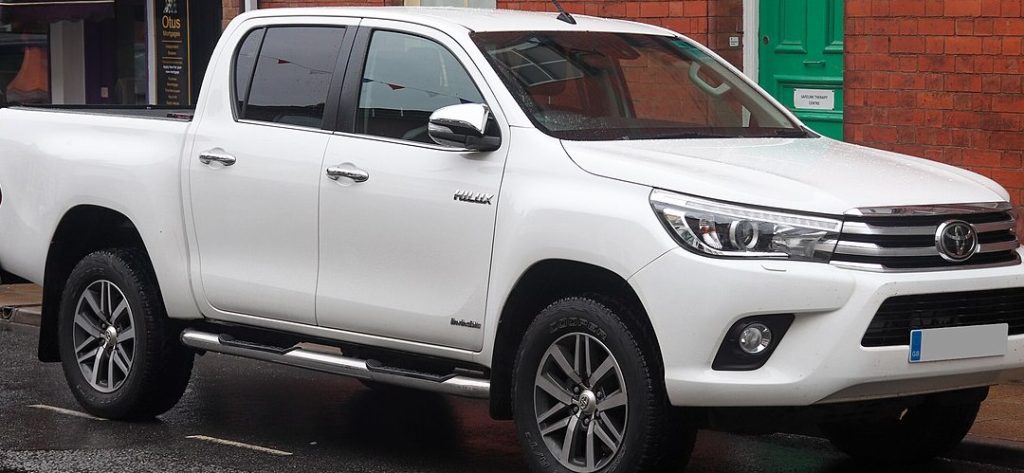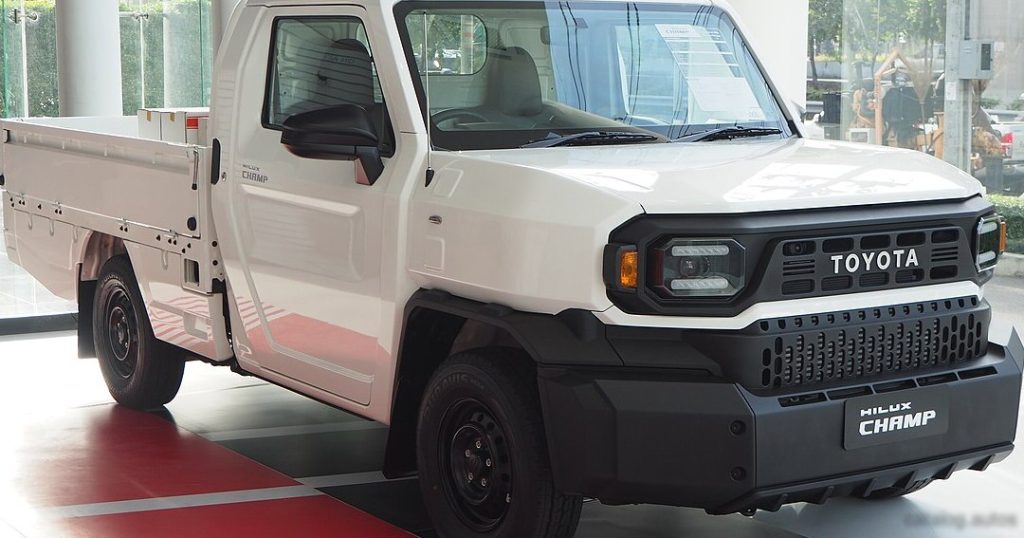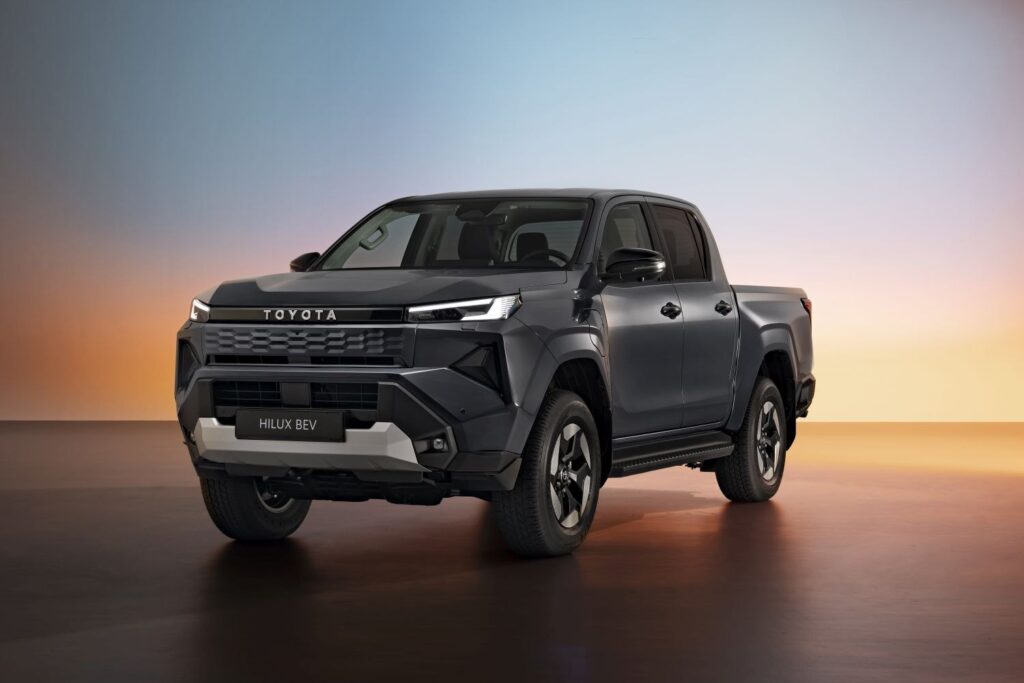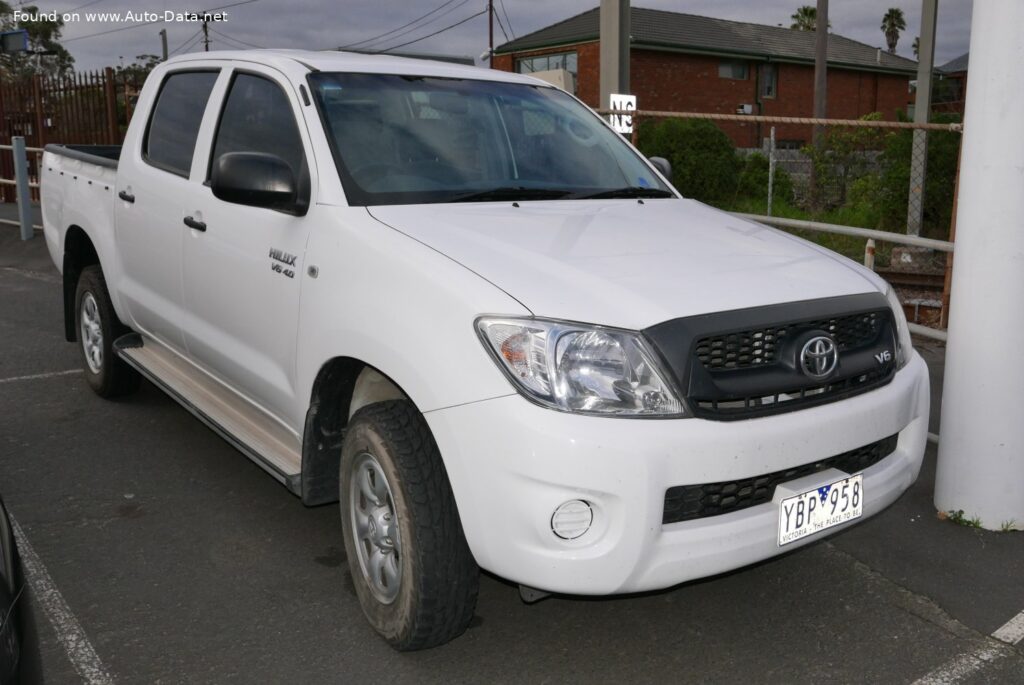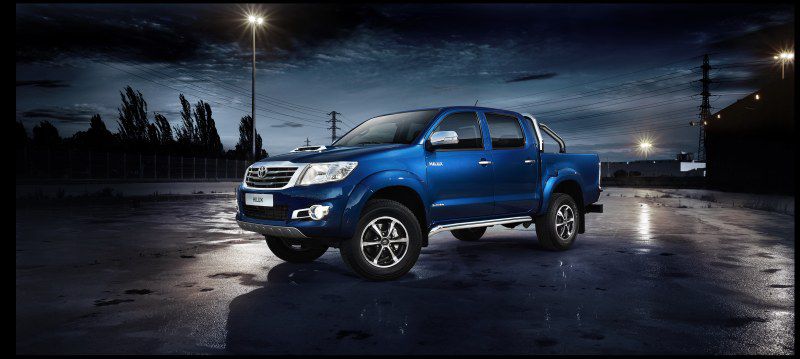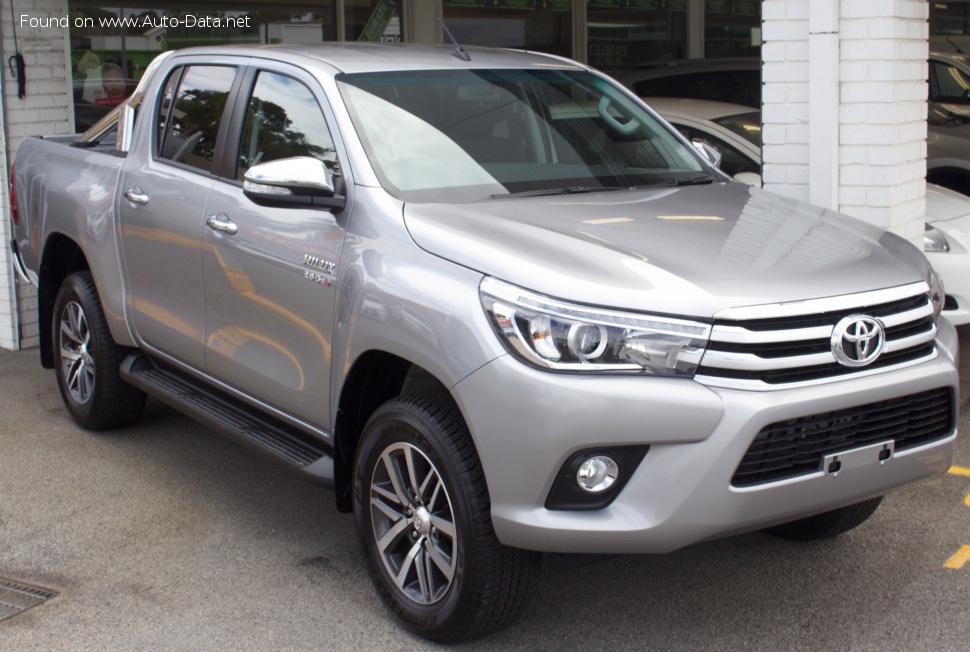
The Toyota Hilux Double Cab VIII 2.4 D-4D 4WD, produced between 2015 and 2017, represents a significant iteration of Toyota’s globally renowned pickup truck. While not widely sold in the United States in this specific configuration, the Hilux holds a dominant position in markets like Europe, Australia, Asia, and Latin America as a rugged, reliable workhorse. The Double Cab configuration expands upon the traditional Hilux formula by offering seating for five passengers, making it a practical choice for both commercial and family use. This generation focused on refining the Hilux’s core strengths – durability, off-road capability, and fuel efficiency – while incorporating modern comfort and safety features. The 2.4 D-4D engine variant, delivering 150 horsepower, was a popular choice, balancing performance with economical operation.
Toyota Hilux Double Cab VIII: A Global Workhorse
The Hilux has a long and storied history, dating back to 1968. Over eight generations, it has earned a reputation for virtually indestructible reliability, often demonstrated in extreme conditions. The eighth-generation Hilux, launched in 2015, built upon this legacy with a more sophisticated chassis, improved interior, and a range of updated engines. The Double Cab variant specifically caters to buyers needing both cargo capacity and passenger space, making it suitable for families, tradespeople, and those requiring a versatile vehicle for work and leisure. In markets where it was sold, it competed with vehicles like the Ford Ranger, Nissan Navara, and Mitsubishi Triton.
Engine & Performance
The heart of the Hilux Double Cab VIII 2.4 D-4D 4WD is the 2GD-FTV 2.4-liter inline-four diesel engine. This engine produces 150 horsepower at 3400 rpm and a substantial 400 Nm (295 lb-ft) of torque between 1600 and 2000 rpm. The engine utilizes a diesel commonrail fuel injection system and a turbocharger with an intercooler to optimize power and efficiency. The longitudinal engine layout contributes to a balanced weight distribution. Acceleration from 0 to 100 km/h (0-62 mph) takes 13.2 seconds, while 0-60 mph is achieved in approximately 12.5 seconds. The Hilux achieves a maximum speed of 170 km/h (105.63 mph). Fuel economy is rated at 6.8-7.0 liters per 100 kilometers (33.6-34.6 US mpg), and CO2 emissions range from 178-185 g/km, meeting Euro 6 emission standards. The engine’s weight-to-power ratio is 14 kg/Hp, and the weight-to-torque ratio is 5.3 kg/Nm.
Design & Features
The Hilux Double Cab VIII is a five-door pickup truck with a robust and functional design. It features a double-wishbone front suspension and a leaf spring rear suspension, optimized for both on-road comfort and off-road capability. The 4WD system provides enhanced traction in challenging terrain. The vehicle’s dimensions are substantial, with a length of 5335 mm (210.04 in), a width of 1855 mm (73.03 in), and a height of 1815 mm (71.46 in). Ground clearance is a generous 293 mm (11.54 in), further enhancing its off-road prowess. The approach and departure angles are 31° and 26° respectively.
Inside, the Double Cab offers seating for five passengers. While the interior prioritizes durability and functionality over luxury, it provides a comfortable and practical space. Features included power steering, an anti-lock braking system (ABS), and a six-speed manual transmission. The Hilux Double Cab VIII also boasts a respectable payload capacity of 1050-1110 kg (2314.85 – 2447.13 lbs) and a maximum towing capacity of 3200 kg (7054.79 lbs) with brakes, and 750 kg (1653.47 lbs) without brakes. A particulate filter is included as part of the emissions control system.
Technical Specifications
| Brand | Toyota |
| Model | Hilux |
| Generation | Hilux Double Cab VIII |
| Type (Engine) | 2.4 D-4D (150 Hp) 4WD |
| Start of production | 2015 |
| End of production | 2017 |
| Powertrain Architecture | Internal Combustion engine |
| Body type | Pick-up |
| Seats | 5 |
| Doors | 5 |
| Fuel consumption (combined) | 6.8-7.0 l/100 km (34.6 – 33.6 US mpg) |
| CO2 emissions | 178-185 g/km |
| Fuel Type | Diesel |
| Acceleration 0 – 100 km/h | 13.2 sec |
| Acceleration 0 – 62 mph | 13.2 sec |
| Acceleration 0 – 60 mph | 12.5 sec |
| Maximum speed | 170 km/h (105.63 mph) |
| Emission standard | Euro 6 |
| Weight-to-power ratio | 14 kg/Hp |
| Weight-to-torque ratio | 5.3 kg/Nm |
| Power | 150 Hp @ 3400 rpm |
| Torque | 400 Nm @ 1600-2000 rpm (295.02 lb.-ft. @ 1600-2000 rpm) |
| Engine layout | Front, Longitudinal |
| Engine Model/Code | 2GD-FTV |
| Engine displacement | 2393 cm3 (146.03 cu. in.) |
| Number of cylinders | 4 |
| Engine configuration | Inline |
| Cylinder Bore | 92 mm (3.62 in.) |
| Piston Stroke | 90 mm (3.54 in.) |
| Compression ratio | 15.6:1 |
| Number of valves per cylinder | 4 |
| Fuel injection system | Diesel Commonrail |
| Engine aspiration | Turbocharger, Intercooler |
| Valvetrain | DOHC |
| Engine oil capacity | 7.5 l (7.93 US qt | 6.6 UK qt) |
| Coolant | 8.9 l (9.4 US qt | 7.83 UK qt) |
| Kerb Weight | 2100-2160 kg (4629.71 – 4761.98 lbs.) |
| Max. weight | 3210 kg (7076.84 lbs.) |
| Max load | 1050-1110 kg (2314.85 – 2447.13 lbs.) |
| Fuel tank capacity | 80 l (21.13 US gal | 17.6 UK gal) |
| Permitted trailer load with brakes (12%) | 3200 kg (7054.79 lbs.) |
| Permitted trailer load without brakes | 750 kg (1653.47 lbs.) |
| Length | 5335 mm (210.04 in.) |
| Width | 1855 mm (73.03 in.) |
| Height | 1815 mm (71.46 in.) |
| Wheelbase | 3085 mm (121.46 in.) |
| Front track | 1535 mm (60.43 in.) |
| Rear track | 1550 mm (61.02 in.) |
| Front overhang | 1000 mm (39.37 in.) |
| Rear overhang | 1250 mm (49.21 in.) |
| Ride height (ground clearance) | 293 mm (11.54 in.) |
| Drag coefficient (Cd) | 0.394 |
| Minimum turning circle | 13.4 m (43.96 ft.) |
| Approach angle | 31° |
| Departure angle | 26° |
| Drive wheel | All wheel drive (4×4) |
| Number of gears | 6 gears, manual transmission |
| Front suspension | Double wishbone |
| Rear suspension | Leaf spring |
| Front brakes | Ventilated discs |
| Rear brakes | Drum |
| Steering type | Steering rack and pinion |
| Power steering | Electric Steering |
| Tires size | 265/65 R17 |
| Wheel rims size | 7.5J x 17 |