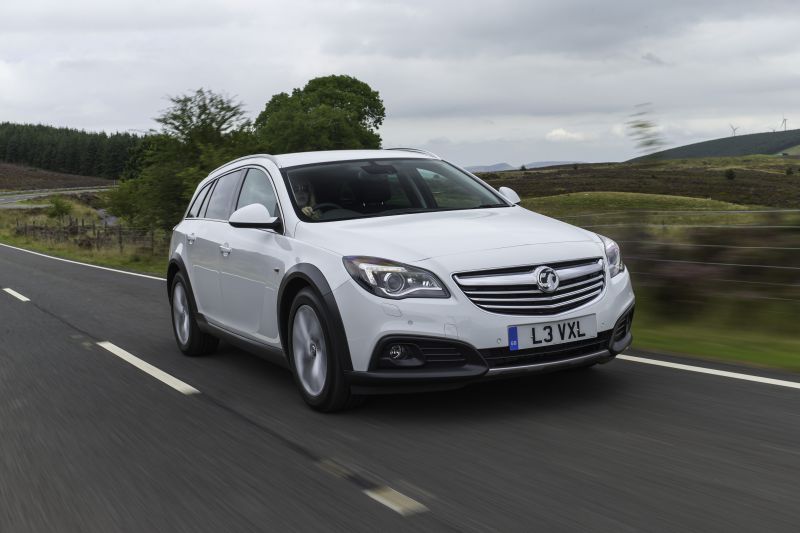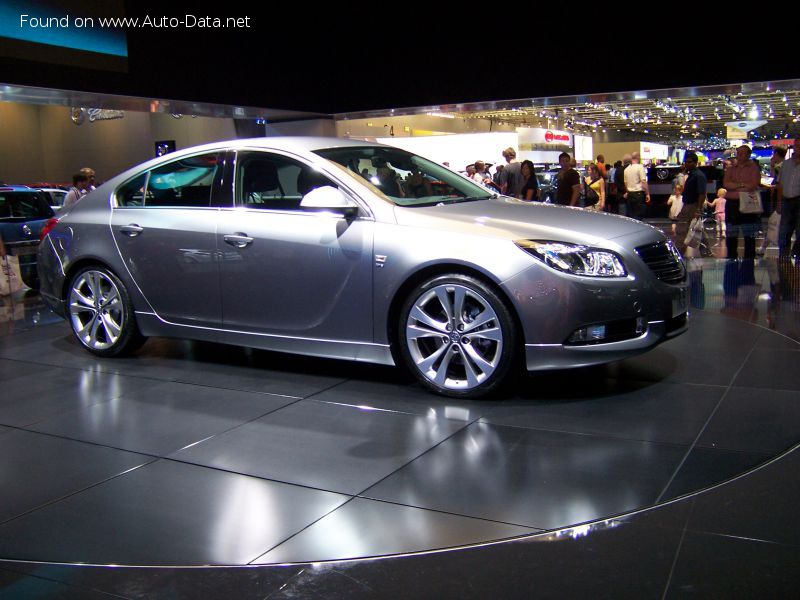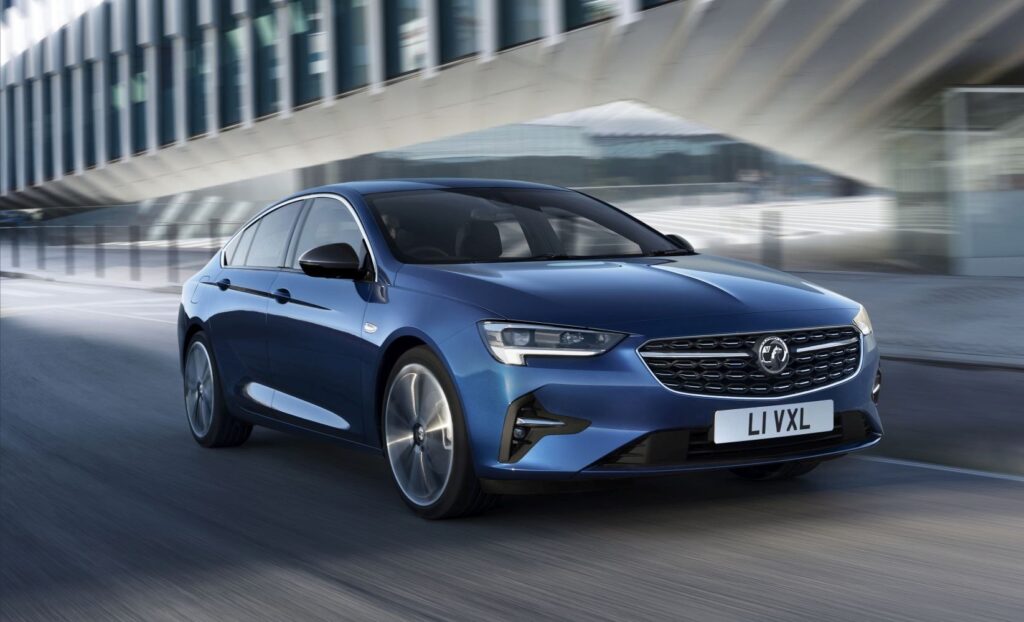
The Vauxhall Insignia II Grand Sport, particularly the facelifted 2020 model, represents a significant offering in the mid-size segment. While marketed under the Vauxhall brand in the United Kingdom, the Insignia is closely related to the Opel Insignia, sold extensively throughout mainland Europe. This liftback, positioned as a practical and stylish alternative to traditional saloons and estates, aims to provide a blend of comfort, technology, and efficiency. The 1.5 Turbo D variant, equipped with a 122 horsepower diesel engine, is designed to appeal to drivers prioritizing fuel economy and lower running costs. This model year saw updates to the exterior styling, interior technology, and engine options, enhancing the Insignia’s competitiveness in a crowded market.
Vauxhall Insignia II Grand Sport: Overview
The Insignia II Grand Sport, launched in 2017, built upon the success of the original Insignia, addressing criticisms and incorporating advancements in automotive technology. The 2020 facelift brought a more refined appearance, with a bolder front grille, revised headlights, and updated interior trim. The Grand Sport designation refers to the liftback body style, offering a larger and more accessible cargo area compared to the traditional notchback saloon. The 1.5 Turbo D model specifically targets European markets where diesel engines remain popular due to their fuel efficiency and torque characteristics. It’s a vehicle designed for long-distance comfort and everyday practicality.
Engine & Performance
The heart of the 2020 Vauxhall Insignia II Grand Sport 1.5 Turbo D is a 1.5-liter inline-3 cylinder diesel engine, designated F15DVH. This engine produces 122 horsepower at 3,500 rpm and a respectable 300 Nm (221.27 lb.-ft.) of torque between 1,750 and 2,500 rpm. The engine utilizes a turbocharger and intercooler to enhance performance and efficiency. Power is delivered to the front wheels via a 6-speed manual transmission. Acceleration from 0 to 60 mph takes 10.7 seconds, while the top speed is electronically limited to 204 km/h (126.76 mph). Fuel consumption is rated at 4.6-5.5 liters per 100 kilometers (51.1 – 42.8 US mpg, 61.4 – 51.4 UK mpg), and CO2 emissions range from 121-145 g/km, meeting Euro 6d emission standards. The engine also incorporates a Start & Stop system and a particulate filter to further reduce emissions.
Design & Features
The Insignia II Grand Sport boasts a sleek and modern liftback design. Its long wheelbase and relatively low roofline contribute to a sporty silhouette. The 2020 facelift brought a more prominent front grille with a chrome finish, redesigned LED headlights, and a revised rear bumper. Inside, the cabin is designed with comfort and practicality in mind. The five-seat configuration offers ample space for passengers, and the liftback design provides a generous 490-liter (17.3 cu. ft.) trunk space, expandable to 1450 liters (51.21 cu. ft.) with the rear seats folded down. Standard features typically include air conditioning, a touchscreen infotainment system, Bluetooth connectivity, and a range of safety systems such as ABS, electronic stability control, and multiple airbags. Higher trim levels offer features like leather upholstery, heated seats, a panoramic sunroof, and advanced driver-assistance systems.
Technical Specifications
| Brand | Vauxhall |
| Model | Insignia |
| Generation | Insignia II Grand Sport (facelift 2020) |
| Type (Engine) | 1.5 Turbo D (122 Hp) |
| Start of production | 2020 |
| Powertrain Architecture | Internal Combustion engine |
| Body type | Liftback |
| Seats | 5 |
| Doors | 5 |
| Combined fuel consumption (WLTP) | 4.6-5.5 l/100 km (51.1 – 42.8 US mpg, 61.4 – 51.4 UK mpg, 21.7 – 18.2 km/l) |
| CO2 emissions (WLTP) | 121-145 g/km |
| Fuel Type | Diesel |
| Acceleration 0 – 60 mph | 10.7 sec |
| Maximum speed | 204 km/h (126.76 mph) |
| Emission standard | Euro 6d |
| Power | 122 Hp @ 3500 rpm |
| Power per litre | 81.6 Hp/l |
| Torque | 300 Nm @ 1750-2500 rpm (221.27 lb.-ft. @ 1750-2500 rpm) |
| Engine layout | Front, Transverse |
| Engine Model/Code | F15DVH |
| Engine displacement | 1496 cm3 (91.29 cu. in.) |
| Number of cylinders | 3 |
| Engine configuration | Inline |
| Number of valves per cylinder | 4 |
| Fuel injection system | Diesel Commonrail |
| Engine aspiration | Turbocharger, Intercooler |
| Engine oil capacity | 4.25 l (4.49 US qt | 3.74 UK qt) |
| Max. weight | 2110 kg (4651.75 lbs.) |
| Trunk (boot) space – minimum | 490 l (17.3 cu. ft.) |
| Trunk (boot) space – maximum | 1450 l (51.21 cu. ft.) |
| Fuel tank capacity | 62 l (16.38 US gal | 13.64 UK gal) |
| AdBlue tank | 15 l (3.96 US gal | 3.3 UK gal) |
| Permitted trailer load with brakes (12%) | 1500 kg (3306.93 lbs.) |
| Permitted trailer load without brakes | 730 kg (1609.37 lbs.) |
| Length | 4906 mm (193.15 in.) |
| Width | 1863 mm (73.35 in.) |
| Width including mirrors | 2093 mm (82.4 in.) |
| Height | 1455 mm (57.28 in.) |
| Wheelbase | 2829 mm (111.38 in.) |
| Front overhang | 999 mm (39.33 in.) |
| Rear overhang | 1078 mm (42.44 in.) |
| Drivetrain Architecture | Front wheel drive |
| Number of gears and type of gearbox | 6 gears, manual transmission |
| Front suspension | Independent, type McPherson with coil spring and anti-roll bar |
| Rear suspension | Independent multi-link spring suspension with stabilizer |
| Assisting systems | ABS (Anti-lock braking system) |
| Steering type | Steering rack and pinion |
| Power steering | Electric Steering |
| Tires size | 215/55 R17; 245/45 R18; 245/35 R20 |
| Wheel rims size | 17; 18; 20 |