
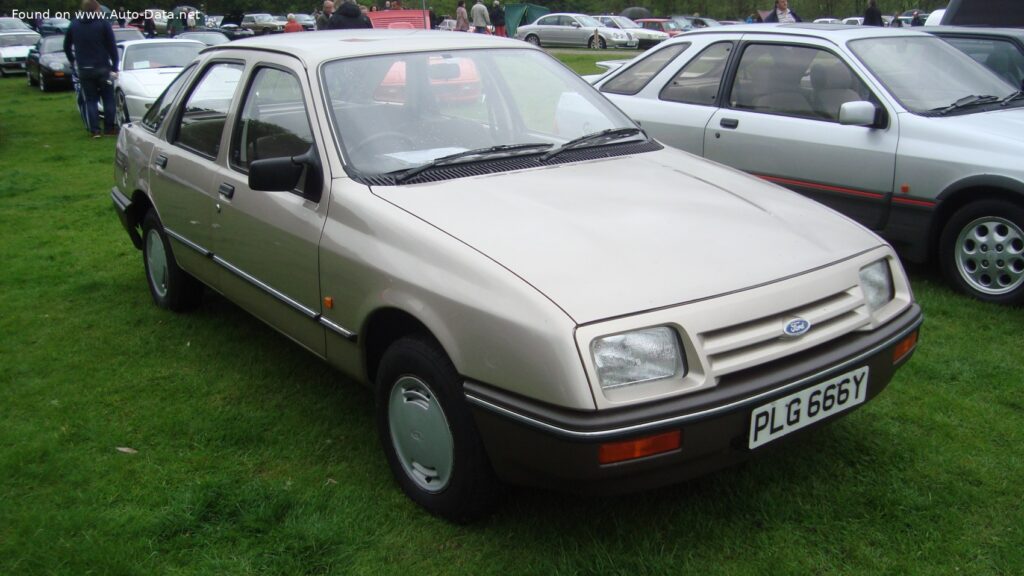
The Ford Sierra, launched in 1982, represented a significant departure from its predecessor, the Cortina. Designed to modernize Ford of Europe’s offerings, the Sierra was a thoroughly contemporary vehicle, embracing aerodynamic styling and a new platform. The Sierra Hatchback I, produced from 1982 to 1993, came in various trims, with the 2.8 XR 4×4 being a performance-oriented variant aimed at enthusiasts. This model, produced between 1985 and 1986, combined a potent engine with all-wheel drive, making it a relatively rare and sought-after vehicle, particularly within the UK and European markets. It wasn’t officially sold in the United States, but represents a key step in Ford’s development of performance hatchbacks.
The Ford Sierra Hatchback I 2.8 XR 4×4
The 2.8 XR 4×4 was positioned as the flagship of the Sierra Hatchback range, offering a blend of practicality and performance. It was designed to appeal to drivers who wanted a versatile vehicle capable of handling both daily commutes and spirited driving. The “XR” designation signified a higher level of trim and performance compared to the standard Sierra models. The inclusion of a four-wheel-drive system further enhanced its appeal, providing improved traction and stability, especially in adverse weather conditions. While not a direct competitor to US muscle cars, the Sierra XR 4×4 offered a unique driving experience within the European context, emphasizing handling and all-weather capability over sheer horsepower.
Engine & Performance
The heart of the Sierra 2.8 XR 4×4 is its 2.8-liter naturally aspirated gasoline engine. This engine produced 150 horsepower, a respectable figure for the mid-1980s, particularly in Europe where engine displacement was often favored over high-revving designs. The engine’s torque output, while not explicitly stated in the provided data, would have been substantial, providing strong acceleration and effortless cruising. Power was delivered to all four wheels via a five-speed manual transmission, allowing drivers to fully exploit the engine’s capabilities. The all-wheel-drive system was a key feature, enhancing grip and stability on various surfaces. This system wasn’t a sophisticated electronic setup like modern AWD systems; it was a more mechanical approach, providing a permanent four-wheel drive configuration. The combination of the engine and drivetrain resulted in a vehicle that was both quick and capable, making it a popular choice for those who lived in areas with challenging road conditions or simply enjoyed a more engaging driving experience.
Design & Features
The Sierra Hatchback I featured a distinctive, angular design that was considered quite modern for its time. The hatchback body style offered a practical and versatile cargo area, making it suitable for families and those who needed to transport larger items. The 2.8 XR 4×4 trim level included several features that set it apart from the standard Sierra models. These typically included sporty styling cues, such as a rear spoiler, unique alloy wheels, and upgraded interior trim. The interior was functional and relatively spacious, offering seating for five passengers. Safety features, while limited by the standards of today, were typical for the era, including seatbelts and a robust chassis structure. The Sierra’s design represented a significant shift from the more traditional styling of the Cortina, embracing a more aerodynamic and contemporary aesthetic. The three or five-door configuration offered buyers a choice based on their individual needs and preferences. The vehicle’s relatively compact dimensions made it easy to maneuver in urban environments, while its all-wheel-drive system provided added confidence in challenging conditions.
Market Context
The Ford Sierra was primarily a European model, designed to compete with vehicles like the Opel/Vauxhall Astra, Volkswagen Golf, and Peugeot 305. It was a key part of Ford of Europe’s strategy to modernize its lineup and appeal to a broader range of customers. The 2.8 XR 4×4, with its performance-oriented features, targeted a niche market of enthusiasts who wanted a practical yet engaging vehicle. It wasn’t intended to be a direct competitor to American muscle cars or luxury sedans; rather, it was designed to offer a unique blend of performance, practicality, and all-weather capability within the European context. The Sierra’s success helped to establish Ford as a leading manufacturer in the European market, and it paved the way for future generations of Ford hatchbacks.
Technical Specifications
| Brand | Ford |
| Model | Sierra |
| Generation | Sierra Hatchback I |
| Type (Engine) | 2.8 XR 4×4 (150 Hp) |
| Start of production | 1985 |
| End of production | 1986 |
| Powertrain Architecture | Internal Combustion engine |
| Body type | Hatchback |
| Seats | 5 |
| Doors | 3/5 |
| Fuel Type | Petrol (Gasoline) |
| Power | 150 Hp |
| Engine aspiration | Naturally aspirated engine |
| Fuel tank capacity | 60 l (15.85 US gal | 13.2 UK gal) |
| Length | 4425 mm (174.21 in.) |
| Width | 1694 mm (66.69 in.) |
| Height | 1407 mm (55.39 in.) |
| Wheelbase | 2608 mm (102.68 in.) |
| Front track | 1452 mm (57.17 in.) |
| Rear (Back) track | 1468 mm (57.8 in.) |
| Minimum turning circle (turning diameter) | 10 m (32.81 ft.) |
| Drive wheel | All wheel drive (4×4) |
| Number of gears and type of gearbox | 5 gears, manual transmission |
| Front brakes | Ventilated discs |
| Rear brakes | Drum |
