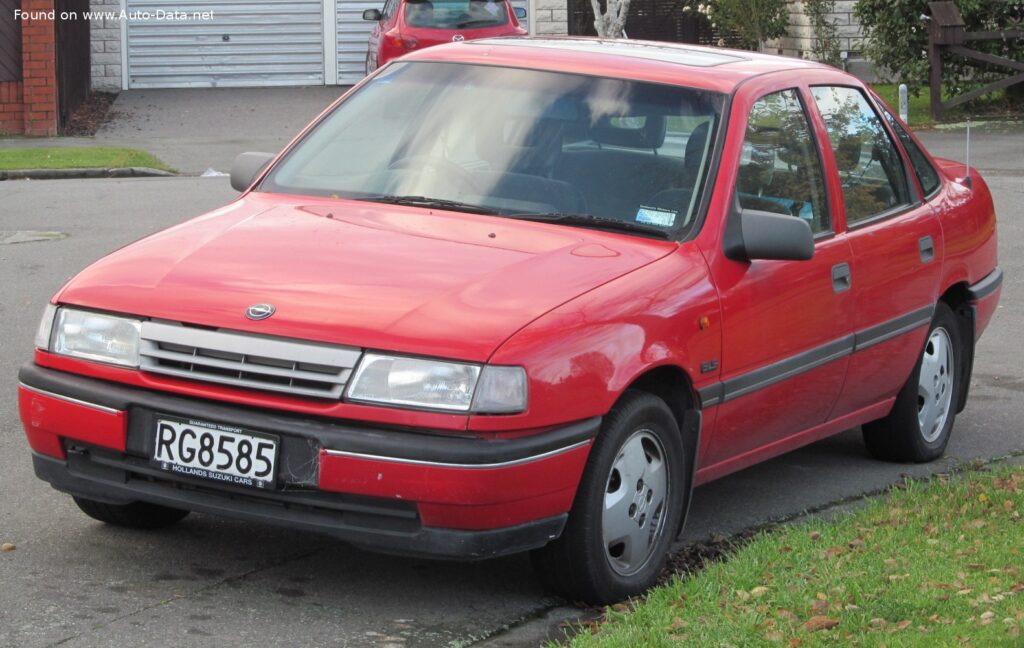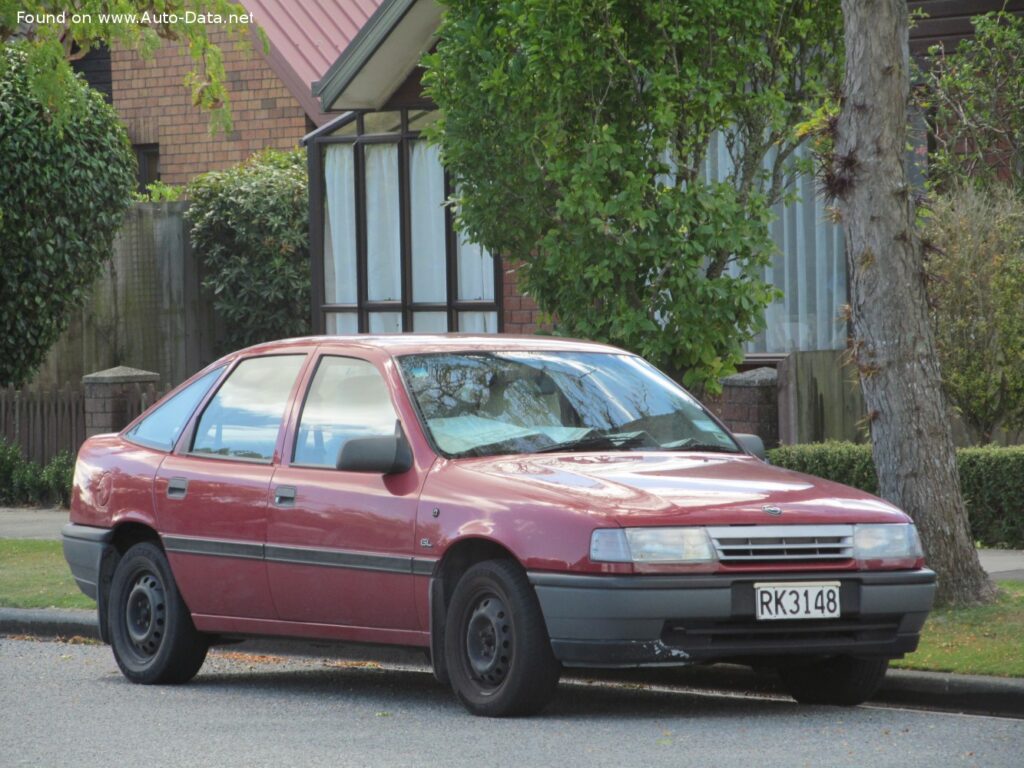
The Opel Vectra A CC 2.0i GT was a compact executive car produced by the German manufacturer Opel between 1988 and 1989. Representing the first generation of the Vectra, designated the “A” series, it was intended as a replacement for both the Opel Ascona and Opel Manta, consolidating Opel’s offerings in the competitive mid-size segment. The “CC” designation stands for “Caravan Coupe,” indicating a hatchback body style. While not officially sold in the United States, the Vectra A was a significant model in Europe, offering a blend of practicality, performance, and modern features for its time. The 2.0i GT variant, with its 129 horsepower engine, was positioned as a sporty trim level within the Vectra A range.
Opel Vectra A CC 2.0i GT: A Detailed Overview
The Vectra A marked a departure for Opel, moving towards more aerodynamic designs and incorporating contemporary technology. It aimed to compete with established rivals like the Ford Mondeo, Volkswagen Passat, and Peugeot 405. The hatchback configuration, particularly popular in Europe, provided enhanced versatility compared to traditional saloon (sedan) models. The 2.0i GT trim level focused on providing a more engaging driving experience, appealing to buyers seeking a balance between comfort and performance.
Engine & Performance
The heart of the Vectra A CC 2.0i GT is its 1998 cc (121.93 cu. in.) inline-four cylinder engine, designated the 20SEH. This naturally aspirated engine produces 129 horsepower at 5200 rpm and 180 Nm (132.76 lb.-ft.) of torque at 2600 rpm. The engine features multi-port fuel injection and an overhead camshaft (OHC) valvetrain with two valves per cylinder. This configuration delivers a power output of 64.6 horsepower per liter. Power is delivered to the front wheels via a five-speed manual transmission. Performance figures include a maximum speed of 206 km/h (128 mph). The weight-to-power ratio of 9.7 kg/Hp and a weight-to-torque ratio of 6.9 kg/Nm contribute to a reasonably responsive driving experience for its era. Fuel economy is rated at 10.3 l/100 km (22.8 US mpg) in urban conditions, 5.6 l/100 km (42 US mpg) on the extra-urban cycle, and 7.1 l/100 km (33.1 US mpg) combined.
Design & Features
The Opel Vectra A CC is a five-door hatchback, offering seating for five passengers. Its design, while typical of late 1980s automotive styling, emphasized aerodynamics to improve fuel efficiency and reduce wind noise. The hatchback body style provides a practical cargo area, with a minimum capacity of 460 liters (16.24 cu. ft.) expanding to 1290 liters (45.56 cu. ft.) with the rear seats folded down. Safety features for the time included an Anti-lock Braking System (ABS), which was becoming increasingly common on European vehicles. Hydraulic power steering was also standard, enhancing driver comfort and control. The interior was designed with practicality in mind, offering a comfortable cabin with a focus on ergonomics. The vehicle’s curb weight is 1245 kg (2744.76 lbs), with a maximum permissible weight of 1750 kg (3858.09 lbs) and a maximum load capacity of 505 kg (1113.33 lbs). The Vectra A CC utilized coil spring suspension on both the front and rear axles, providing a balance between ride comfort and handling.
Technical Specifications
| Brand | Opel |
| Model | Vectra |
| Generation | Vectra A CC |
| Type (Engine) | 2.0i GT (129 Hp) |
| Start of production | 1988 |
| End of production | 1989 |
| Powertrain Architecture | Internal Combustion engine |
| Body type | Hatchback |
| Seats | 5 |
| Doors | 5 |
| Fuel consumption (urban) | 10.3 l/100 km (22.8 US mpg) |
| Fuel consumption (extra urban) | 5.6 l/100 km (42 US mpg) |
| Fuel consumption (combined) | 7.1 l/100 km (33.1 US mpg) |
| Fuel Type | Petrol (Gasoline) |
| Maximum speed | 206 km/h (128 mph) |
| Weight-to-power ratio | 9.7 kg/Hp |
| Weight-to-torque ratio | 6.9 kg/Nm |
| Power | 129 Hp @ 5200 rpm |
| Power per litre | 64.6 Hp/l |
| Torque | 180 Nm @ 2600 rpm (132.76 lb.-ft. @ 2600 rpm) |
| Engine layout | Front, Transverse |
| Engine Model/Code | 20SEH |
| Engine displacement | 1998 cm3 (121.93 cu. in.) |
| Number of cylinders | 4 |
| Engine configuration | Inline |
| Cylinder Bore | 86 mm (3.39 in.) |
| Piston Stroke | 86 mm (3.39 in.) |
| Compression ratio | 9.2:1 |
| Number of valves per cylinder | 2 |
| Fuel injection system | Multi-port manifold injection |
| Engine aspiration | Naturally aspirated |
| Valvetrain | OHC |
| Engine oil capacity | 4 l (4.23 US qt | 3.52 UK qt) |
| Coolant capacity | 7.2 l (7.61 US qt | 6.34 UK qt) |
| Kerb Weight | 1245 kg (2744.76 lbs.) |
| Max. weight | 1750 kg (3858.09 lbs.) |
| Max load | 505 kg (1113.33 lbs.) |
| Trunk (boot) space – minimum | 460 l (16.24 cu. ft.) |
| Trunk (boot) space – maximum | 1290 l (45.56 cu. ft.) |
| Fuel tank capacity | 61 l (16.11 US gal | 13.42 UK gal) |
| Length | 4352 mm (171.34 in.) |
| Width | 1706 mm (67.17 in.) |
| Height | 1400 mm (55.12 in.) |
| Wheelbase | 2600 mm (102.36 in.) |
| Front track | 1420 mm (55.91 in.) |
| Rear track | 1423 mm (56.02 in.) |
| Drivetrain | Front wheel drive |
| Number of gears | 5 gears, manual transmission |
| Front suspension | Coil spring |
| Rear suspension | Coil spring |
| Front brakes | Ventilated discs |
| Rear brakes | Disc |
| Assisting systems | ABS (Anti-lock braking system), Hydraulic Power Steering |
| Tires size | 175/70 R14 |
| Wheel rims size | 14 |
The Opel Vectra A CC 2.0i GT, while not a high-performance sports car, represented a well-rounded and practical option for European buyers in the late 1980s. Its combination of a reasonably powerful engine, comfortable interior, and versatile hatchback body style made it a popular choice in its segment. It laid the groundwork for subsequent generations of the Vectra, which continued to evolve and refine Opel’s presence in the competitive mid-size car market.