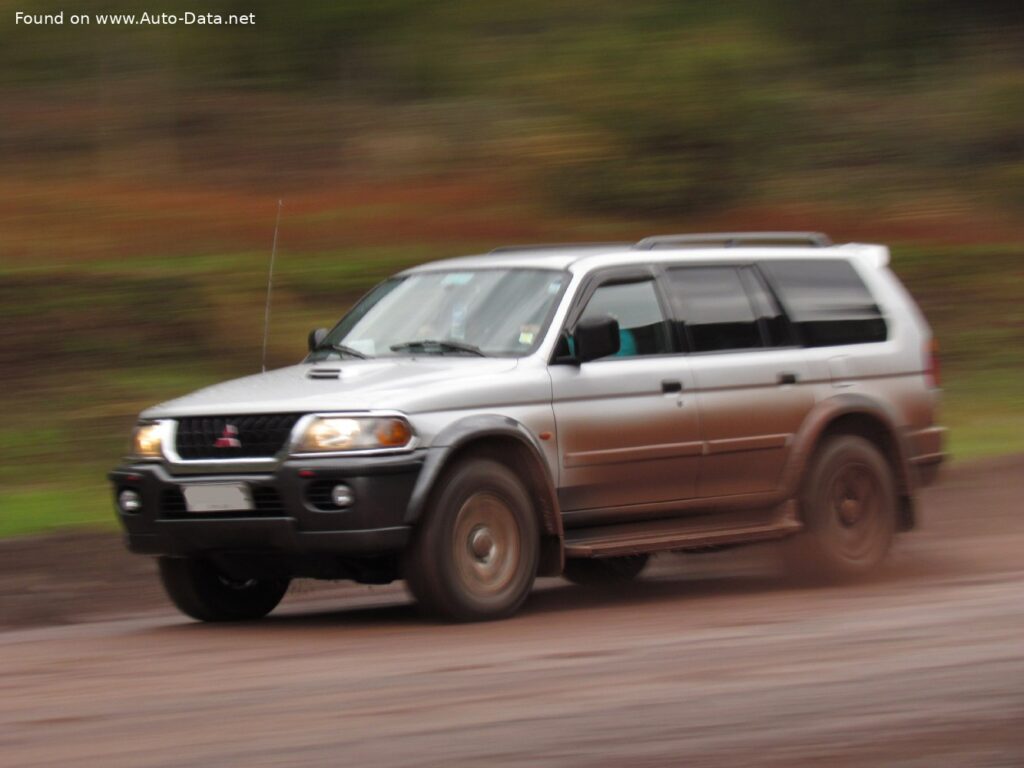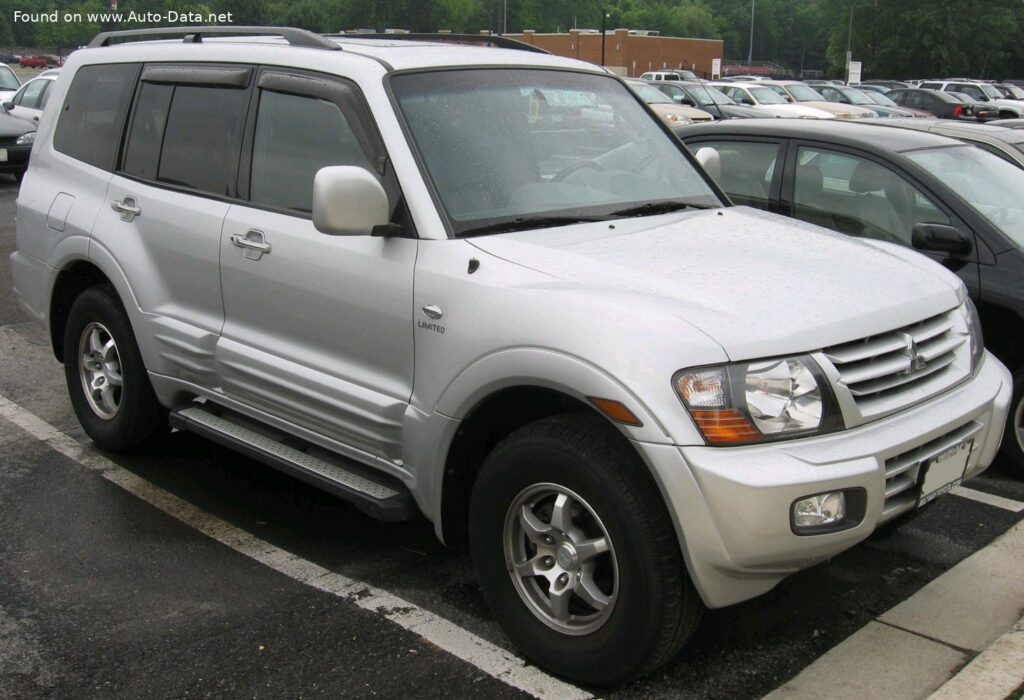
The Mitsubishi Montero, known as the Pajero in many international markets, is a mid-size to full-size SUV produced by Mitsubishi Motors. The generation spanning from 2000 to 2006 represents the third generation of the Montero, a vehicle that gained a reputation for its robust build quality, off-road capability, and comfortable ride. While not a major seller in the United States, the Montero held a significant position in markets like Europe, Australia, and Latin America, competing with vehicles like the Toyota Land Cruiser Prado and Nissan Patrol. This iteration of the Montero aimed to blend traditional SUV toughness with increased refinement and modern features.
Mitsubishi Montero 3.5 V6 GDI: An Overview
The third-generation Montero, launched in 1999, represented a substantial upgrade over its predecessor. It featured a fully independent suspension, a body-on-frame construction for durability, and a range of powerful engines. The 3.5-liter V6 GDI (Gasoline Direct Injection) engine, introduced during this generation, became a popular choice, offering a balance of performance and fuel efficiency. The Montero’s seven-seat configuration and spacious interior made it a practical choice for families, while its four-wheel-drive system ensured it remained a capable off-roader. The model was discontinued in 2006, paving the way for the fourth generation.
Engine & Performance
The heart of the Mitsubishi Montero 3.5 V6 GDI is a 3.5-liter V6 engine employing Gasoline Direct Injection (GDI) technology. This engine produces 202 horsepower at 5000 rpm and 318 Nm (234.54 lb.-ft.) of torque at 4000 rpm. The GDI system improves fuel efficiency and power output by injecting fuel directly into the combustion chamber. The engine is longitudinally mounted at the front of the vehicle. Power is delivered through a five-speed automatic transmission to all four wheels, providing a robust and capable drivetrain. Acceleration from 0 to 100 km/h (0-62 mph) takes 10.7 seconds, while 0 to 60 mph is achieved in a calculated 10.2 seconds. The Montero boasts a maximum speed of 190 km/h (118.06 mph). The weight-to-power ratio of 10.6 kg/Hp and a weight-to-torque ratio of 6.7 kg/Nm contribute to its responsive driving experience.
Design & Features
The 2000-2006 Mitsubishi Montero is a five-door SUV with seating for up to seven passengers. Its body-on-frame construction provides a solid foundation for both on-road comfort and off-road durability. The exterior design is characterized by its boxy, utilitarian shape, typical of SUVs from that era. Key features include a spacious interior, a versatile seating arrangement, and a large cargo area. The trunk offers a minimum capacity of 215 liters (7.59 cu. ft.) which expands to a substantial 1700 liters (60.03 cu. ft.) with the rear seats folded down. Safety features for the time included ABS (Anti-lock Braking System) and ventilated disc brakes on all four wheels. The suspension utilizes a double wishbone setup at the front and coil springs at the rear, providing a comfortable ride and good handling characteristics. Hydraulic power steering ensures ease of maneuverability. The vehicle rides on 16-inch wheels fitted with 265/70 R16 H tires.
Technical Specifications
| Brand | Mitsubishi |
| Model | Montero |
| Generation | Montero |
| Type (Engine) | 3.5 V6 GDI (202 Hp) Automatic |
| Start of production | 2000 year |
| End of production | 2006 year |
| Powertrain Architecture | Internal Combustion engine |
| Body type | SUV |
| Seats | 7 |
| Doors | 5 |
| Fuel consumption (urban) | 19.5 l/100 km (12.1 US mpg, 14.5 UK mpg, 5.1 km/l) |
| Fuel consumption (extra urban) | 11.1 l/100 km (21.2 US mpg, 25.4 UK mpg, 9 km/l) |
| Fuel consumption (combined) | 14.2 l/100 km (16.6 US mpg, 19.9 UK mpg, 7 km/l) |
| Fuel Type | Petrol (Gasoline) |
| Acceleration 0 – 100 km/h | 10.7 sec |
| Acceleration 0 – 62 mph | 10.7 sec |
| Acceleration 0 – 60 mph | 10.2 sec |
| Maximum speed | 190 km/h (118.06 mph) |
| Weight-to-power ratio | 10.6 kg/Hp |
| Weight-to-torque ratio | 6.7 kg/Nm |
| Power | 202 Hp @ 5000 rpm |
| Torque | 318 Nm @ 4000 rpm (234.54 lb.-ft. @ 4000 rpm) |
| Engine layout | Front, Longitudinal |
| Engine displacement | 3497 cm3 (213.4 cu. in.) |
| Number of cylinders | 6 |
| Engine configuration | V-engine |
| Cylinder Bore | 93 mm (3.66 in.) |
| Piston Stroke | 85.8 mm (3.38 in.) |
| Compression ratio | 10.4:1 |
| Number of valves per cylinder | 4 |
| Fuel injection system | Direct injection |
| Engine aspiration | Naturally aspirated engine |
| Valvetrain | DOHC |
| Kerb Weight | 2135 kg (4706.87 lbs.) |
| Max. weight | 2760 kg (6084.76 lbs.) |
| Max load | 625 kg (1377.89 lbs.) |
| Trunk (boot) space – minimum | 215 l (7.59 cu. ft.) |
| Trunk (boot) space – maximum | 1700 l (60.03 cu. ft.) |
| Fuel tank capacity | 90 l (23.78 US gal | 19.8 UK gal) |
| Length | 4795 mm (188.78 in.) |
| Width | 1875 mm (73.82 in.) |
| Height | 1855 mm (73.03 in.) |
| Wheelbase | 2780 mm (109.45 in.) |
| Front track | 1560 mm (61.42 in.) |
| Rear (Back) track | 1560 mm (61.42 in.) |
| Drive wheel | All wheel drive (4×4) |
| Number of gears and type of gearbox | 5 gears, automatic transmission |
| Front suspension | Double wishbone |
| Rear suspension | Coil spring |
| Front brakes | Ventilated discs |
| Rear brakes | Ventilated discs |
| Assisting systems | ABS (Anti-lock braking system) |
| Steering type | Steering rack and pinion |
| Power steering | Hydraulic Steering |
| Tires size | 265/70 R16 H |
| Wheel rims size | 16 |