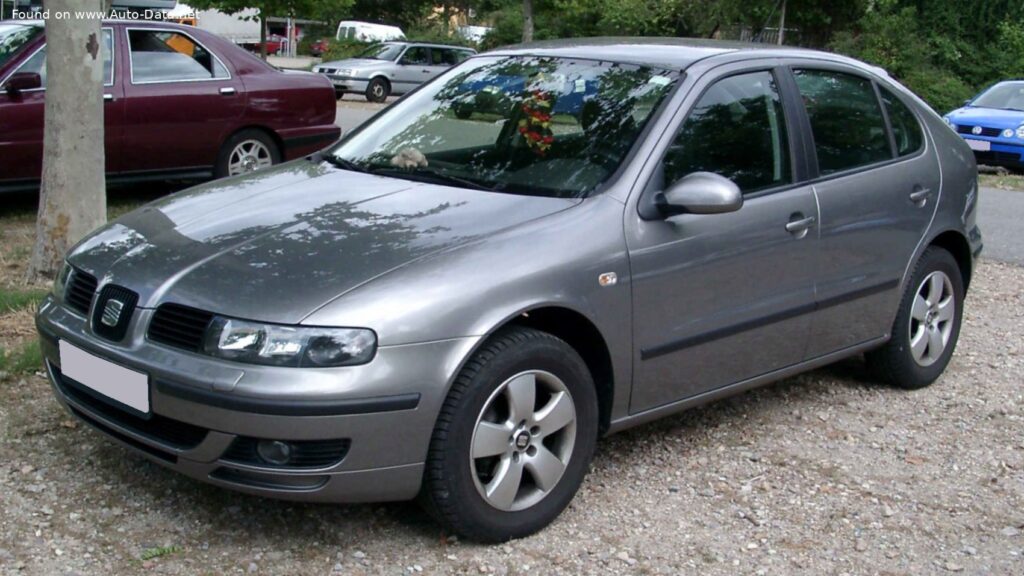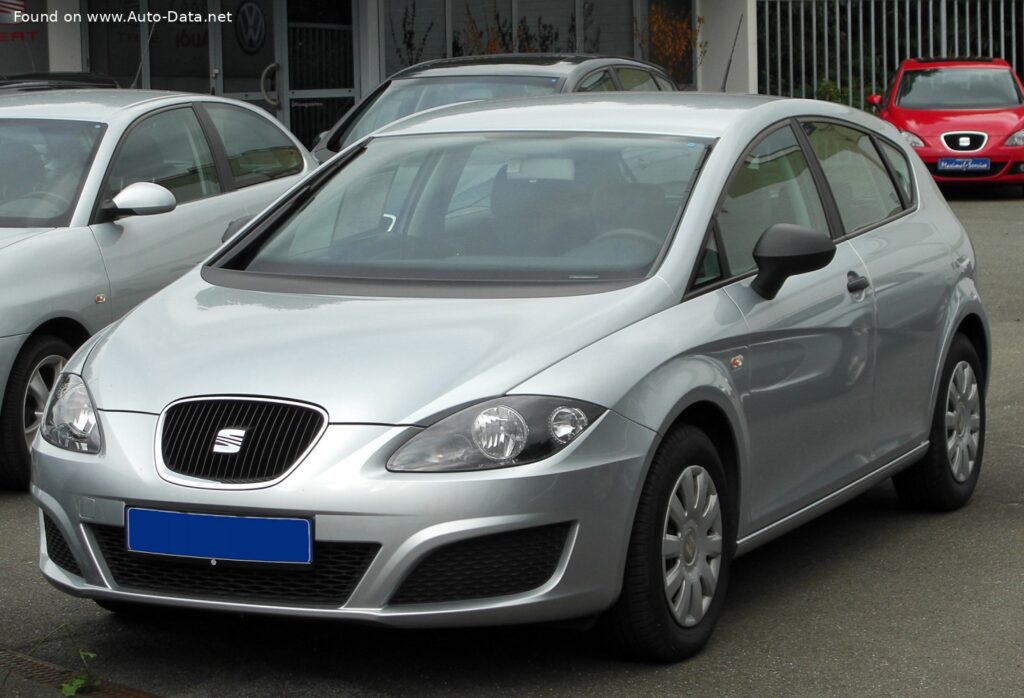
The SEAT León II (1P), particularly the facelifted version introduced in 2009, represents a significant step forward for the Spanish automaker. Positioned as a compact hatchback, the León aimed to compete directly with established European rivals like the Volkswagen Golf, Ford Focus, and Opel Astra. While SEAT is now a subsidiary of the Volkswagen Group, the León II maintained a distinct identity, offering a blend of sporty handling, practical design, and value for money. This specific variant, the 1.6 MPI (102/98 Hp) LPG, was geared towards markets seeking a more economical and environmentally conscious option, leveraging the benefits of Liquefied Petroleum Gas (LPG) alongside traditional petrol power. The León II was not officially sold in the United States, but it was a popular choice in Europe, South America, and other international markets.
SEAT León II (1P, facelift 2009) 1.6 MPI (102/98 Hp) LPG: An Overview
The facelifted León II, produced from 2009 to 2012, brought subtle but important changes to the original 1P model. These updates included revised front and rear styling, interior enhancements, and improvements to the engine range. The 1.6 MPI LPG version offered a compelling alternative to purely petrol-powered vehicles, providing lower running costs and reduced emissions, particularly in regions with favorable LPG infrastructure and pricing. The dual-fuel capability allowed drivers to switch between petrol and LPG, maximizing flexibility and range.
Engine & Performance
At the heart of the SEAT León II 1.6 MPI LPG lies a 1.6-liter inline four-cylinder engine. This naturally aspirated powerplant produces 102 horsepower (98 horsepower when running on LPG) at 5600 rpm and 148 Nm (109.16 lb.-ft.) of torque at 3800 rpm. The engine utilizes multi-port fuel injection and a compression ratio of 10.5:1. The LPG conversion allows for a slight reduction in power output, but also offers significant fuel cost savings. The engine, designated CHGA, is a robust and relatively simple design, known for its reliability. Performance figures include a 0-100 km/h (0-62 mph) acceleration time of 12.2 seconds, and a top speed of 184 km/h (114.33 mph) on petrol. When running on LPG, acceleration to 100 km/h increases slightly to 12.6 seconds, with a corresponding reduction in top speed to 181 km/h. The car features a five-speed manual transmission, driving the front wheels.
Design & Features
The SEAT León II is a five-door hatchback, offering a practical and versatile body style. The 2009 facelift brought a more aggressive front fascia, with a redesigned grille and headlights. The interior was updated with improved materials and a more modern dashboard layout. The León II prioritizes functionality and driver engagement. Standard features typically included air conditioning, power windows, central locking, and an audio system. Safety features, common for vehicles of this era, included ABS (Anti-lock Braking System) and front airbags. The hatchback configuration provides a generous 341 liters (12.04 cu. ft.) of trunk space, expandable to 1166 liters (41.18 cu. ft.) with the rear seats folded down. The car’s dimensions are 4315 mm (169.88 in.) in length, 1768 mm (69.61 in.) in width, and 1459 mm (57.44 in.) in height. The LPG system is typically installed with the LPG tank occupying space in the trunk, reducing overall cargo capacity slightly.
Technical Specifications
| Brand | Seat |
| Model | Leon |
| Generation | Leon II (1P, facelift 2009) |
| Type (Engine) | 1.6 MPI (102/98 Hp) LPG |
| Start of production | 2009 year |
| End of production | 2012 year |
| Powertrain Architecture | Internal Combustion engine |
| Body type | Hatchback |
| Seats | 5 |
| Doors | 5 |
| Fuel consumption (economy) – urban | 9.9 l/100 km (23.8 US mpg, 28.5 UK mpg, 10.1 km/l) |
| Fuel consumption (economy) – urban (LPG) | 12.9 l/100 km |
| Fuel consumption (economy) – extra urban | 5.8 l/100 km (40.6 US mpg, 48.7 UK mpg, 17.2 km/l) |
| Fuel consumption (economy) – extra urban (LPG) | 7.4 l/100 km |
| Fuel consumption (economy) – combined | 7.3 l/100 km (32.2 US mpg, 38.7 UK mpg, 13.7 km/l) |
| Fuel consumption (economy) – combined (LPG) | 9.5 l/100 km |
| CO2 emissions | 173 g/km |
| CO2 emissions (LPG) | 153 g/km |
| Fuel Type | Petrol / LPG |
| Acceleration 0 – 100 km/h | 12.2 sec |
| Acceleration 0 – 62 mph | 12.2 sec |
| Acceleration 0 – 100 km/h (LPG) | 12.6 sec |
| Acceleration 0 – 60 mph (Calculated by Auto-Data.net) | 11.6 sec |
| Maximum speed | 184 km/h (114.33 mph) |
| Maximum speed (LPG) | 181 km/h |
| Emission standard | Euro 4 |
| Weight-to-power ratio | 11.1 kg/Hp, 90.3 Hp/tonne |
| Weight-to-torque ratio | 7.6 kg/Nm, 131 Nm/tonne |
| Power | 102 Hp @ 5600 rpm |
| Power per litre | 63.9 Hp/l |
| Power (LPG) | 98 Hp @ 5600 rpm |
| Power per litre (LPG) | 61.4 Hp/l |
| Torque | 148 Nm @ 3800 rpm (109.16 lb.-ft. @ 3800 rpm) |
| Torque (LPG) | 144 Nm @ 3800 rpm |
| Engine layout | Front, Transverse |
| Engine Model/Code | CHGA |
| Engine displacement | 1595 cm3 (97.33 cu. in.) |
| Number of cylinders | 4 |
| Engine configuration | Inline |
| Cylinder Bore | 81 mm (3.19 in.) |
| Piston Stroke | 77.4 mm (3.05 in.) |
| Compression ratio | 10.5:1 |
| Number of valves per cylinder | 2 |
| Fuel injection system | Multi-port manifold injection |
| Engine aspiration | Naturally aspirated engine |
| Engine oil capacity | 4.1 l (4.33 US qt | 3.61 UK qt) |
| Coolant | 8 l (8.45 US qt | 7.04 UK qt) |
| Kerb Weight | 1130 kg (2491.22 lbs.) |
| Max. weight | 1836 kg (4047.69 lbs.) |
| Max load | 706 kg (1556.46 lbs.) |
| Trunk (boot) space – minimum | 341 l (12.04 cu. ft.) |
| Trunk (boot) space – maximum | 1166 l (41.18 cu. ft.) |
| Fuel tank capacity | 55 l (14.53 US gal | 12.1 UK gal) |
| Max. roof load | 75 kg (165.35 lbs.) |
| Permitted trailer load with brakes (8%) | 1500 kg (3306.93 lbs.) |
| Permitted trailer load with brakes (12%) | 1200 kg (2645.55 lbs.) |
| Permitted trailer load without brakes | 670 kg (1477.1 lbs.) |
| Length | 4315 mm (169.88 in.) |
| Width | 1768 mm (69.61 in.) |
| Height | 1459 mm (57.44 in.) |
| Wheelbase | 2578 mm (101.5 in.) |
| Front track | 1539 mm (60.59 in.) |
| Rear (Back) track | 1523 mm (59.96 in.) |
| Front overhang | 949 mm (37.36 in.) |
| Rear overhang | 788 mm (31.02 in.) |
| Minimum turning circle (turning diameter) | 10.7 m (35.1 ft.) |
| Drivetrain Architecture | The Internal combustion engine (ICE) drives the front wheels of the vehicle. |
| Drive wheel | Front wheel drive |
| Number of gears and type of gearbox | 5 gears, manual transmission |
| Front suspension | Independent, type McPherson with coil spring and anti-roll bar |
| Rear suspension | Independent multi-link suspension |
| Front brakes | Ventilated discs |
| Rear brakes | Disc |
| Assisting systems | ABS (Anti-lock braking system) |
| Steering type | Steering rack and pinion |
| Power steering | Electric Steering |
| Tires size | 205/55 R16 |
| Wheel rims size | 6.5J x 16 |