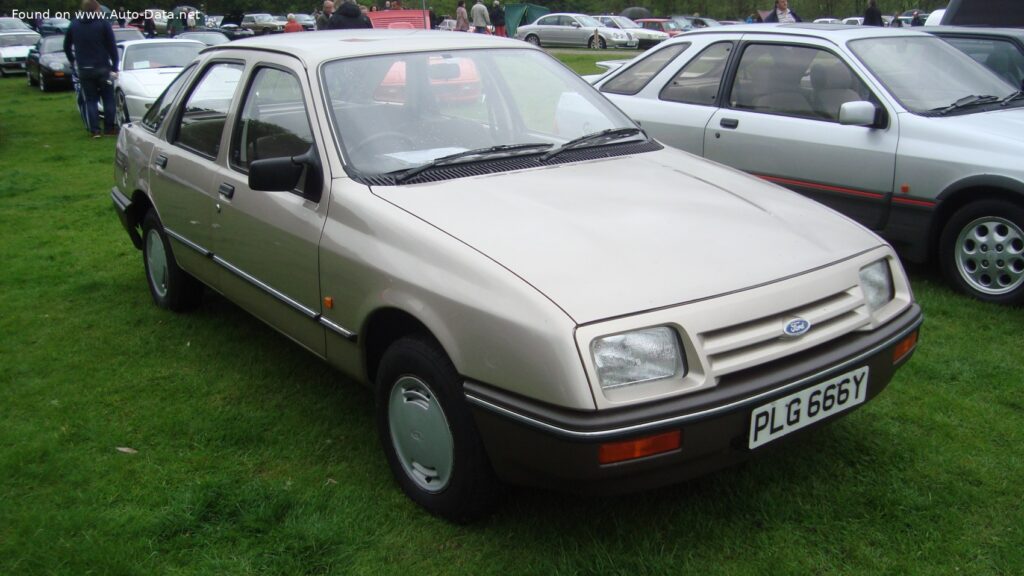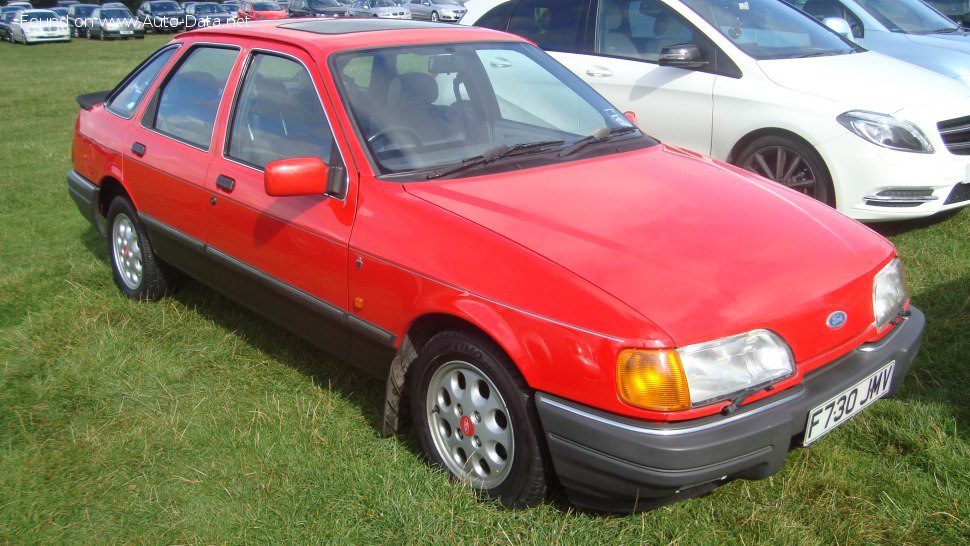
The Ford Sierra, launched in 1982, represented a significant departure from its predecessor, the Cortina. Designed to compete in the mid-size family car segment, the Sierra aimed for a more modern and aerodynamic profile. The Sierra Hatchback II 1.6, produced from 1988 to 1993, was a key variant within the Sierra range, offering a practical and affordable option for European buyers. While never officially sold in the United States, the Sierra was a hugely popular vehicle in the UK and across Europe, known for its handling and relatively modern design for its time. It served as a crucial model for Ford during a period of significant change in the automotive industry.
Ford Sierra Hatchback II 1.6 (72 Hp): A Detailed Overview
The Sierra Hatchback II 1.6 occupied a vital position in Ford’s European lineup. It wasn’t a performance car, but a sensible, everyday vehicle designed for families and commuters. The “II” designation signifies a series of updates and refinements made to the original Sierra, improving its build quality, interior comfort, and overall refinement. The 1.6-liter engine option provided a balance between fuel economy and adequate power for typical driving conditions. The hatchback body style, while not new to the market, was becoming increasingly popular, offering greater practicality than traditional saloon (sedan) cars.
Engine & Performance
The heart of the Sierra Hatchback II 1.6 is a 1.6-liter inline four-cylinder petrol (gasoline) engine. This engine produced 72 horsepower at 4900 rpm and 119 Newton-meters (87.77 lb.-ft.) of torque at 2900 rpm. While these figures might seem modest by modern standards, they were competitive within its class during the late 1980s and early 1990s. The engine featured a single overhead camshaft (OHC) valvetrain with two valves per cylinder and utilized a carburetor fuel injection system – a common setup for the era. The longitudinal engine layout, coupled with rear-wheel drive, provided a driving experience that was considered engaging and balanced, particularly for those accustomed to front-wheel-drive cars. The five-speed manual transmission allowed drivers to optimize engine performance and fuel efficiency. Power per liter was rated at 45.1 Hp/l, indicating a reasonably efficient engine design for its time.
Design & Features
The Sierra Hatchback II’s design was a significant departure from the boxy aesthetics of the Cortina. Its sleek, aerodynamic shape was influenced by contemporary design trends, aiming to reduce drag and improve fuel economy. The hatchback body style offered a large and practical cargo area, accessible through a rear liftgate. The interior was functional and relatively spacious, accommodating five passengers comfortably. While not lavishly equipped, the Sierra offered essential features for the time, including comfortable seating, basic instrumentation, and ventilation. Safety features were limited by the standards of the era, but typically included seatbelts and a robust chassis structure. The Sierra’s design prioritized practicality and affordability over luxury, making it a popular choice for budget-conscious buyers. The 5-door configuration enhanced accessibility for passengers and cargo.
Technical Specifications
| Brand | Ford |
| Model | Sierra |
| Generation | Sierra Hatchback II |
| Type (Engine) | 1.6 (72 Hp) |
| Start of production | 1988 |
| End of production | 1993 |
| Powertrain Architecture | Internal Combustion engine |
| Body type | Hatchback |
| Seats | 5 |
| Doors | 5 |
| Fuel Type | Petrol (Gasoline) |
| Power | 72 Hp @ 4900 rpm |
| Power per litre | 45.1 Hp/l |
| Torque | 119 Nm @ 2900 rpm |
| Torque (lb.-ft.) | 87.77 lb.-ft. @ 2900 rpm |
| Engine layout | Front, Longitudinal |
| Engine displacement | 1597 cm3 |
| Engine displacement (cu. in.) | 97.45 cu. in. |
| Number of cylinders | 4 |
| Engine configuration | Inline |
| Cylinder Bore | 81.3 mm |
| Cylinder Bore (in.) | 3.2 in. |
| Piston Stroke | 77 mm |
| Piston Stroke (in.) | 3.03 in. |
| Number of valves per cylinder | 2 |
| Fuel injection system | Carburettor |
| Engine aspiration | Naturally aspirated engine |
| Valvetrain | OHC |
| Fuel tank capacity | 60 l |
| Fuel tank capacity (US gal) | 15.85 US gal |
| Fuel tank capacity (UK gal) | 13.2 UK gal |
| Length | 4425 mm |
| Length (in.) | 174.21 in. |
| Width | 1694 mm |
| Width (in.) | 66.69 in. |
| Height | 1407 mm |
| Height (in.) | 55.39 in. |
| Wheelbase | 2608 mm |
| Wheelbase (in.) | 102.68 in. |
| Front track | 1452 mm |
| Front track (in.) | 57.17 in. |
| Rear track | 1468 mm |
| Rear track (in.) | 57.8 in. |
| Minimum turning circle | 10 m |
| Minimum turning circle (ft.) | 32.81 ft. |
| Drivetrain Architecture | Rear wheel drive |
| Drive wheel | Rear wheel drive |
| Number of gears | 5 |
| Type of gearbox | Manual transmission |
| Front brakes | Disc |
| Rear brakes | Drum |
The Ford Sierra Hatchback II 1.6, while not a groundbreaking vehicle, played a significant role in the European automotive landscape. It offered a practical, affordable, and reasonably efficient transportation solution for a wide range of buyers. Its rear-wheel-drive configuration and relatively simple mechanical design provided a driving experience that many enthusiasts still appreciate today. Though never officially available in the US market, the Sierra remains a fondly remembered and historically important model in Ford’s global history.