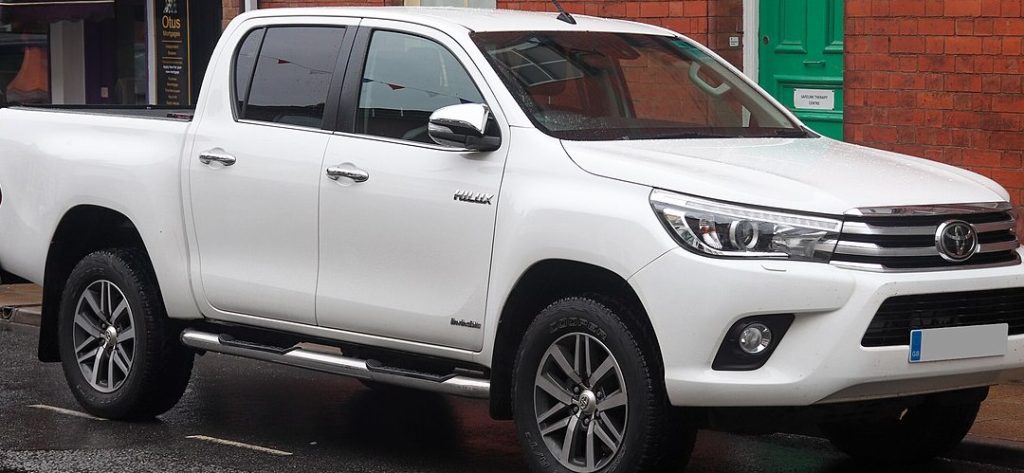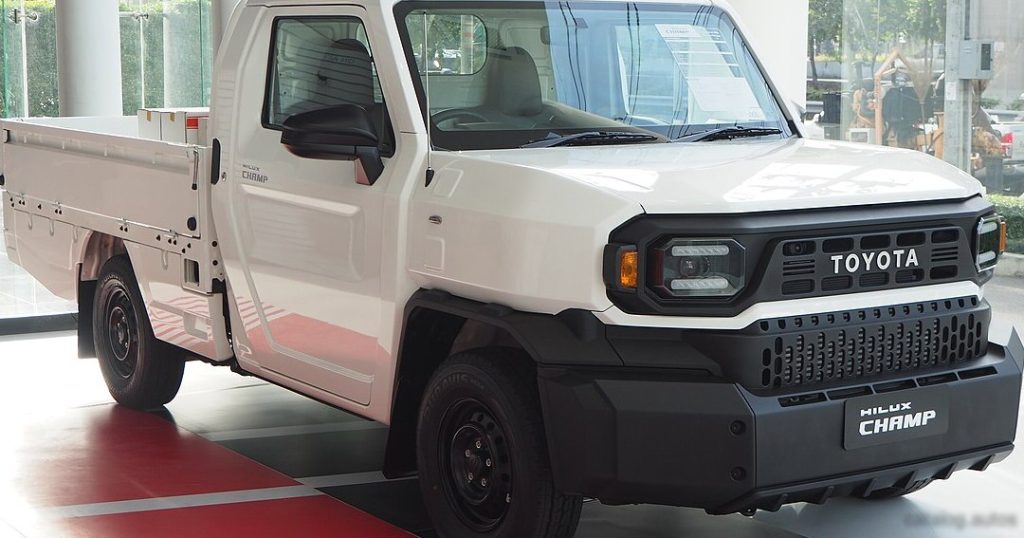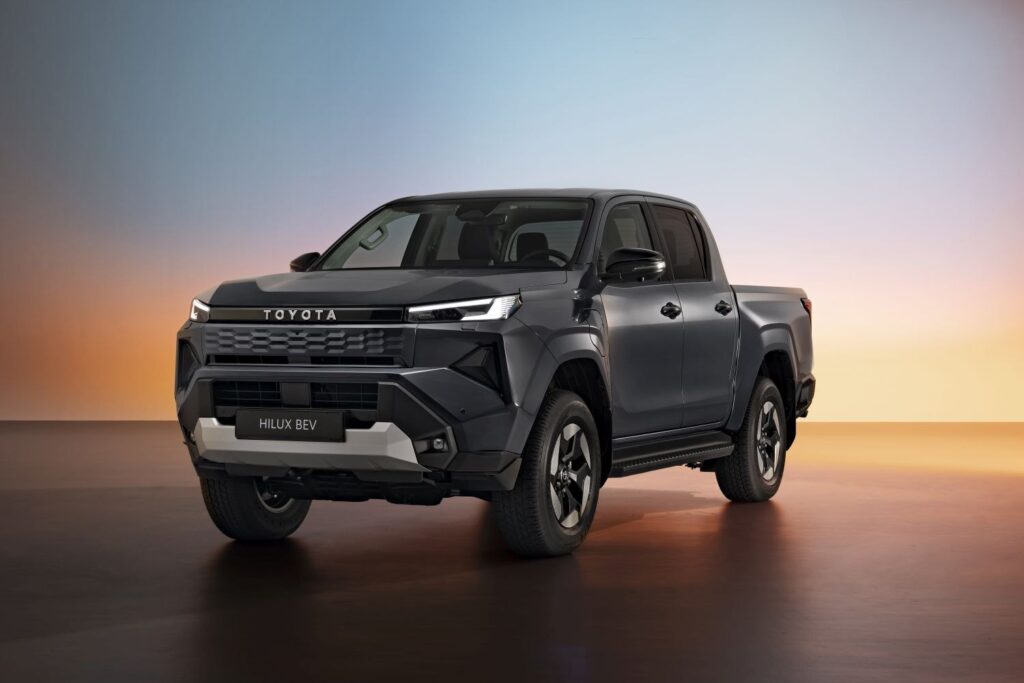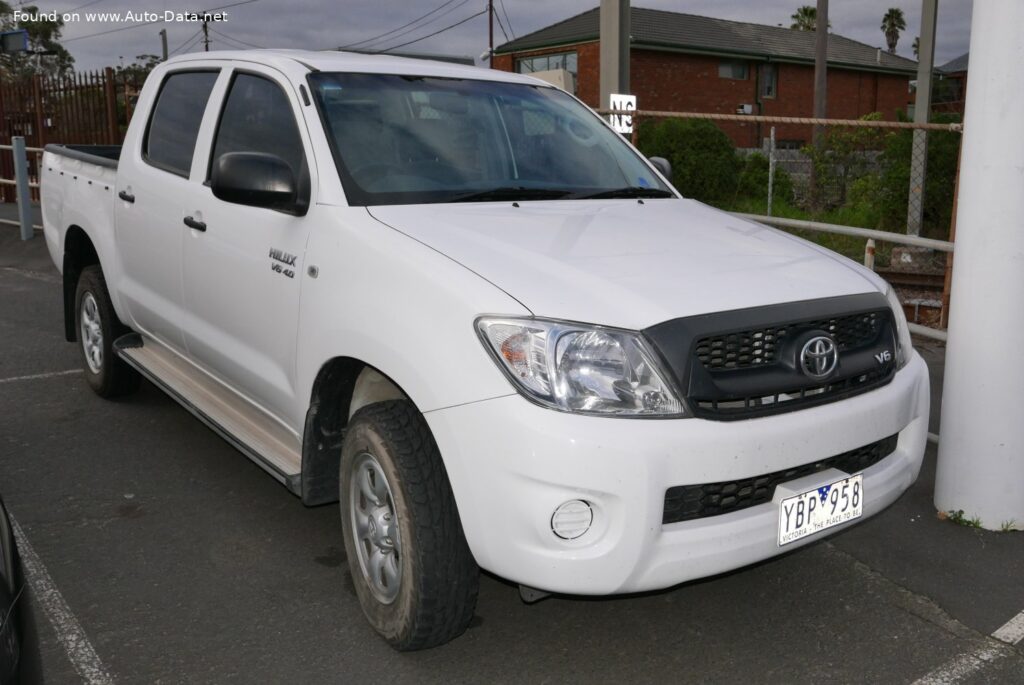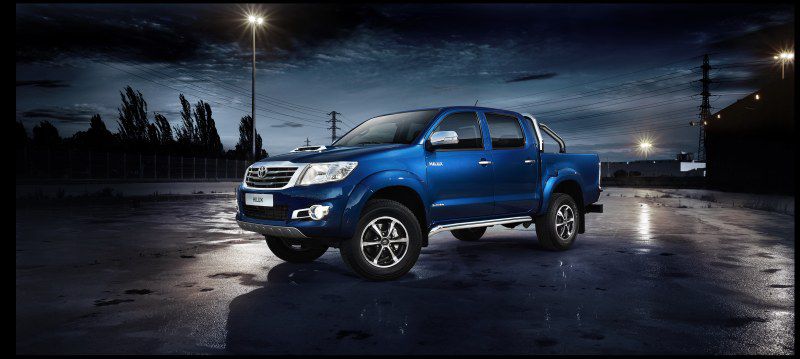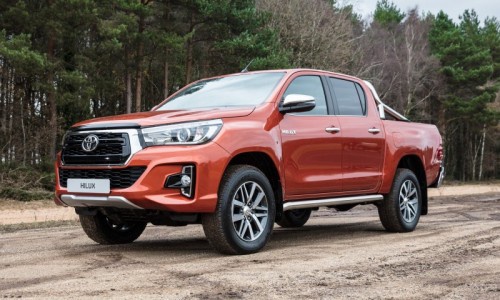
The Toyota Hilux Double Cab VIII (facelift 2017) 2.7i (166 Hp) represents a mid-cycle refresh of the eighth generation of Toyota’s globally renowned Hilux pickup truck. Introduced in November 2017 and continuing through June 2020, this iteration of the Hilux was primarily aimed at markets outside of North America, where the Hilux has historically not been officially sold. Instead, it holds a significant position in markets like Europe, Australia, Asia, and Latin America, celebrated for its ruggedness, reliability, and off-road capability. The Double Cab configuration offers seating for five passengers, blending commercial utility with family practicality. This model specifically features a 2.7-liter inline-four gasoline engine, offering a balance between performance and fuel efficiency for a versatile work and lifestyle vehicle.
Toyota Hilux Double Cab VIII (facelift 2017) 2.7i: Overview
The Hilux, a name synonymous with durability, has been in continuous production since 1968. The eighth generation, launched in 2016, brought significant improvements in comfort, safety, and technology while retaining the core values that have made the Hilux a best-seller worldwide. The 2017 facelift further refined the design and enhanced the vehicle’s appeal. The 2.7i variant, powered by the 2TR-FE engine, caters to buyers who prefer the characteristics of a gasoline engine – typically quieter operation and lower initial cost – over diesel alternatives. This model is a popular choice for those needing a dependable pickup for both work and personal use, offering a compelling combination of capability and affordability.
Engine & Performance
The Toyota Hilux Double Cab VIII (facelift 2017) 2.7i is equipped with the 2TR-FE 2.7-liter inline-four cylinder gasoline engine. This naturally aspirated engine produces 166 horsepower at 5200 rpm and 245 Nm (180.7 lb.-ft.) of torque at 4000 rpm. The engine’s power-to-weight ratio is 95.1 Hp/tonne, and the torque-to-weight ratio is 140.4 Nm/tonne, providing adequate performance for everyday tasks and moderate towing needs. The engine utilizes a multi-port fuel injection system and a DOHC (Double Overhead Camshaft) valvetrain with D-VVT-i (Dual Variable Valve Timing-intelligent) technology, optimizing both power delivery and fuel efficiency. Power is delivered to the rear wheels via a 5-speed manual transmission. The longitudinal engine layout contributes to a balanced weight distribution. The engine requires 5.6 liters (5.92 US qt | 4.93 UK qt) of engine oil and 7.8 liters (8.24 US qt | 6.86 UK qt) of coolant.
Design & Features
The Hilux Double Cab VIII (facelift 2017) maintains the traditional pickup truck body style, featuring a separate chassis and body construction for enhanced durability. The Double Cab configuration provides a spacious cabin with seating for five occupants, making it suitable for both work crews and families. The 2017 facelift brought subtle styling updates, including a revised front grille, headlights, and bumper, giving the Hilux a more modern and aggressive appearance. The interior features functional and durable materials, designed to withstand the rigors of daily use. Key features include a robust suspension system – double wishbone at both the front and rear – designed to handle challenging terrain and heavy loads. Safety features include an Anti-lock Braking System (ABS). The vehicle’s dimensions are 5330 mm (209.84 in) in length, 1800 mm (70.87 in) in width, and 1700 mm (66.93 in) in height, with a wheelbase of 3085 mm (121.46 in). The kerb weight is 1745 kg (3847.07 lbs), with a maximum permissible weight of 2780 kg (6128.85 lbs) and a maximum load capacity of 1035 kg (2281.78 lbs).
Technical Specifications
| Brand | Toyota |
| Model | Hilux |
| Generation | Hilux Double Cab VIII (facelift 2017) |
| Type (Engine) | 2.7i (166 Hp) |
| Start of production | November, 2017 |
| End of production | June, 2020 |
| Powertrain Architecture | Internal Combustion engine |
| Body type | Pick-up |
| Seats | 5 |
| Doors | 4 |
| Fuel Type | Petrol (Gasoline) |
| Weight-to-power ratio | 10.5 kg/Hp |
| Weight-to-torque ratio | 7.1 kg/Nm |
| Power | 166 Hp @ 5200 rpm |
| Power per litre | 61.6 Hp/l |
| Torque | 245 Nm @ 4000 rpm / 180.7 lb.-ft. @ 4000 rpm |
| Engine layout | Front, Longitudinal |
| Engine Model/Code | 2TR-FE |
| Engine displacement | 2694 cm3 / 164.4 cu. in. |
| Number of cylinders | 4 |
| Engine configuration | Inline |
| Cylinder Bore | 95 mm / 3.74 in. |
| Piston Stroke | 95 mm / 3.74 in. |
| Compression ratio | 10.2:1 |
| Number of valves per cylinder | 4 |
| Fuel injection system | Multi-port manifold injection |
| Engine aspiration | Naturally aspirated engine |
| Valvetrain | DOHC, D-VVT-i |
| Engine oil capacity | 5.6 l / 5.92 US qt | 4.93 UK qt |
| Coolant | 7.8 l / 8.24 US qt | 6.86 UK qt |
| Kerb Weight | 1745 kg / 3847.07 lbs |
| Max. weight | 2780 kg / 6128.85 lbs |
| Max load | 1035 kg / 2281.78 lbs |
| Fuel tank capacity | 80 l / 21.13 US gal | 17.6 UK gal |
| Permitted trailer load with brakes (12%) | 2500 kg / 5511.56 lbs |
| Permitted trailer load without brakes | 750 kg / 1653.47 lbs |
| Length | 5330 mm / 209.84 in |
| Width | 1800 mm / 70.87 in |
| Height | 1700 mm / 66.93 in |
| Wheelbase | 3085 mm / 121.46 in |
| Front track | 1510 mm / 59.45 in |
| Rear (Back) track | 1510 mm / 59.45 in |
| Front overhang | 1000 mm / 39.37 in |
| Drivetrain Architecture | Rear wheel drive |
| Number of gears and type of gearbox | 5 gears, manual transmission |
| Front suspension | Double wishbone |
| Rear suspension | Double wishbone |
| Front brakes | Ventilated discs |
| Rear brakes | Drum |
| Assisting systems | ABS (Anti-lock braking system) |
| Steering type | Steering rack and pinion |
| Power steering | Hydraulic Steering |
| Tires size | 215/65 R16 |
| Wheel rims size | 6J x 16 |