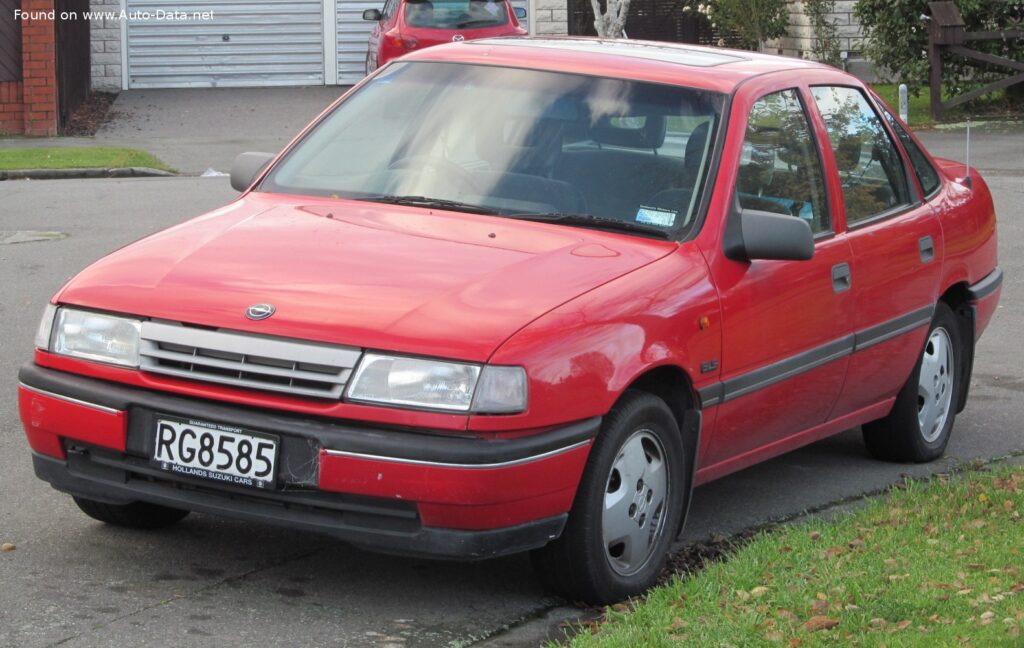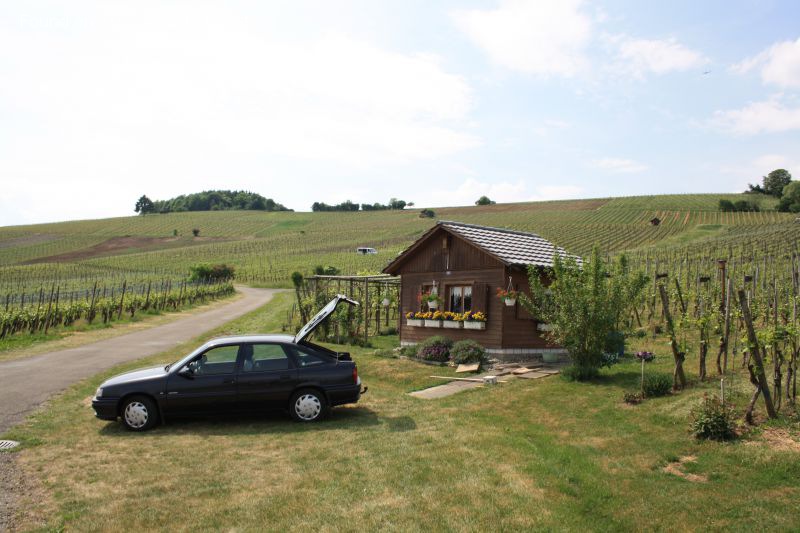
The Opel Vectra A CC (facelift 1992) 1.6i represents a significant iteration in Opel’s mid-size offering, positioned as a practical and affordable family car within the European market. Introduced in August 1992 and continuing through November 1993, this facelifted version of the original Vectra A aimed to refine the model’s aesthetics and address early criticisms. While not officially sold in the United States, the Vectra A was a key competitor to vehicles like the Ford Mondeo and Volkswagen Passat in Europe, offering a blend of comfort, space, and reasonable performance. The “CC” designation stands for “Comfort and Communication,” highlighting the focus on improved interior features and technology for the time.
Opel Vectra A CC (facelift 1992) 1.6i: Overview
The Vectra A, launched in 1988, was Opel’s replacement for the Ascona and Manta models, consolidating their mid-size range into a single, more modern offering. The 1992 facelift brought subtle but noticeable changes to the exterior styling, including revised headlights, grille, and bumpers. The 1.6i variant, producing 75 horsepower, was a popular choice for buyers seeking a balance between fuel economy and adequate performance for everyday driving. This model primarily targeted families and commuters who needed a reliable and spacious vehicle.
Engine & Performance
The heart of the Vectra A CC 1.6i is a 1.6-liter inline four-cylinder engine, designated the C16NZ. This naturally aspirated engine produces 75 horsepower at 5200 rpm and 120 Nm (88.51 lb.-ft.) of torque at 2800 rpm. While not a performance powerhouse, the engine provides sufficient power for typical commuting and highway driving. The engine utilizes a single-point fuel injection system, a common technology of the era, contributing to reasonable fuel efficiency. Acceleration from 0 to 100 km/h (0-62 mph) takes approximately 14 seconds, with a 0-60 mph time calculated at 13.3 seconds. The vehicle achieves a maximum speed of 176 km/h (109.36 mph). The engine’s power-to-weight ratio is 13.6 kg/Hp, and the torque-to-weight ratio is 8.5 kg/Nm, reflecting the car’s modest performance characteristics. The engine displacement is 1597 cm3 (97.45 cu. in.), with a compression ratio of 8.8:1 and 2 valves per cylinder.
Design & Features
The Opel Vectra A CC (facelift 1992) is a five-door hatchback, offering a practical and versatile body style. The hatchback configuration provides easy access to the cargo area and allows for flexible loading. The interior comfortably seats five passengers. The 1992 facelift brought subtle styling updates to the exterior, aiming for a more contemporary look. Key features for the time included hydraulic power steering, disc brakes on the front wheels, and drum brakes on the rear. Safety features were relatively basic by modern standards, but included seatbelts and a robust body structure for passive safety. The trunk space is a notable feature, offering 460 liters (16.24 cu. ft.) with the rear seats up and expanding to 1290 liters (45.56 cu. ft.) with the rear seats folded down. The fuel tank capacity is 61 liters (16.11 US gal). The vehicle’s dimensions are 4352 mm (171.34 in.) in length, 1706 mm (67.17 in.) in width, and 1400 mm (55.12 in.) in height, with a wheelbase of 2600 mm (102.36 in.).
Technical Specifications
| Brand | Opel |
| Model | Vectra |
| Generation | Vectra A CC (facelift 1992) |
| Type (Engine) | 1.6i (75 Hp) |
| Start of production | August, 1992 |
| End of production | November, 1993 |
| Powertrain Architecture | Internal Combustion engine |
| Body type | Hatchback |
| Seats | 5 |
| Doors | 5 |
| Fuel consumption (combined) | 7 l/100 km |
| Fuel consumption (US mpg) | 33.6 US mpg |
| Fuel consumption (UK mpg) | 40.4 UK mpg |
| Fuel consumption (km/l) | 14.3 km/l |
| Fuel Type | Petrol (Gasoline) |
| Acceleration 0 – 100 km/h | 14 sec |
| Acceleration 0 – 62 mph | 14 sec |
| Acceleration 0 – 60 mph | 13.3 sec |
| Maximum speed | 176 km/h |
| Maximum speed (mph) | 109.36 mph |
| Weight-to-power ratio | 13.6 kg/Hp |
| Weight-to-torque ratio | 8.5 kg/Nm |
| Power | 75 Hp @ 5200 rpm |
| Power per litre | 47 Hp/l |
| Torque | 120 Nm @ 2800 rpm |
| Torque (lb.-ft.) | 88.51 lb.-ft. @ 2800 rpm |
| Engine layout | Front, Transverse |
| Engine Model/Code | C16NZ |
| Engine displacement | 1597 cm3 |
| Engine displacement (cu. in.) | 97.45 cu. in. |
| Number of cylinders | 4 |
| Engine configuration | Inline |
| Cylinder Bore | 80 mm |
| Cylinder Bore (in.) | 3.15 in. |
| Piston Stroke | 79.5 mm |
| Piston Stroke (in.) | 3.13 in. |
| Compression ratio | 8.8:1 |
| Number of valves per cylinder | 2 |
| Fuel injection system | Single-point injection |
| Engine aspiration | Naturally aspirated engine |
| Valvetrain | OHC |
| Engine oil capacity | 3.5 l |
| Engine oil capacity (US qt) | 3.7 US qt |
| Engine oil capacity (UK qt) | 3.08 UK qt |
| Coolant | 5.8 l |
| Coolant (US qt) | 6.13 US qt |
| Coolant (UK qt) | 5.1 UK qt |
| Kerb Weight | 1020 kg |
| Kerb Weight (lbs.) | 2248.72 lbs. |
| Max. weight | 1550 kg |
| Max. weight (lbs.) | 3417.17 lbs. |
| Max load | 530 kg |
| Max load (lbs.) | 1168.45 lbs. |
| Trunk (boot) space – minimum | 460 l |
| Trunk (boot) space – minimum (cu. ft.) | 16.24 cu. ft. |
| Trunk (boot) space – maximum | 1290 l |
| Trunk (boot) space – maximum (cu. ft.) | 45.56 cu. ft. |
| Fuel tank capacity | 61 l |
| Fuel tank capacity (US gal) | 16.11 US gal |
| Fuel tank capacity (UK gal) | 13.42 UK gal |
| Length | 4352 mm |
| Length (in.) | 171.34 in. |
| Width | 1706 mm |
| Width (in.) | 67.17 in. |
| Height | 1400 mm |
| Height (in.) | 55.12 in. |
| Wheelbase | 2600 mm |
| Wheelbase (in.) | 102.36 in. |
| Front track | 1420 mm |
| Front track (in.) | 55.91 in. |
| Rear (Back) track | 1423 mm |
| Rear (Back) track (in.) | 56.02 in. |
| Drivetrain Architecture | The Internal combustion engine (ICE) drives the front wheels of the vehicle. |
| Drive wheel | Front wheel drive |
| Number of gears and type of gearbox | 5 gears, manual transmission |
| Front suspension | Coil spring |
| Rear suspension | Coil spring |
| Front brakes | Disc |
| Rear brakes | Drum |
| Power steering | Hydraulic Steering |
| Tires size | 175/70 R14 |
| Wheel rims size | 14 |