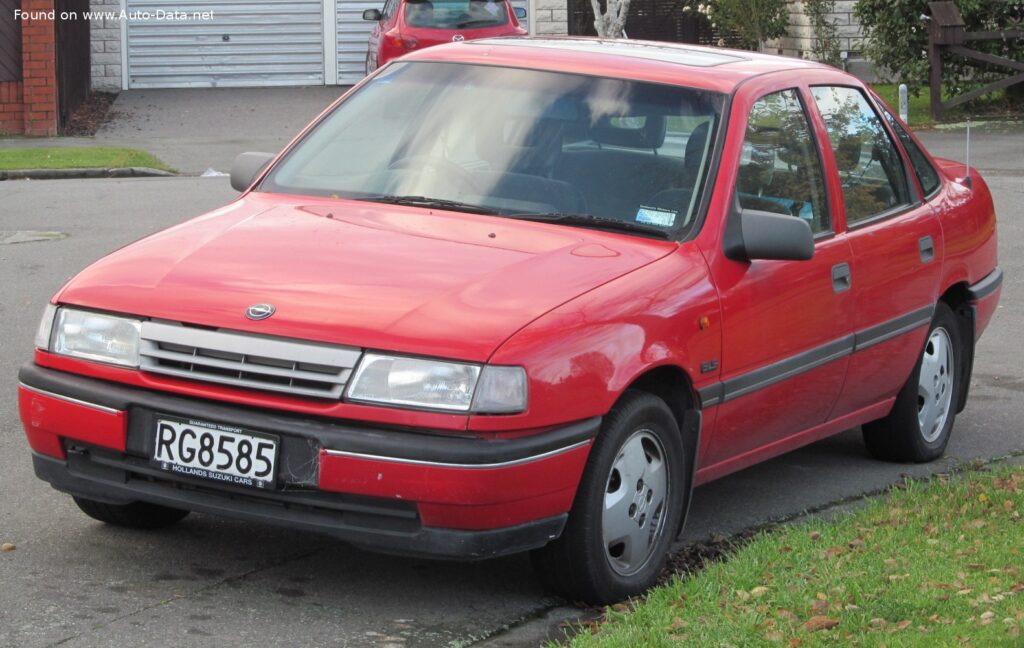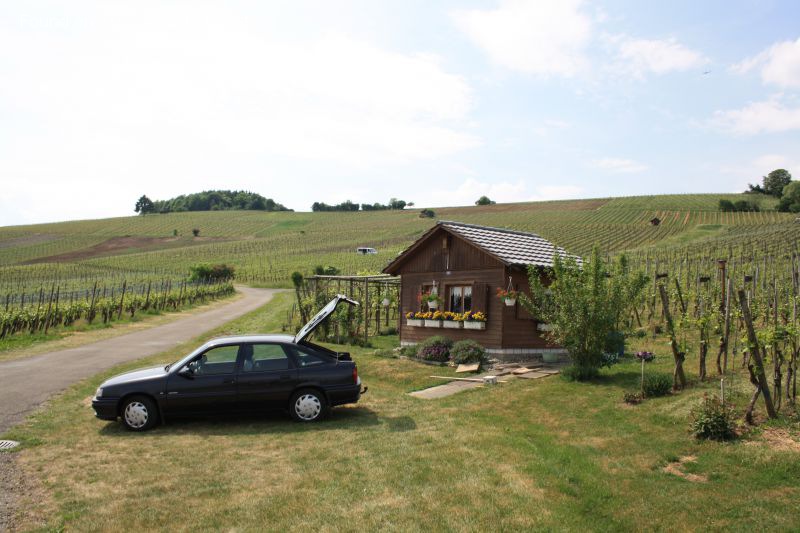
The Opel Vectra A CC (facelift 1992) 1.7 D represents a significant iteration in Opel’s mid-size family car lineage. Introduced in November 1993 and continuing in production until July 1995, this variant of the Vectra A aimed to provide economical transportation, primarily within the European market. While not officially sold in the United States, understanding the Vectra A is crucial for appreciating the development of Opel’s engineering and design philosophies, which would later influence models available in North America. The “CC” designation stands for “Comfort and Chassis,” indicating a focus on ride quality and handling improvements over earlier versions. This particular model, powered by a 1.7-liter diesel engine, was geared towards buyers prioritizing fuel efficiency and practicality.
Opel Vectra A CC (facelift 1992) 1.7 D: A Detailed Overview
The Vectra A, launched in 1988, was Opel’s replacement for the Ascona and Manta models. It represented a move towards more modern, aerodynamic styling and a greater emphasis on safety and comfort. The facelift in 1992 brought subtle but important changes to the exterior and interior, refining the design and addressing some initial criticisms. The 1.7 D variant, with its diesel engine, was a popular choice in Europe, where fuel costs were higher and diesel engines were favored for their economy. It served as a workhorse for families and individuals needing a reliable and affordable vehicle.
Engine & Performance
The heart of the Vectra A CC 1.7 D is a 1.7-liter inline-four cylinder diesel engine, designated the 17D. This engine produces 60 horsepower at 4600 rpm and 105 Nm (77.44 lb.-ft.) of torque at 2650 rpm. While not a performance-oriented engine, it provides adequate power for everyday driving. The engine utilizes a precombustion chamber injection system, a common technology for diesel engines of that era, designed to improve combustion efficiency and reduce emissions. The engine’s naturally aspirated configuration means it relies solely on atmospheric pressure for intake, contributing to its relatively modest power output. Acceleration from 0 to 100 km/h (0-62 mph) takes approximately 20.5 seconds, and 0 to 60 mph is achieved in around 19.5 seconds. The top speed is rated at 152 km/h (94.45 mph). Fuel economy is a strong point, achieving a combined consumption of 6 liters per 100 kilometers (39.2 US mpg or 47.1 UK mpg).
Design & Features
The Opel Vectra A CC 1.7 D is a five-door hatchback, offering a practical and versatile body style. The hatchback configuration provides easy access to the cargo area and allows for flexible loading. The vehicle comfortably seats six passengers, making it suitable for families. The 1992 facelift brought minor cosmetic updates, including revised front and rear fascias, updated interior trim, and improved lighting. Safety features for the time included seatbelts, though modern safety systems like airbags and ABS were not standard equipment. The focus was on providing a robust and reliable vehicle with a spacious interior and a reasonably sized trunk, offering 460 liters (16.24 cu. ft.) of space in its standard configuration, expandable to 1290 liters (45.56 cu. ft.) with the rear seats folded down. The interior was designed with practicality in mind, featuring durable materials and a functional layout.
Technical Specifications
| Brand | Opel |
| Model | Vectra |
| Generation | Vectra A CC (facelift 1992) |
| Type (Engine) | 1.7 D (60 Hp) |
| Start of production | November, 1993 |
| End of production | July, 1995 |
| Powertrain Architecture | Internal Combustion engine |
| Body type | Hatchback |
| Seats | 6 |
| Doors | 5 |
| Fuel consumption (combined) | 6 l/100 km |
| Fuel consumption (US mpg) | 39.2 US mpg |
| Fuel consumption (UK mpg) | 47.1 UK mpg |
| Fuel consumption (km/l) | 16.7 km/l |
| Fuel Type | Diesel |
| Acceleration 0 – 100 km/h | 20.5 sec |
| Acceleration 0 – 62 mph | 20.5 sec |
| Acceleration 0 – 60 mph | 19.5 sec |
| Maximum speed | 152 km/h |
| Maximum speed (mph) | 94.45 mph |
| Power | 60 Hp @ 4600 rpm |
| Power per litre | 35.6 Hp/l |
| Torque | 105 Nm @ 2650 rpm |
| Torque (lb.-ft.) | 77.44 lb.-ft. @ 2650 rpm |
| Engine layout | Front, Transverse |
| Engine Model/Code | 17D |
| Engine displacement | 1686 cm3 |
| Engine displacement (cu. in.) | 102.89 cu. in. |
| Number of cylinders | 4 |
| Engine configuration | Inline |
| Cylinder Bore | 79 mm |
| Cylinder Bore (in.) | 3.11 in. |
| Piston Stroke | 86 mm |
| Piston Stroke (in.) | 3.39 in. |
| Compression ratio | 22:1 |
| Number of valves per cylinder | 2 |
| Fuel injection system | Precombustion chamber injection |
| Engine aspiration | Naturally aspirated engine |
| Valvetrain | OHC |
| Engine oil capacity | 4.75 l |
| Engine oil capacity (US qt) | 5.02 US qt |
| Engine oil capacity (UK qt) | 4.18 UK qt |
| Coolant | 9.1 l |
| Coolant (US qt) | 9.62 US qt |
| Coolant (UK qt) | 8.01 UK qt |
| Trunk (boot) space – minimum | 460 l |
| Trunk (boot) space – minimum (cu. ft.) | 16.24 cu. ft. |
| Trunk (boot) space – maximum | 1290 l |
| Trunk (boot) space – maximum (cu. ft.) | 45.56 cu. ft. |
| Fuel tank capacity | 61 l |
| Fuel tank capacity (US gal) | 16.11 US gal |
| Fuel tank capacity (UK gal) | 13.42 UK gal |
| Length | 4352 mm |
| Length (in.) | 171.34 in. |
| Width | 1706 mm |
| Width (in.) | 67.17 in. |
| Height | 1400 mm |
| Height (in.) | 55.12 in. |
| Wheelbase | 2600 mm |
| Wheelbase (in.) | 102.36 in. |
| Front track | 1420 mm |
| Front track (in.) | 55.91 in. |
| Rear (Back) track | 1423 mm |
| Rear (Back) track (in.) | 56.02 in. |
| Ride height (ground clearance) | 140 mm |
| Ride height (ground clearance) (in.) | 5.51 in. |
| Drivetrain Architecture | Front wheel drive |
| Number of gears and type of gearbox | 5 gears, manual transmission |
In conclusion, the Opel Vectra A CC 1.7 D (facelift 1992) was a practical and economical vehicle designed for the European market. While not known for its performance, it offered a comfortable ride, a spacious interior, and excellent fuel efficiency. It represents a key step in Opel’s evolution as a manufacturer, showcasing their commitment to providing reliable and affordable transportation for families and individuals.