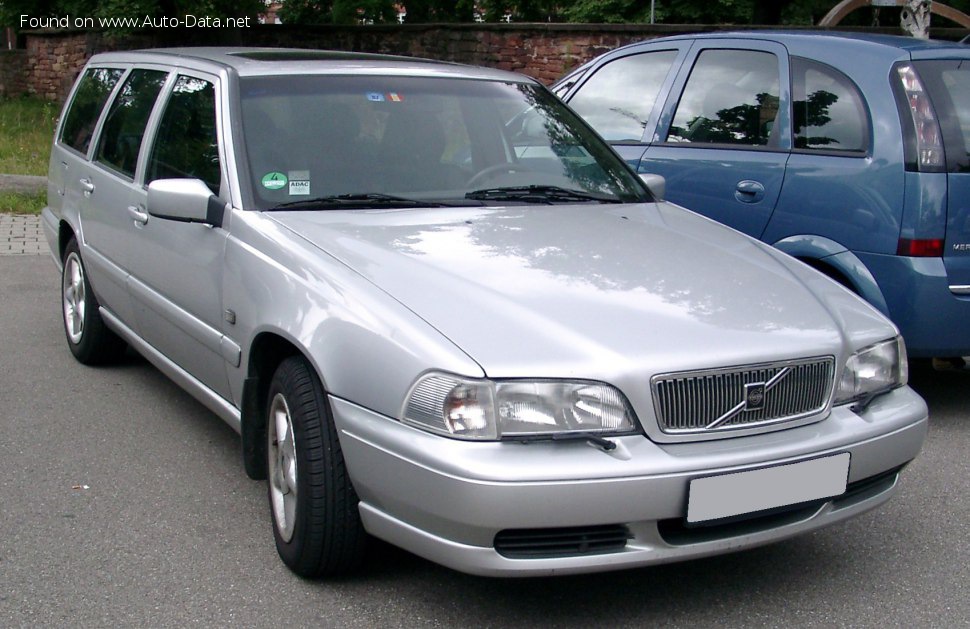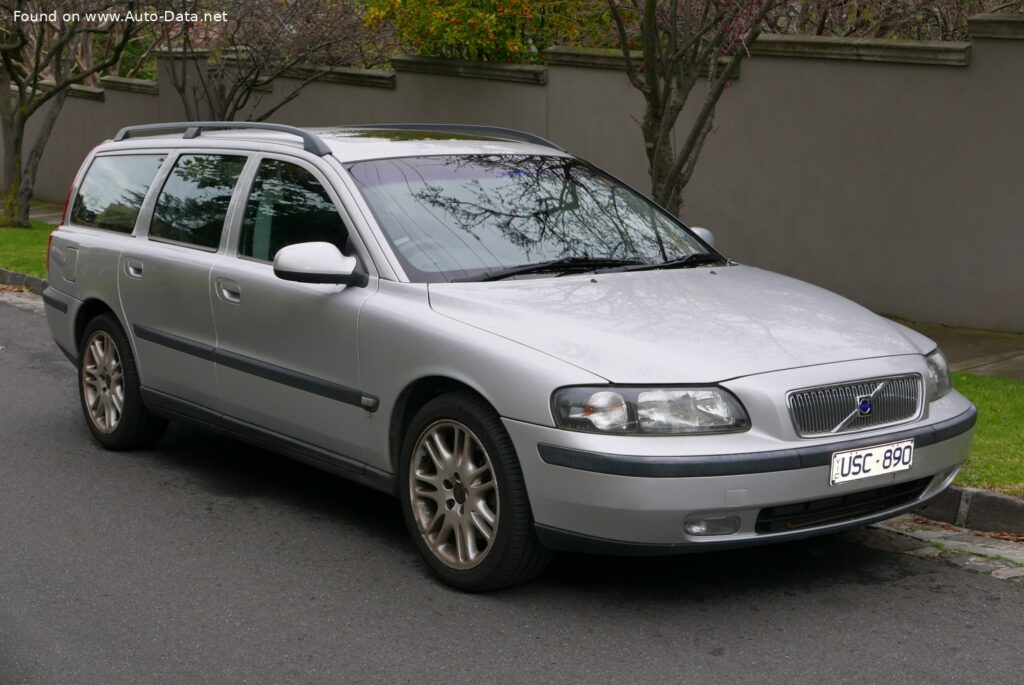
The Volvo V70 II 2.3 T5 Automatic, produced between 2000 and 2004, represents the second generation of Volvo’s popular station wagon, the V70. This model was primarily aimed at the European market, where large, practical, and safe estate cars were – and continue to be – highly valued. While not officially sold in the United States during its production run, the V70 II embodies Volvo’s commitment to safety, comfort, and understated Scandinavian design. It served as a key competitor to other premium wagons like the Audi Avant and BMW Touring, offering a compelling blend of performance and practicality.
Volvo V70 II 2.3 T5: A Detailed Overview
The V70 II built upon the success of its predecessor, offering increased refinement, improved safety features, and a more powerful engine lineup. The 2.3 T5 variant, equipped with a turbocharged five-cylinder engine, was a particularly popular choice, delivering a strong balance of performance and fuel efficiency. This generation of V70 saw Volvo further solidify its reputation for building durable and reliable vehicles, making it a favorite among families and those requiring a versatile vehicle for both daily commuting and long-distance travel.
Engine & Performance
At the heart of the V70 II 2.3 T5 lies Volvo’s renowned 2.3-liter inline-five cylinder turbocharged engine, designated the B5234T3. This engine produces 250 horsepower at 5200 rpm and 330 Nm (243.4 lb.-ft.) of torque at 2400 rpm. The turbocharger significantly enhances the engine’s responsiveness, providing strong acceleration across a wide range of engine speeds. Power is delivered to the front wheels via a smooth-shifting five-speed automatic transmission. This powertrain combination allows the V70 II 2.3 T5 to accelerate from 0 to 60 mph in approximately 7.1 seconds and reach a top speed of 250 km/h (155.34 mph). The engine’s specific output is impressive, generating 107.8 horsepower per liter of displacement. The weight-to-power ratio of 6.5 kg/Hp and a weight-to-torque ratio of 4.9 kg/Nm contribute to its spirited driving experience.
Design & Features
The Volvo V70 II is a five-door, five-seat station wagon (estate) characterized by its clean lines and functional design. Its exterior styling reflects Volvo’s commitment to understated elegance, avoiding excessive ornamentation in favor of a timeless aesthetic. The interior is spacious and well-appointed, with a focus on comfort and practicality. The V70 II boasts a generous cargo capacity of 485 liters (17.13 cu. ft.) with the rear seats up, expanding to a substantial 1641 liters (57.95 cu. ft.) when the rear seats are folded down.
Safety was, and remains, a core Volvo value. The V70 II incorporates a comprehensive suite of safety features, including Anti-lock Braking System (ABS), side impact protection system (SIPS), and a reinforced body structure. These features contributed to the V70 II achieving high scores in crash tests during its time. Other notable features include hydraulic power steering, a comfortable ride quality, and a well-equipped cabin with features expected of a premium vehicle of its era. The vehicle’s dimensions – 4710 mm (185.43 in.) in length, 1804 mm (71.02 in.) in width, and 1465 mm (57.68 in.) in height – provide ample space for passengers and cargo.
Technical Specifications
| Brand | Volvo |
| Model | V70 |
| Generation | V70 II |
| Type (Engine) | 2.3 T5 (250 Hp) Automatic |
| Start of production | 2000 |
| End of production | 2004 |
| Powertrain Architecture | Internal Combustion engine |
| Body type | Station wagon (estate) |
| Seats | 5 |
| Doors | 5 |
| Fuel consumption (urban) | 15.3 l/100 km (15.4 US mpg, 18.5 UK mpg, 6.5 km/l) |
| Fuel consumption (extra urban) | 8.2 l/100 km (28.7 US mpg, 34.4 UK mpg, 12.2 km/l) |
| Fuel consumption (combined) | 9.4 l/100 km (25 US mpg, 30.1 UK mpg, 10.6 km/l) |
| Fuel Type | Petrol (Gasoline) |
| Acceleration 0 – 100 km/h | 7.5 sec |
| Acceleration 0 – 62 mph | 7.5 sec |
| Acceleration 0 – 60 mph | 7.1 sec |
| Maximum speed | 250 km/h (155.34 mph) |
| Weight-to-power ratio | 6.5 kg/Hp |
| Weight-to-torque ratio | 4.9 kg/Nm |
| Power | 250 Hp @ 5200 rpm |
| Power per litre | 107.8 Hp/l |
| Torque | 330 Nm @ 2400 rpm (243.4 lb.-ft. @ 2400 rpm) |
| Engine layout | Front, Transverse |
| Engine Model/Code | B5234T3 |
| Engine displacement | 2319 cm3 (141.51 cu. in.) |
| Number of cylinders | 5 |
| Engine configuration | Inline |
| Cylinder Bore | 81 mm (3.19 in.) |
| Piston Stroke | 90 mm (3.54 in.) |
| Compression ratio | 8.5:1 |
| Number of valves per cylinder | 4 |
| Fuel injection system | Multi-port manifold injection |
| Engine aspiration | Turbocharger |
| Valvetrain | DOHC |
| Engine oil capacity | 5.5 l (5.81 US qt | 4.84 UK qt) |
| Coolant | 8 l (8.45 US qt | 7.04 UK qt) |
| Kerb Weight | 1615 kg (3560.47 lbs.) |
| Max. weight | 2110 kg (4651.75 lbs.) |
| Max load | 495 kg (1091.29 lbs.) |
| Trunk (boot) space – minimum | 485 l (17.13 cu. ft.) |
| Trunk (boot) space – maximum | 1641 l (57.95 cu. ft.) |
| Fuel tank capacity | 70 l (18.49 US gal | 15.4 UK gal) |
| Length | 4710 mm (185.43 in.) |
| Width | 1804 mm (71.02 in.) |
| Height | 1465 mm (57.68 in.) |
| Wheelbase | 2755 mm (108.46 in.) |
| Front track | 1563 mm (61.54 in.) |
| Rear (Back) track | 1560 mm (61.42 in.) |
| Drivetrain Architecture | ICE, Front wheel drive |
| Number of gears and type of gearbox | 5 gears, automatic transmission |
| Front suspension | Wishbone |
| Rear suspension | Coil spring |
| Front brakes | Disc |
| Rear brakes | Disc |
| Assisting systems | ABS (Anti-lock braking system) |
| Steering type | Steering rack and pinion |
| Power steering | Hydraulic Steering |
| Tires size | 215/55 R16 |
| Wheel rims size | 16 |