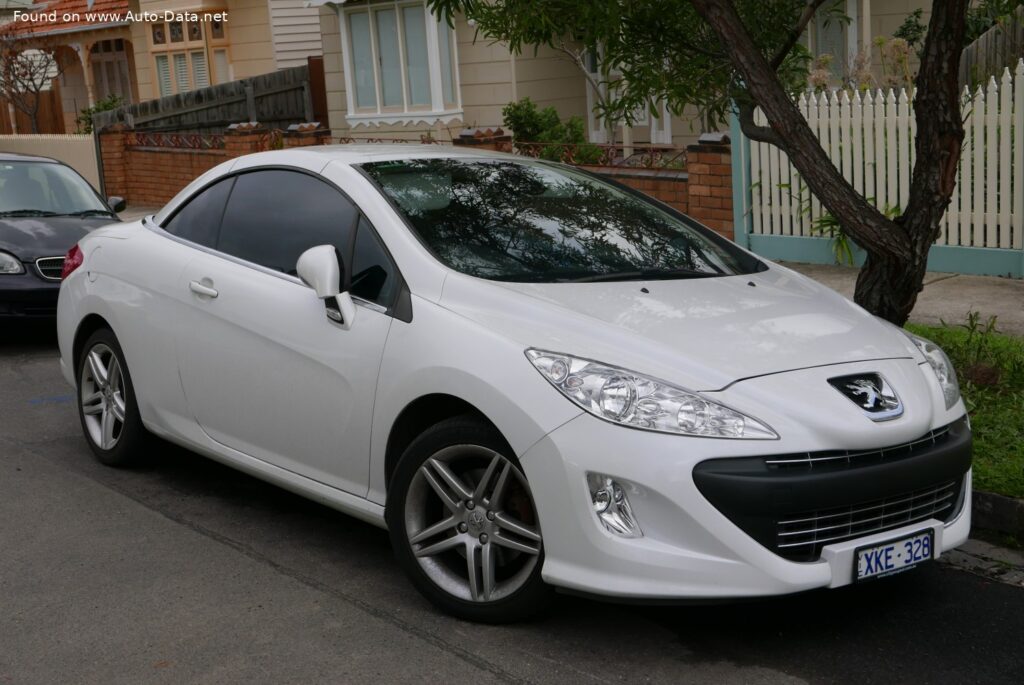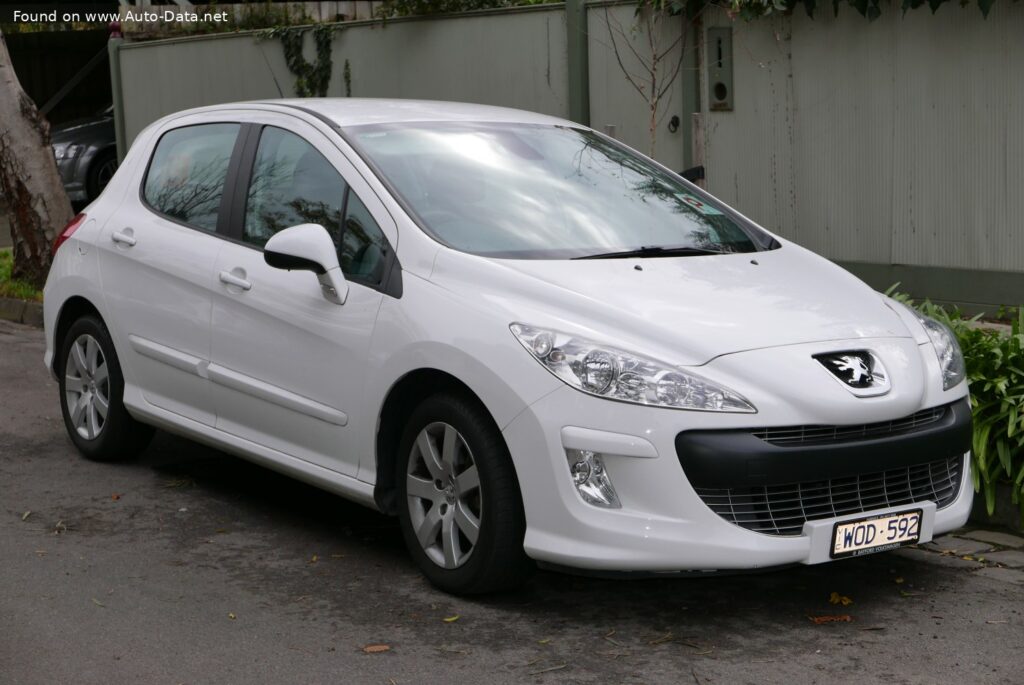
The Peugeot 308 I (Phase I) is a compact hatchback that was produced by the French automaker Peugeot between 2007 and 2010. Representing the first generation of the 308 model, it succeeded the Peugeot 307 and aimed to provide a more refined and modern offering in the competitive C-segment. This generation of the 308 was primarily marketed in Europe, where it quickly gained popularity for its stylish design, comfortable ride, and fuel-efficient engine options. The 1.6 HDi variant, equipped with a diesel engine and particulate filter (FAP), was a particularly popular choice due to its balance of performance and economy.
Peugeot 308 I (Phase I): Overview and Market Position
The 308 I Phase I was designed to appeal to buyers seeking a practical, yet sophisticated, family car. It competed directly with models like the Volkswagen Golf, Ford Focus, and Renault Mégane. Peugeot positioned the 308 as a step up in terms of build quality and interior design compared to its predecessor, the 307. The Phase I models, produced from 2007 to 2010, established the foundation for the 308’s success, paving the way for subsequent updates and generations. While not officially sold in the United States, the 308 represents a significant example of European compact car design and engineering of the late 2000s.
Engine & Performance
The 1.6 HDi engine powering this variant of the 308 is a 1.6-liter inline-four cylinder diesel engine, designated the 9HZ DV6TED4. This engine produces 109 horsepower at 4,000 rpm and 260 Nm (191.77 lb.-ft.) of torque at 1,750 rpm. The engine utilizes a turbocharger with an intercooler to enhance performance and efficiency. A diesel commonrail fuel injection system ensures precise fuel delivery, contributing to both power output and reduced emissions. The engine’s relatively high compression ratio of 17.6:1 is typical for diesel engines, maximizing combustion efficiency. Paired with a 5-speed manual transmission and front-wheel drive, the 308 1.6 HDi achieves a 0-100 km/h (0-62 mph) acceleration time of 11.3 seconds and a maximum speed of 191 km/h (118.68 mph). The engine’s focus is on fuel economy, achieving combined fuel consumption of 4.7 l/100 km (50 US mpg or 60.1 UK mpg).
Design & Features
The Peugeot 308 I Phase I is a five-door hatchback, offering a practical and versatile body style. Its design language, penned under the direction of Gilles Vidal, aimed for a more mature and sophisticated aesthetic than the 307. The exterior features a distinctive front grille, sculpted headlights, and a generally aerodynamic profile. Inside, the 308 offered a comfortable and well-appointed cabin for its class. Standard features included air conditioning, power windows, and a basic audio system. Safety features, crucial for the era, included ABS (Anti-lock Braking System) and driver/passenger airbags. The interior space is well-utilized, providing seating for five passengers and a trunk (boot) space ranging from 348 liters (12.29 cu. ft.) with the rear seats up to 1201 liters (42.41 cu. ft.) with the rear seats folded down. The inclusion of a particulate filter (FAP) in the exhaust system was a key feature, reducing harmful emissions and aligning with increasingly stringent European emission standards.
Technical Specifications
| Brand | Peugeot |
| Model | 308 |
| Generation | 308 I (Phase I, 2007) |
| Type (Engine) | 1.6 HDi (109 Hp) FAP |
| Start of production | 2007 |
| End of production | 2010 |
| Powertrain Architecture | Internal Combustion engine |
| Body type | Hatchback |
| Seats | 5 |
| Doors | 5 |
| Fuel consumption (urban) | 6 l/100 km (39.2 US mpg, 47.1 UK mpg, 16.7 km/l) |
| Fuel consumption (extra urban) | 3.9 l/100 km (60.3 US mpg, 72.4 UK mpg, 25.6 km/l) |
| Fuel consumption (combined) | 4.7 l/100 km (50 US mpg, 60.1 UK mpg, 21.3 km/l) |
| Fuel Type | Diesel |
| Acceleration 0 – 100 km/h | 11.3 sec |
| Acceleration 0 – 62 mph | 11.3 sec |
| Acceleration 0 – 60 mph | 10.7 sec |
| Maximum speed | 191 km/h (118.68 mph) |
| Emission standard | Euro 4 |
| Weight-to-power ratio | 12.1 kg/Hp, 82.5 Hp/tonne |
| Weight-to-torque ratio | 5.1 kg/Nm, 196.7 Nm/tonne |
| Power | 109 Hp @ 4000 rpm |
| Power per litre | 69.9 Hp/l |
| Torque | 260 Nm @ 1750 rpm (191.77 lb.-ft. @ 1750 rpm) |
| Engine layout | Front, Transverse |
| Engine Model/Code | 9HZ DV6TED4 |
| Engine displacement | 1560 cm3 (95.2 cu. in.) |
| Number of cylinders | 4 |
| Engine configuration | Inline |
| Cylinder Bore | 75 mm (2.95 in.) |
| Piston Stroke | 88.3 mm (3.48 in.) |
| Compression ratio | 17.6:1 |
| Number of valves per cylinder | 4 |
| Fuel injection system | Diesel Commonrail |
| Engine aspiration | Turbocharger, Intercooler |
| Valvetrain | DOHC |
| Engine oil capacity | 3.75 l (3.96 US qt | 3.3 UK qt) |
| Coolant | 6 l (6.34 US qt | 5.28 UK qt) |
| Kerb Weight | 1322 kg (2914.51 lbs.) |
| Max. weight | 1840 kg (4056.51 lbs.) |
| Max load | 518 kg (1141.99 lbs.) |
| Trunk (boot) space – minimum | 348 l (12.29 cu. ft.) |
| Trunk (boot) space – maximum | 1201 l (42.41 cu. ft.) |
| Fuel tank capacity | 60 l (15.85 US gal | 13.2 UK gal) |
| Length | 4276 mm (168.35 in.) |
| Width | 1815 mm (71.46 in.) |
| Height | 1498 mm (58.98 in.) |
| Wheelbase | 2608 mm (102.68 in.) |
| Front track | 1526 mm (60.08 in.) |
| Rear (Back) track | 1521 mm (59.88 in.) |
| Drivetrain Architecture | Front wheel drive |
| Number of gears and type of gearbox | 5 gears, manual transmission |
| Front suspension | Wishbone |
| Rear suspension | Trailing arm |
| Front brakes | Ventilated discs |
| Rear brakes | Disc |
| Steering type | Steering rack and pinion |
| Power steering | Hydraulic Steering |
| Tires size | 195/65R15 91T; 205/55R16 91T; 225/45R17 |
| Wheel rims size | 6.5Jx15; 7Jx16; 7.5J x 17 |
The Peugeot 308 I Phase I 1.6 HDi FAP remains a notable example of European automotive engineering, demonstrating a commitment to fuel efficiency, practicality, and a refined driving experience within the compact hatchback segment.