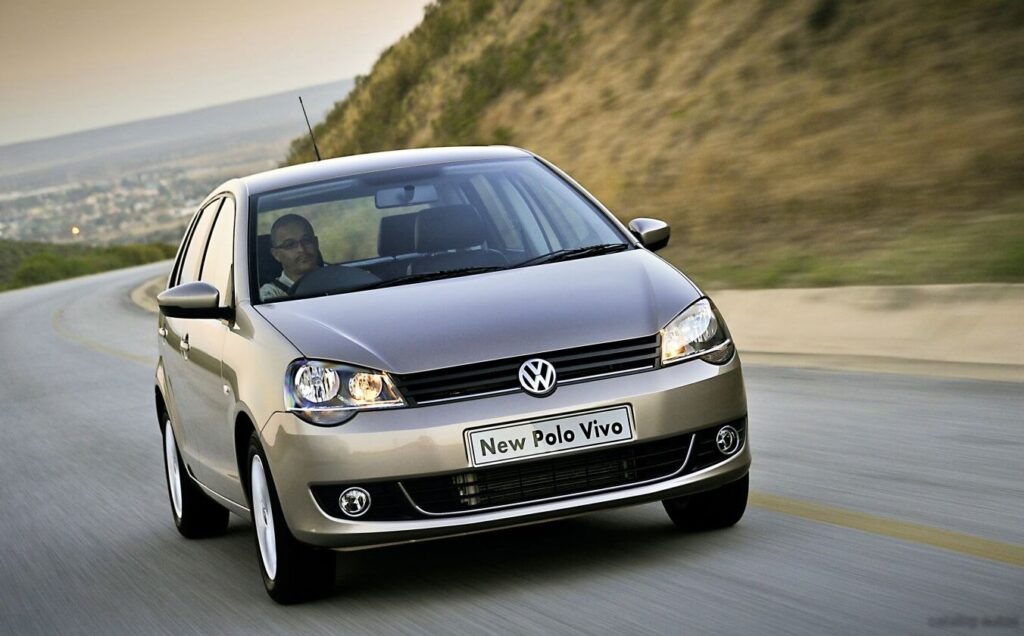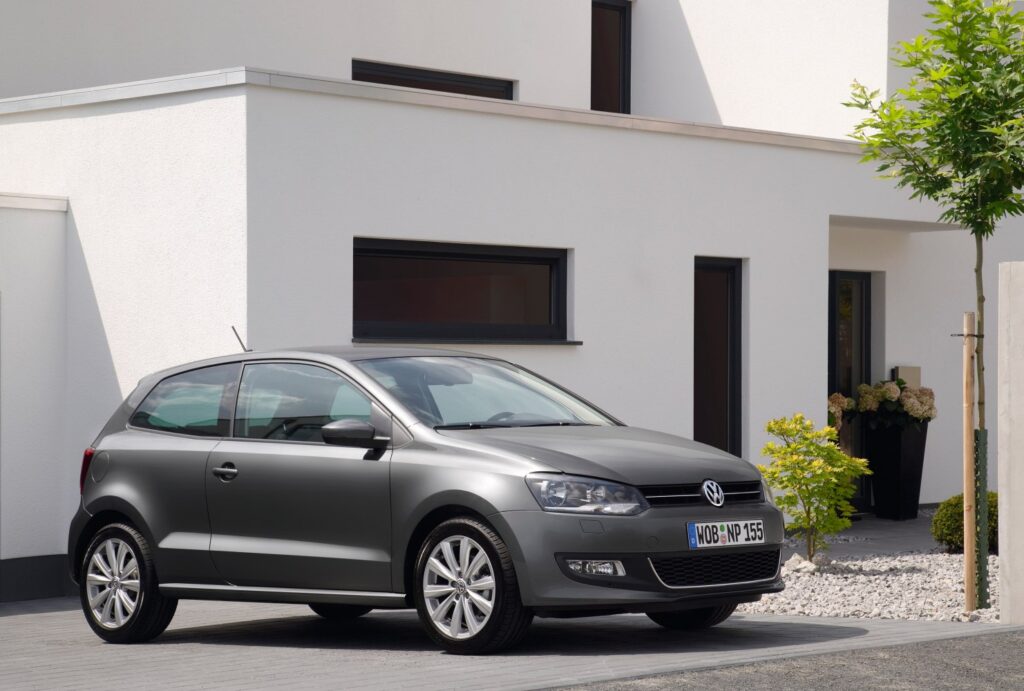
The Volkswagen Polo V (3-door) 1.2, produced between 2009 and 2014, represents a significant iteration in Volkswagen’s long-running supermini lineage. This particular version, powered by a 1.2-liter engine producing 70 horsepower, was primarily aimed at the European market, where the three-door hatchback body style remained popular for its sporty aesthetic and slightly lower weight. While not officially sold in the United States, the Polo V is a crucial model in understanding Volkswagen’s global strategy and its commitment to efficient, accessible motoring. It slots into the subcompact or supermini segment, competing with vehicles like the Ford Fiesta, Renault Clio, and Opel Corsa.
Volkswagen Polo V (3-door) 1.2: A Detailed Overview
The Polo V marked a substantial step forward for the model, offering improved refinement, safety features, and a more modern interior compared to its predecessor. The three-door variant, while offering less practicality than the five-door, appealed to buyers seeking a more dynamic and youthful image. This generation of Polo benefited from Volkswagen’s engineering expertise, resulting in a well-balanced and reliable vehicle. The 1.2-liter engine, while not exceptionally powerful, provided adequate performance for urban driving and economical long-distance cruising.
Engine & Performance
The heart of the Polo V 1.2 is a 1.2-liter inline three-cylinder gasoline engine, designated EA111 / CGPA. This naturally aspirated engine delivers 70 horsepower at 5400 rpm and 112 Nm (82.61 lb.-ft.) of torque at 3000 rpm. The power-to-weight ratio stands at 14.2 kg/Hp, and the torque-to-weight ratio is 8.9 kg/Nm. While acceleration isn’t its strong suit – taking 14.1 seconds to reach 100 km/h (62 mph) and 13.4 seconds to 60 mph – the engine prioritizes fuel efficiency. Combined fuel consumption is rated at 5.5 l/100 km (42.8 US mpg, 51.4 UK mpg), with CO2 emissions of 128 g/km, meeting Euro 5 emission standards. The engine utilizes multi-port manifold fuel injection and a double overhead camshaft (DOHC) valvetrain. Power is delivered to the front wheels via a five-speed manual transmission.
Design & Features
The Polo V (3-door) is a classic hatchback design, characterized by its relatively short wheelbase and compact dimensions. Measuring 3970 mm (156.3 in) in length and 1682 mm (66.22 in) in width, it’s well-suited for navigating crowded city streets. The three-door configuration contributes to a slightly more streamlined profile. Inside, the Polo V offers seating for five passengers, although rear space is somewhat limited. The interior design is functional and well-built, reflecting Volkswagen’s reputation for quality. Key features included ABS (Anti-lock Braking System) as standard, and options like air conditioning and power steering were commonly specified. Trunk space ranges from 280 liters (9.89 cu. ft.) with the rear seats up to 952 liters (33.62 cu. ft.) with them folded down. Safety features were improved over previous generations, with a focus on passive safety through a reinforced body structure.
Technical Specifications
| Brand | Volkswagen |
| Model | Polo |
| Generation | Polo V (3-door) |
| Type (Engine) | 1.2 (70 Hp) |
| Start of production | 2009 |
| End of production | 2014 |
| Powertrain Architecture | Internal Combustion engine |
| Body type | Hatchback |
| Seats | 5 |
| Doors | 3 |
| Fuel consumption (urban) | 7.3 l/100 km (32.2 US mpg, 38.7 UK mpg) |
| Fuel consumption (extra urban) | 4.5 l/100 km (52.3 US mpg, 62.8 UK mpg) |
| Fuel consumption (combined) | 5.5 l/100 km (42.8 US mpg, 51.4 UK mpg) |
| CO2 emissions | 128 g/km |
| Fuel Type | Petrol (Gasoline) |
| Acceleration 0 – 100 km/h | 14.1 sec |
| Acceleration 0 – 62 mph | 14.1 sec |
| Acceleration 0 – 60 mph | 13.4 sec |
| Maximum speed | 165 km/h (102.53 mph) |
| Emission standard | Euro 5 |
| Weight-to-power ratio | 14.2 kg/Hp |
| Weight-to-torque ratio | 8.9 kg/Nm |
| Power | 70 Hp @ 5400 rpm |
| Torque | 112 Nm @ 3000 rpm (82.61 lb.-ft. @ 3000 rpm) |
| Engine layout | Front, Transverse |
| Engine Model/Code | EA111 / CGPA |
| Engine displacement | 1198 cm3 (73.11 cu. in.) |
| Number of cylinders | 3 |
| Engine configuration | Inline |
| Cylinder Bore | 76.5 mm (3.01 in.) |
| Piston Stroke | 86.9 mm (3.42 in.) |
| Compression ratio | 10.5:1 |
| Number of valves per cylinder | 4 |
| Fuel injection system | Multi-port manifold injection |
| Engine aspiration | Naturally aspirated |
| Valvetrain | DOHC |
| Engine oil capacity | 2.8 l (2.96 US qt | 2.46 UK qt) |
| Coolant capacity | 5.6 l (5.92 US qt | 4.93 UK qt) |
| Kerb Weight | 992 kg (2186.99 lbs.) |
| Max. weight | 1550 kg (3417.17 lbs.) |
| Max load | 558 kg (1230.18 lbs.) |
| Trunk (boot) space – minimum | 280 l (9.89 cu. ft.) |
| Trunk (boot) space – maximum | 952 l (33.62 cu. ft.) |
| Fuel tank capacity | 45 l (11.89 US gal | 9.9 UK gal) |
| Max. roof load | 75 kg (165.35 lbs.) |
| Permitted trailer load with brakes (8%) | 1000 kg (2204.62 lbs.) |
| Permitted trailer load with brakes (12%) | 800 kg (1763.7 lbs.) |
| Permitted trailer load without brakes | 530 kg (1168.45 lbs.) |
| Permitted towbar download | 50 kg (110.23 lbs.) |
| Length | 3970 mm (156.3 in.) |
| Width | 1682 mm (66.22 in.) |
| Width including mirrors | 1901 mm (74.84 in.) |
| Height | 1462 mm (57.56 in.) |
| Wheelbase | 2470 mm (97.24 in.) |
| Front track | 1463 mm (57.6 in.) |
| Rear track | 1456 mm (57.32 in.) |
| Front overhang | 839 mm (33.03 in.) |
| Rear overhang | 661 mm (26.02 in.) |
| Ride height (ground clearance) | 153 mm (6.02 in.) |
| Drag coefficient (Cd) | 0.32 |
| Minimum turning circle | 10.6 m (34.78 ft.) |
| Drivetrain Architecture | Front wheel drive |
| Number of gears | 5 gears, manual transmission |
| Front suspension | Independent, McPherson with coil spring and anti-roll bar |
| Rear suspension | Coil spring, Torsion |
| Front brakes | Ventilated discs, 256×22 mm |
| Rear brakes | Drum, 200×40 mm |
| Tires size | 175/70 R14; 185/60 R15 |
| Wheel rims size | 5J x 14; 6J x 15 |
The Volkswagen Polo V (3-door) 1.2 represents a well-rounded and practical choice for buyers in the European supermini segment. Its combination of fuel efficiency, build quality, and relatively affordable price point made it a popular option. While not a performance car, it provides a comfortable and reliable driving experience, embodying Volkswagen’s commitment to accessible and well-engineered automobiles.