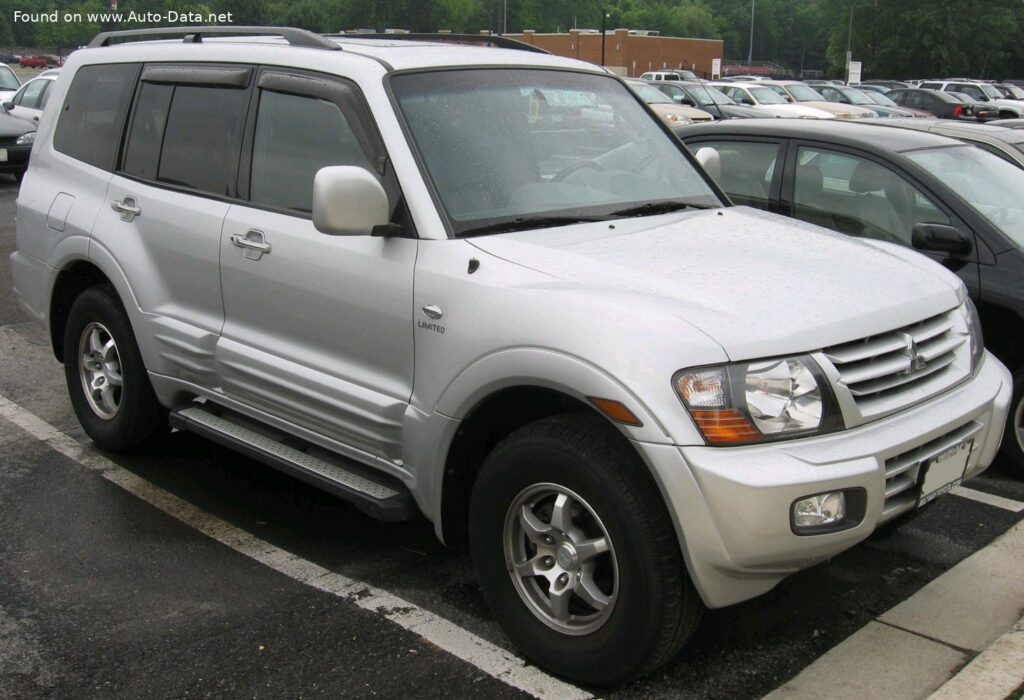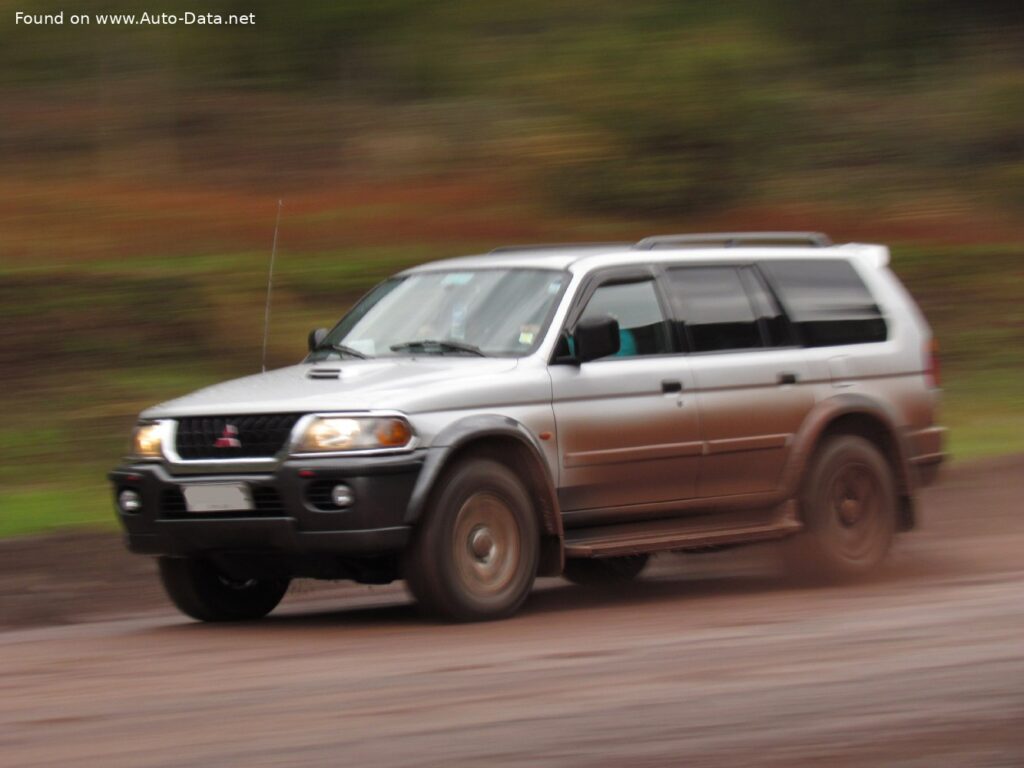
The Mitsubishi Montero Sport I, produced between 1999 and 2003, represents Mitsubishi’s entry into the increasingly popular mid-size SUV segment. While not officially sold in the United States under the Montero Sport name, it was a significant vehicle in markets like Asia, Australia, and Latin America, often marketed under different names like Pajero Sport. This first generation of the Montero Sport was designed to offer a blend of off-road capability, family practicality, and relative affordability, building upon the reputation of the larger, more established Mitsubishi Pajero (Montero in some markets). It served as a more accessible alternative to the full-size Pajero, appealing to buyers seeking a rugged yet comfortable SUV.
Mitsubishi Montero Sport I: Overview
The Montero Sport I was fundamentally a body-on-frame SUV, utilizing a ladder chassis for enhanced durability and off-road performance. This construction method, common in SUVs of the era, provided a robust platform capable of handling challenging terrain. It was positioned as a competitor to vehicles like the Toyota Hilux Surf (4Runner in the US), Isuzu Trooper, and Ford Explorer, offering a similar combination of features and capabilities. The vehicle’s design prioritized functionality and a rugged aesthetic, reflecting its intended use.
Engine & Performance
The most common engine offered in the Montero Sport I was the 3.0-liter V6 gasoline engine, designated as the 6G72. This naturally aspirated engine produced 170 horsepower at 5000 rpm and 255 Nm (188.08 lb-ft) of torque at 4500 rpm. The engine featured a 9:1 compression ratio, multi-port fuel injection, and a double overhead camshaft (DOHC) valvetrain with four valves per cylinder. This configuration provided a reasonable balance of power and fuel efficiency for its time. The engine’s longitudinal front-engine layout contributed to a balanced weight distribution.
Performance figures indicated a 0-100 km/h (0-62 mph) acceleration time of 11.6 seconds and a top speed of 175 km/h (108.74 mph). While not exceptionally quick by modern standards, these figures were competitive within its class. The vehicle’s weight-to-power ratio of 11.3 kg/Hp and weight-to-torque ratio of 7.5 kg/Nm reflected its robust construction. A five-speed manual transmission was the standard gearbox, providing drivers with direct control over the powertrain. The Montero Sport I featured a part-time four-wheel-drive system, allowing drivers to switch between two-wheel drive for on-road efficiency and four-wheel drive for enhanced traction in off-road conditions.
Design & Features
The Montero Sport I was a five-door SUV with seating for five passengers. Its body-on-frame construction resulted in a relatively high curb weight of 1920 kg (4232.88 lbs). The exterior design was characterized by a boxy silhouette, large headlights, and a prominent grille, typical of SUVs from the late 1990s and early 2000s. The vehicle’s dimensions – 4610 mm (181.5 in) in length, 1775 mm (69.88 in) in width, and 1735 mm (68.31 in) in height – provided ample interior space for passengers and cargo.
Inside, the Montero Sport I offered a functional and durable interior. While not luxurious, it provided essential comfort features for its target market. Standard equipment typically included power steering, air conditioning, and basic instrumentation. Safety features were relatively limited by contemporary standards, but generally included an Anti-lock Braking System (ABS). The trunk offered a minimum capacity of 500 liters (17.66 cu. ft.), expandable to 1720 liters (60.74 cu. ft.) with the rear seats folded down. The fuel tank capacity was 74 liters (19.55 US gal).
Technical Specifications
| Brand | Mitsubishi |
| Model | Montero Sport |
| Generation | Montero Sport I |
| Type (Engine) | 3.0 i V6 24V (170 Hp) |
| Start of production | 1999 |
| End of production | 2003 |
| Powertrain Architecture | Internal Combustion engine |
| Body type | Off-road vehicle, SUV |
| Seats | 5 |
| Doors | 5 |
| Fuel consumption (urban) | 16.6 l/100 km (14.2 US mpg / 17 UK mpg) |
| Fuel consumption (extra urban) | 9.9 l/100 km (23.8 US mpg / 28.5 UK mpg) |
| Fuel Type | Petrol (Gasoline) |
| Acceleration 0 – 100 km/h | 11.6 sec |
| Acceleration 0 – 62 mph | 11.6 sec |
| Acceleration 0 – 60 mph | 11 sec |
| Maximum speed | 175 km/h (108.74 mph) |
| Weight-to-power ratio | 11.3 kg/Hp |
| Weight-to-torque ratio | 7.5 kg/Nm |
| Power | 170 Hp @ 5000 rpm |
| Torque | 255 Nm @ 4500 rpm (188.08 lb.-ft. @ 4500 rpm) |
| Engine layout | Front, Longitudinal |
| Engine displacement | 2972 cm3 (181.36 cu. in.) |
| Number of cylinders | 6 |
| Engine configuration | V-engine |
| Cylinder Bore | 91.1 mm (3.59 in.) |
| Piston Stroke | 76 mm (2.99 in.) |
| Compression ratio | 9:1 |
| Number of valves per cylinder | 4 |
| Fuel injection system | Multi-port manifold injection |
| Engine aspiration | Naturally aspirated engine |
| Valvetrain | DOHC |
| Kerb Weight | 1920 kg (4232.88 lbs.) |
| Max. weight | 2510 kg (5533.6 lbs.) |
| Max load | 590 kg (1300.73 lbs.) |
| Trunk (boot) space – minimum | 500 l (17.66 cu. ft.) |
| Trunk (boot) space – maximum | 1720 l (60.74 cu. ft.) |
| Fuel tank capacity | 74 l (19.55 US gal | 16.28 UK gal) |
| Length | 4610 mm (181.5 in.) |
| Width | 1775 mm (69.88 in.) |
| Height | 1735 mm (68.31 in.) |
| Wheelbase | 2725 mm (107.28 in.) |
| Front track | 1465 mm (57.68 in.) |
| Rear (Back) track | 1480 mm (58.27 in.) |
| Drive wheel | All wheel drive (4×4) |
| Number of gears and type of gearbox | 5 gears, manual transmission |
| Front suspension | Double wishbone |
| Rear suspension | Coil spring |
| Front brakes | Ventilated discs |
| Rear brakes | Disc |
| Assisting systems | ABS (Anti-lock braking system) |
| Power steering | Hydraulic Steering |
| Tires size | 255/70 R16 |
The Mitsubishi Montero Sport I, while not a groundbreaking vehicle, represented a solid and capable offering in the mid-size SUV segment. Its blend of off-road ability, practicality, and affordability made it a popular choice in many markets, establishing a foundation for subsequent generations of the Montero Sport/Pajero Sport.