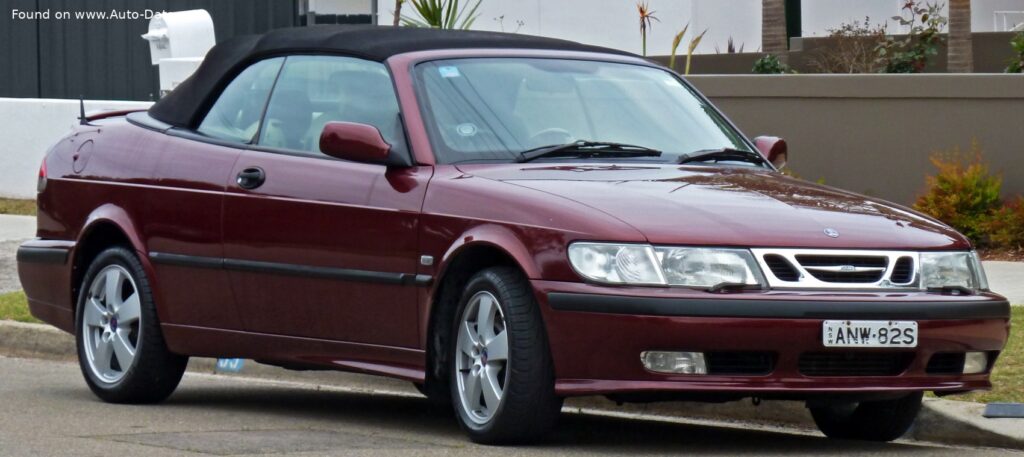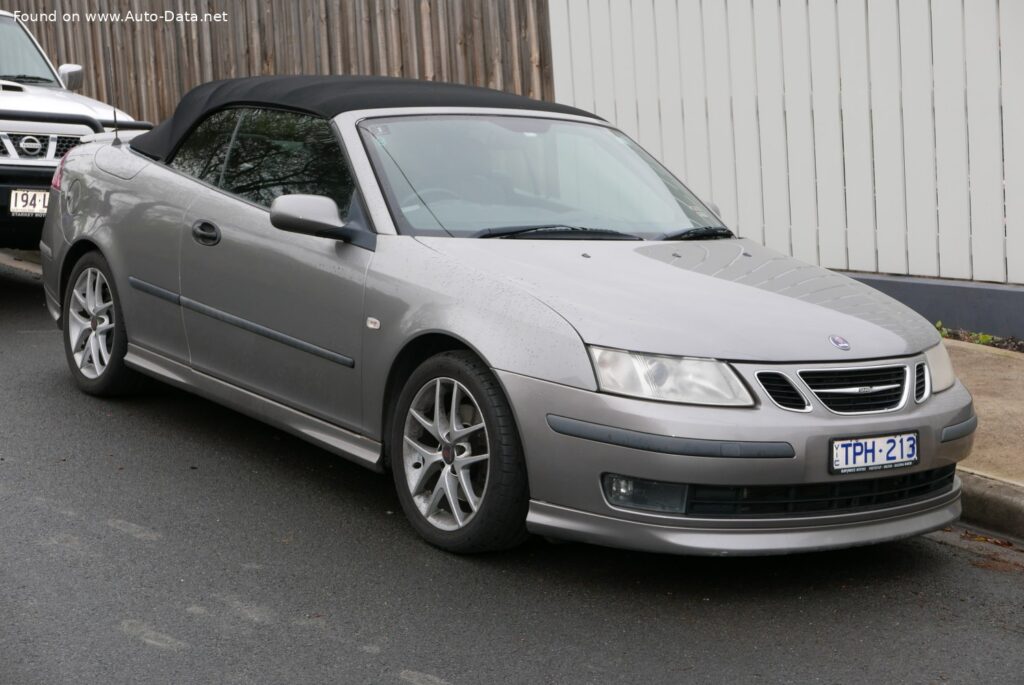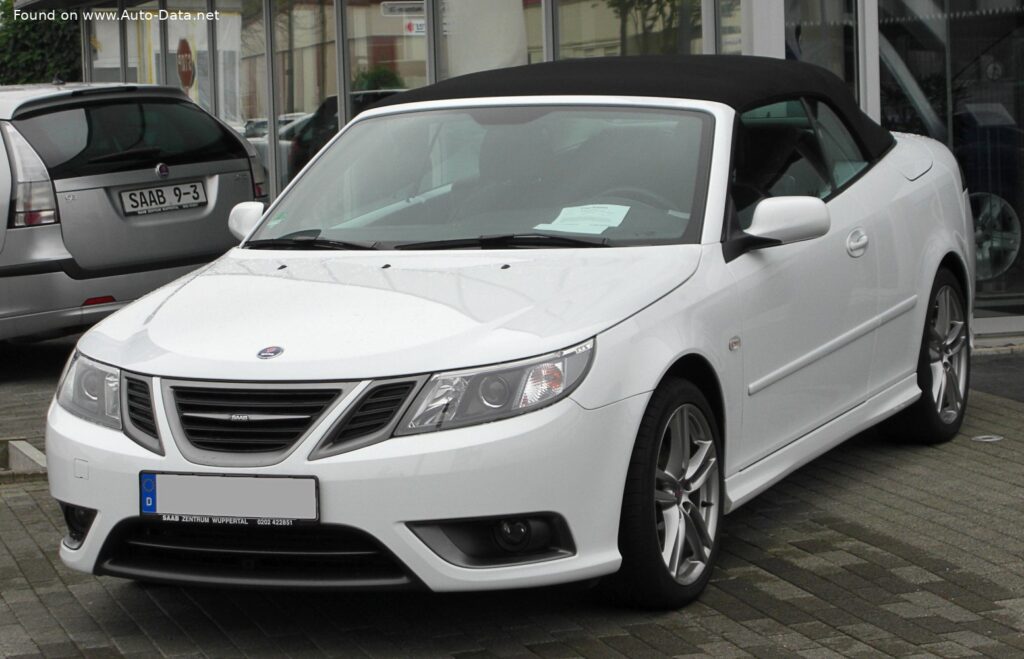
The Saab 9-3 Convertible II, particularly the facelifted version introduced in September 2007, represents a compelling blend of Scandinavian design, turbocharged performance, and open-air driving enjoyment. Positioned within the premium compact convertible segment, the 9-3 Convertible aimed to offer a sophisticated alternative to more mainstream offerings. This iteration, featuring the 1.9 TTiD engine producing 180 horsepower, was primarily marketed in Europe, where Saab maintained a strong following. Production continued until December 2010, coinciding with the broader challenges faced by the Saab brand under General Motors ownership and ultimately, its eventual demise.
Saab 9-3 Convertible II (2007-2010): A Detailed Overview
The 9-3 Convertible II facelift brought subtle but significant updates to the original model, refining its aesthetics and enhancing its overall appeal. While never a high-volume seller in the United States (Saab’s US presence was limited and focused on sedans and wagons), the 9-3 Convertible held a niche position for buyers seeking a distinctive and well-engineered drop-top experience. The 1.9 TTiD variant, with its twin-turbocharged diesel engine, offered a unique combination of fuel efficiency and respectable performance, catering to European markets where diesel engines were – and continue to be – highly popular.
Engine & Performance
The heart of the 2007-2010 Saab 9-3 Convertible 1.9 TTiD is the Z19DTR engine, a 1.9-liter inline-four cylinder diesel powerplant. This engine is notable for its twin-turbocharger configuration, coupled with an intercooler, which delivers a potent 180 horsepower at 4000 rpm and a substantial 400 Nm (295.02 lb.-ft.) of torque between 1850 and 2750 rpm. The commonrail direct fuel injection system contributes to both performance and efficiency. This configuration allowed for brisk acceleration, achieving 0-100 km/h (0-62 mph) in 9.1 seconds, and a calculated 0-60 mph time of 8.6 seconds. The engine’s power-to-liter ratio is an impressive 94.2 hp/l. Maximum speed is electronically limited to 220 km/h (136.7 mph). The engine meets Euro 4 emission standards and incorporates a particulate filter to reduce harmful emissions.
Design & Features
The Saab 9-3 Convertible II is a two-door, four-seat cabriolet. The design emphasizes a sleek profile, with a relatively long hood and a short rear deck typical of convertible designs. The facelifted model features revised front and rear styling, including updated headlights and taillights, as well as a redesigned front bumper and grille. The interior is characterized by Saab’s typically minimalist and functional Scandinavian design philosophy. Key features include a power-operated soft top, offering open-air driving enjoyment, and a focus on driver comfort. Safety features, crucial for a modern convertible, include ABS (Anti-lock Braking System) and ventilated disc brakes on all four wheels (302mm front, 292mm rear). The car’s kerb weight ranges from 1650 to 1835 kg (3637.63 to 4045.48 lbs), depending on equipment levels. Trunk space, while compromised by the convertible mechanism, offers 258 liters (9.11 cu. ft.) with the top up and 352 liters (12.43 cu. ft.) with the top down.
Technical Specifications
| Brand | Saab |
| Model | 9-3 |
| Generation | 9-3 Convertible II (facelift 2007) |
| Type (Engine) | 1.9 TTiD (180 Hp) |
| Start of production | September, 2007 |
| End of production | December, 2010 |
| Powertrain Architecture | Internal Combustion engine |
| Body type | Cabriolet |
| Seats | 4 |
| Doors | 2 |
| Fuel consumption (urban) | 7.7 l/100 km (30.5 US mpg, 36.7 UK mpg, 13 km/l) |
| Fuel consumption (extra urban) | 4.7 l/100 km (50 US mpg, 60.1 UK mpg, 21.3 km/l) |
| Fuel consumption (combined) | 5.8 l/100 km (40.6 US mpg, 48.7 UK mpg, 17.2 km/l) |
| CO2 emissions | 154 g/km |
| Fuel Type | Diesel |
| Acceleration 0 – 100 km/h | 9.1 sec |
| Acceleration 0 – 62 mph | 9.1 sec |
| Acceleration 0 – 60 mph | 8.6 sec |
| Maximum speed | 220 km/h (136.7 mph) |
| Emission standard | Euro 4 |
| Weight-to-power ratio | 9.2 kg/Hp, 109.1 Hp/tonne |
| Weight-to-torque ratio | 4.1 kg/Nm, 242.4 Nm/tonne |
| Power | 180 Hp @ 4000 rpm |
| Torque | 400 Nm @ 1850-2750 rpm (295.02 lb.-ft. @ 1850-2750 rpm) |
| Engine layout | Front, Transverse |
| Engine Model/Code | Z19DTR |
| Engine displacement | 1910 cm3 (116.56 cu. in.) |
| Number of cylinders | 4 |
| Engine configuration | Inline |
| Cylinder Bore | 82 mm (3.23 in.) |
| Piston Stroke | 90.4 mm (3.56 in.) |
| Compression ratio | 16.5:1 |
| Number of valves per cylinder | 4 |
| Fuel injection system | Diesel Commonrail |
| Engine aspiration | Twin-Turbo, Intercooler |
| Valvetrain | DOHC |
| Engine oil capacity | 4.5 l (4.76 US qt | 3.96 UK qt) |
| Coolant | 7.4 l (7.82 US qt | 6.51 UK qt) |
| Kerb Weight | 1650-1835 kg (3637.63 – 4045.48 lbs.) |
| Max. weight | 2040-2140 kg (4497.43 – 4717.89 lbs.) |
| Max load | 305-390 kg (672.41 – 859.8 lbs.) |
| Trunk (boot) space – minimum | 258 l (9.11 cu. ft.) |
| Trunk (boot) space – maximum | 352 l (12.43 cu. ft.) |
| Fuel tank capacity | 58 l (15.32 US gal | 12.76 UK gal) |
| Permitted trailer load with brakes (12%) | 1600 kg (3527.4 lbs.) |
| Permitted trailer load without brakes | 750 kg (1653.47 lbs.) |
| Length | 4647 mm (182.95 in.) |
| Width | 1780 mm (70.08 in.) |
| Width including mirrors | 2038 mm (80.24 in.) |
| Height | 1437 mm (56.57 in.) |
| Wheelbase | 2675 mm (105.31 in.) |
| Front track | 1524 mm (60 in.) |
| Rear (Back) track | 1506 mm (59.29 in.) |
| Front overhang | 981 mm (38.62 in.) |
| Rear overhang | 991 mm (39.02 in.) |
| Minimum turning circle (turning diameter) | 11.4 m (37.4 ft.) |
| Drivetrain Architecture | Front wheel drive |
| Number of gears and type of gearbox | 6 gears, manual transmission |
| Front suspension | Independent, type McPherson with coil spring and anti-roll bar |
| Rear suspension | Independent multi-link spring suspension with stabilizer |
| Front brakes | Ventilated discs, 302 mm |
| Rear brakes | Ventilated discs, 292 mm |
| Tires size | 215/55 R16; 225/45 R17; 235/45 R17; 225/45 R18 |
| Wheel rims size | 6.5J x 16; 7J x 17; 7.5J x 17; 7.5J x 18 |