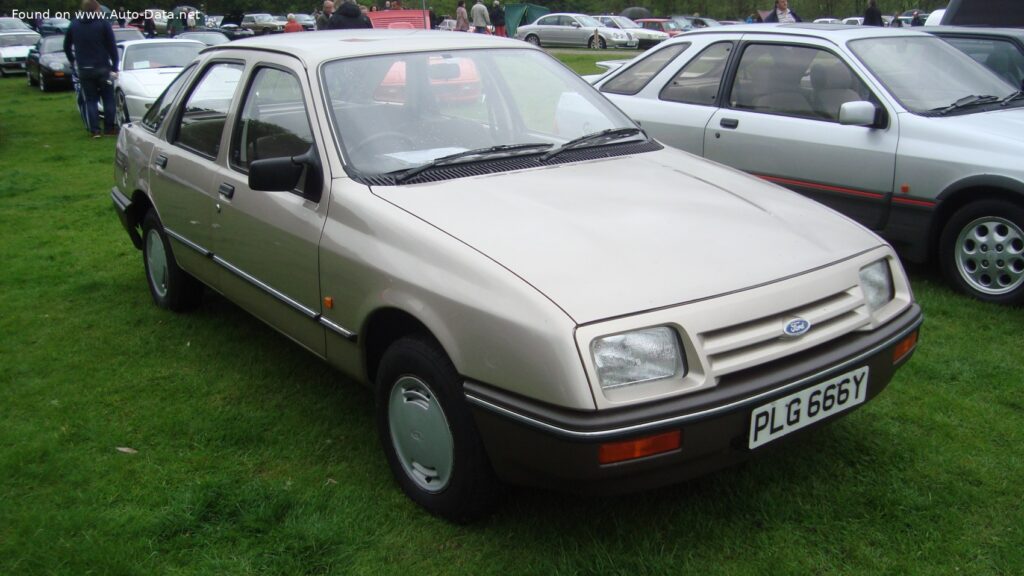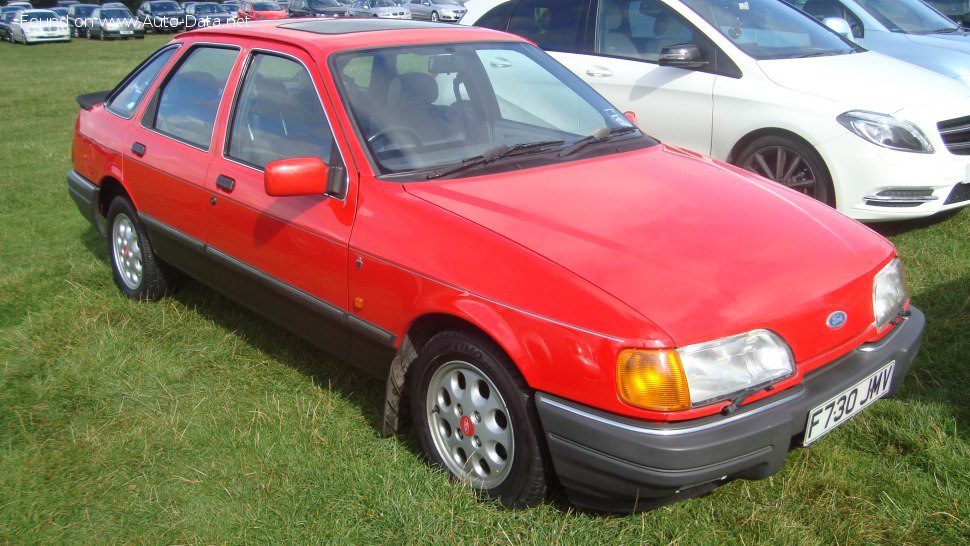
The Ford Sierra Hatchback II 1.8 (87 Hp) Automatic, produced between 1988 and 1993, represents a significant evolution in Ford of Europe’s mid-size family car lineup. Replacing the aging Cortina, the Sierra was a radical departure in design and engineering, embracing aerodynamics and modern manufacturing techniques. While never officially sold in the United States, the Sierra was a hugely popular vehicle in Europe, competing with models like the Opel/Vauxhall Astra, Volkswagen Jetta, and Peugeot 305. The Hatchback II variant, specifically the 1.8-liter automatic, offered a balance of practicality, affordability, and reasonable performance for the family car market. It was a key player in Ford’s efforts to modernize its image and appeal to a broader customer base.
The Ford Sierra Hatchback II: A European Success Story
The Sierra marked a pivotal moment for Ford in Europe. The first-generation Sierra, launched in 1982, was controversial for its boxy, aerodynamic styling, a stark contrast to the more traditional designs of its competitors. However, it proved to be a robust and well-engineered vehicle. The Hatchback II, introduced with various updates throughout its production run, refined the original design and addressed some of the criticisms leveled at the first iteration. The 1.8-liter engine, coupled with an automatic transmission, was a popular choice for buyers seeking a comfortable and convenient driving experience. The Sierra’s success helped solidify Ford’s position as a leading automotive manufacturer in Europe, paving the way for future models like the Mondeo.
Engine & Performance
The Ford Sierra Hatchback II 1.8 Automatic is powered by a 1.8-liter inline four-cylinder petrol (gasoline) engine. This engine produces 87 horsepower, offering a power-to-weight ratio of 48.4 horsepower per liter. While not a performance-oriented vehicle, the 1.8-liter engine provided adequate power for everyday driving and cruising on European motorways. The engine utilizes a carburetor fuel injection system, a common technology for the era, and is naturally aspirated. The engine’s longitudinal front-engine layout, coupled with rear-wheel drive, was a traditional configuration for Ford at the time, offering a balanced driving experience. The four-speed automatic transmission provides smooth gear changes, enhancing the car’s comfort and ease of use. Acceleration was modest, but the focus was on fuel efficiency and reliability rather than outright speed. The engine displacement of 1796 cm3 (109.6 cubic inches) was considered a good compromise between power and economy for the time.
Design & Features
The Sierra Hatchback II is a five-door, five-seat hatchback. Its design, while initially controversial, was heavily influenced by aerodynamic principles, aiming to reduce drag and improve fuel efficiency. The body style offered a practical and versatile solution for families, providing ample space for passengers and luggage. The interior was functional and relatively spacious, although the materials used were typical of the late 1980s and early 1990s. Safety features, while limited by the standards of today, included ventilated disc brakes on the front wheels and drum brakes on the rear. The car’s suspension system was designed to provide a comfortable ride, balancing handling with passenger comfort. The Sierra’s relatively simple construction made it easy to maintain and repair, contributing to its popularity among cost-conscious buyers. The 60-liter (15.85 US gallons) fuel tank provided a reasonable driving range between fill-ups. The turning circle of 10 meters (32.81 feet) made it relatively maneuverable in urban environments.
Technical Specifications
| Brand | Ford |
| Model | Sierra |
| Generation | Sierra Hatchback II |
| Type (Engine) | 1.8 (87 Hp) Automatic |
| Start of production | 1988 year |
| End of production | 1993 year |
| Powertrain Architecture | Internal Combustion engine |
| Body type | Hatchback |
| Seats | 5 |
| Doors | 5 |
| Fuel Type | Petrol (Gasoline) |
| Power | 87 Hp |
| Power per litre | 48.4 Hp/l |
| Engine layout | Front, Longitudinal |
| Engine displacement | 1796 cm3 |
| Engine displacement (US) | 109.6 cu. in. |
| Number of cylinders | 4 |
| Engine configuration | Inline |
| Number of valves per cylinder | 2 |
| Fuel injection system | Carburettor |
| Engine aspiration | Naturally aspirated engine |
| Fuel tank capacity | 60 l |
| Fuel tank capacity (US) | 15.85 US gal |
| Fuel tank capacity (UK) | 13.2 UK gal |
| Length | 4425 mm |
| Length (US) | 174.21 in. |
| Width | 1694 mm |
| Width (US) | 66.69 in. |
| Height | 1407 mm |
| Height (US) | 55.39 in. |
| Wheelbase | 2608 mm |
| Wheelbase (US) | 102.68 in. |
| Front track | 1452 mm |
| Front track (US) | 57.17 in. |
| Rear track | 1468 mm |
| Rear track (US) | 57.8 in. |
| Minimum turning circle | 10 m |
| Minimum turning circle (US) | 32.81 ft. |
| Drivetrain Architecture | ICE drives rear wheels |
| Drive wheel | Rear wheel drive |
| Number of gears | 4 |
| Gearbox type | automatic transmission |
| Front brakes | Ventilated discs |
| Rear brakes | Drum |
The Ford Sierra Hatchback II 1.8 Automatic, while not a groundbreaking vehicle in terms of performance or technology, was a successful and important model for Ford of Europe. It represented a significant step forward in design and engineering, offering a practical, affordable, and reliable option for families in the late 1980s and early 1990s. Its legacy continues to influence Ford’s approach to vehicle design and manufacturing today.