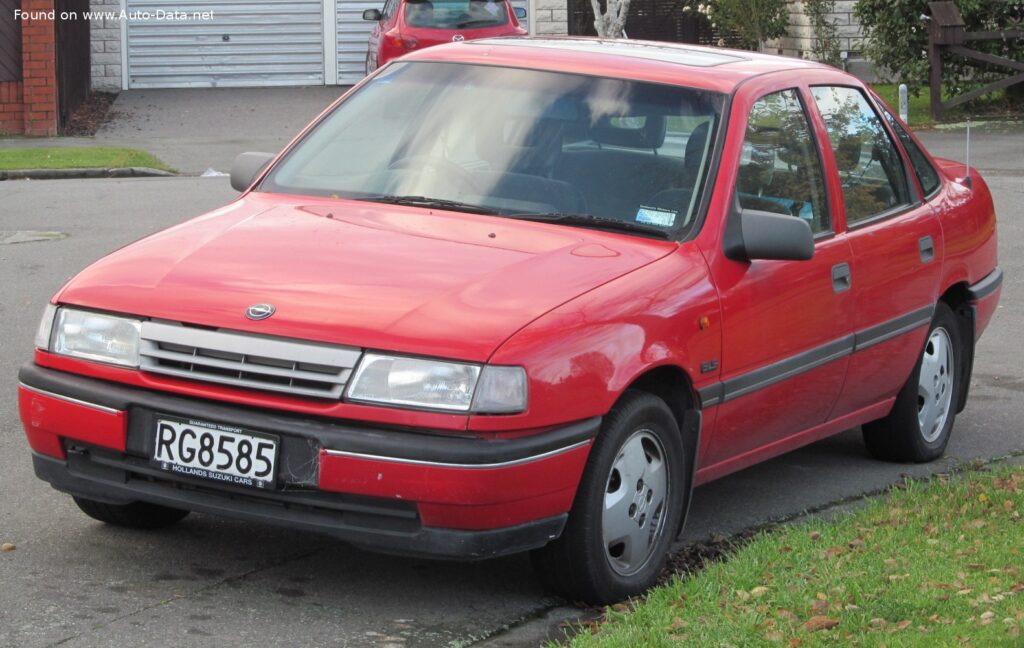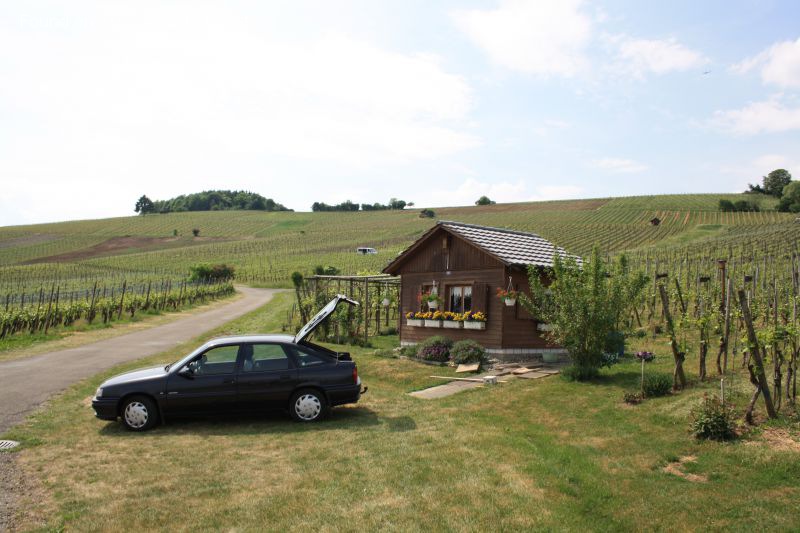
The Opel Vectra A CC (facelift 1992) 2.0i 16V 4×4 represents a significant iteration of Opel’s mid-size offering, produced between 1994 and 1995. Positioned as a competitor to vehicles like the Ford Mondeo and Volkswagen Passat in the European market, the Vectra A aimed to provide a blend of practicality, comfort, and performance. The “CC” designation stands for “Comfort and Chassis,” indicating a focus on ride quality and handling. This particular variant, equipped with a 2.0-liter 16-valve engine and all-wheel drive, was designed to appeal to drivers seeking enhanced traction and stability, particularly in inclement weather conditions common in many European regions. While not officially sold in the United States, understanding the Vectra A provides insight into the engineering and design philosophies prevalent in the European automotive industry during the early 1990s.
Opel Vectra A CC: A Detailed Overview
The Vectra A, launched in 1988, was Opel’s replacement for the Ascona and Manta models. The 1992 facelift brought significant cosmetic and mechanical updates, improving the car’s appeal and addressing some initial criticisms. The 2.0i 16V 4×4 model was a higher-specification trim, offering a more powerful engine and the added security of all-wheel drive. Opel, as a key brand within the General Motors portfolio, leveraged technology and engineering expertise across its divisions, resulting in a vehicle that was relatively advanced for its time.
Engine & Performance
The heart of the Vectra A CC 2.0i 16V 4×4 is its 1998 cc (121.93 cu. in.) inline-four cylinder engine, designated the X20XEV. This engine produces 136 horsepower (Hp) at 5600 rpm and 188 Nm (138.66 lb.-ft.) of torque at 3200 rpm. The 16-valve cylinder head, coupled with multi-port fuel injection and a compression ratio of 10.8:1, contributes to its responsive performance. Power delivery is smooth and linear, making it suitable for both everyday driving and longer journeys. The engine’s naturally aspirated design, while not offering the outright power of a turbocharged unit, provides a predictable and reliable driving experience. The all-wheel-drive system distributes power to all four wheels, enhancing grip and stability, particularly on slippery surfaces. Acceleration from 0 to 100 km/h (0-62 mph) takes 10.5 seconds, while the car achieves a maximum speed of 204 km/h (126.76 mph). The weight-to-power ratio of 9.2 kg/Hp and weight-to-torque ratio of 6.6 kg/Nm indicate a reasonably efficient powertrain.
Design & Features
The Vectra A CC is a five-door hatchback, offering a practical and versatile body style. The hatchback configuration provides easy access to the cargo area and allows for flexible loading. The 1992 facelift brought subtle but noticeable changes to the exterior, including revised front and rear fascias, updated headlights, and a more streamlined profile. Inside, the Vectra A CC offers seating for five passengers and a comfortable cabin environment. Features such as hydraulic power steering and an Anti-lock Braking System (ABS) were included as standard equipment on this model, enhancing both driver convenience and safety. The trunk space is generous, ranging from 460 liters (16.24 cu. ft.) with the rear seats up to 1290 liters (45.56 cu. ft.) with the rear seats folded down. The interior design, while functional, reflects the aesthetic sensibilities of the early 1990s, with a focus on durability and practicality rather than outright luxury.
Technical Specifications
| Brand | Opel |
| Model | Vectra |
| Generation | Vectra A CC (facelift 1992) |
| Type (Engine) | 2.0i 16V (136 Hp) 4×4 |
| Start of production | March, 1994 |
| End of production | July, 1995 |
| Powertrain Architecture | Internal Combustion engine |
| Body type | Hatchback |
| Seats | 5 |
| Doors | 5 |
| Fuel consumption (combined) | 8.3 l/100 km |
| Fuel consumption (US mpg) | 28.3 US mpg |
| Fuel consumption (UK mpg) | 34 UK mpg |
| Fuel consumption (km/l) | 12 km/l |
| Fuel Type | Petrol (Gasoline) |
| Acceleration 0 – 100 km/h | 10.5 sec |
| Acceleration 0 – 62 mph | 10.5 sec |
| Acceleration 0 – 60 mph | 10 sec |
| Maximum speed | 204 km/h |
| Maximum speed (mph) | 126.76 mph |
| Weight-to-power ratio | 9.2 kg/Hp |
| Weight-to-torque ratio | 6.6 kg/Nm |
| Power | 136 Hp @ 5600 rpm |
| Power per litre | 68.1 Hp/l |
| Torque | 188 Nm @ 3200 rpm |
| Torque (lb.-ft.) | 138.66 lb.-ft. @ 3200 rpm |
| Engine layout | Front, Transverse |
| Engine Model/Code | X20XEV |
| Engine displacement | 1998 cm3 |
| Engine displacement (cu. in.) | 121.93 cu. in. |
| Number of cylinders | 4 |
| Engine configuration | Inline |
| Piston Stroke | 86 mm |
| Piston Stroke (in.) | 3.39 in. |
| Compression ratio | 10.8:1 |
| Number of valves per cylinder | 4 |
| Fuel injection system | Multi-port manifold injection |
| Engine aspiration | Naturally aspirated engine |
| Valvetrain | DOHC |
| Engine oil capacity | 4 l |
| Engine oil capacity (US qt) | 4.23 US qt |
| Engine oil capacity (UK qt) | 3.52 UK qt |
| Coolant | 7.2 l |
| Coolant (US qt) | 7.61 US qt |
| Coolant (UK qt) | 6.34 UK qt |
| Kerb Weight | 1245 kg |
| Kerb Weight (lbs.) | 2744.76 lbs. |
| Max. weight | 1755 kg |
| Max. weight (lbs.) | 3869.11 lbs. |
| Max load | 510 kg |
| Max load (lbs.) | 1124.36 lbs. |
| Trunk (boot) space – minimum | 460 l |
| Trunk (boot) space – minimum (cu. ft.) | 16.24 cu. ft. |
| Trunk (boot) space – maximum | 1290 l |
| Trunk (boot) space – maximum (cu. ft.) | 45.56 cu. ft. |
| Fuel tank capacity | 61 l |
| Fuel tank capacity (US gal) | 16.11 US gal |
| Fuel tank capacity (UK gal) | 13.42 UK gal |
| Length | 4352 mm |
| Length (in.) | 171.34 in. |
| Width | 1706 mm |
| Width (in.) | 67.17 in. |
| Height | 1400 mm |
| Height (in.) | 55.12 in. |
| Wheelbase | 2600 mm |
| Wheelbase (in.) | 102.36 in. |
| Front track | 1426 mm |
| Front track (in.) | 56.14 in. |
| Rear (Back) track | 1432 mm |
| Rear (Back) track (in.) | 56.38 in. |
| Drive wheel | All wheel drive (4×4) |
| Number of gears and type of gearbox | 5 gears, manual transmission |
| Front suspension | Wishbone |
| Rear suspension | Coil spring |
| Front brakes | Ventilated discs |
| Rear brakes | Disc |
| Assisting systems | ABS (Anti-lock braking system) |
| Power steering | Hydraulic Steering |
| Tires size | 195/60 R15 |
| Wheel rims size | 15 |