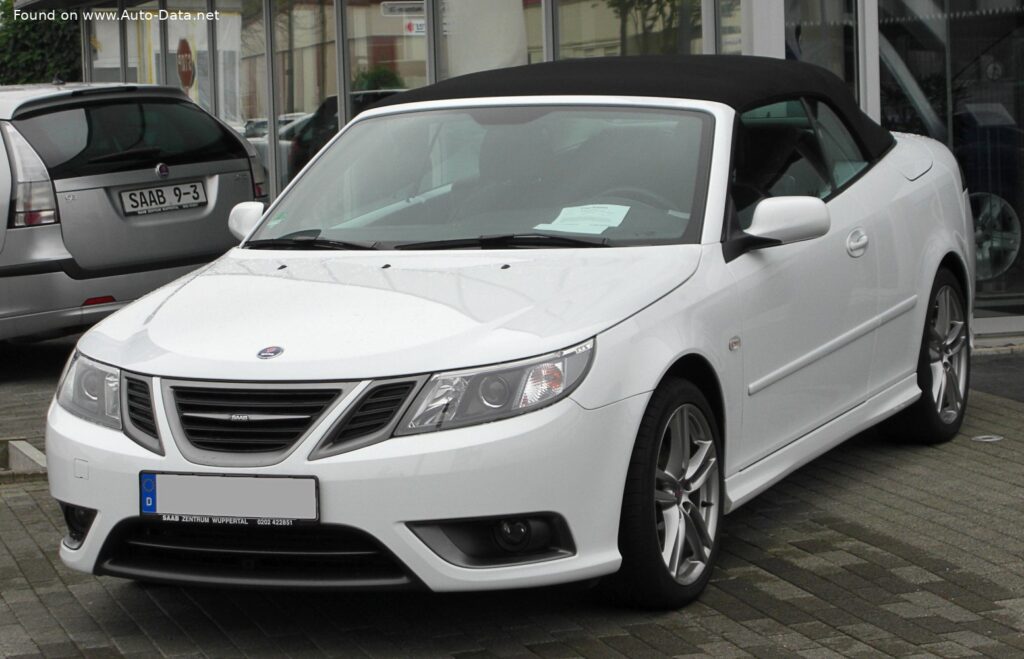
The Saab 9-3 Convertible II, specifically the facelifted version introduced in September 2007, represents a compelling blend of Scandinavian design and turbocharged performance within the premium compact convertible segment. Produced through December 2010, this iteration of the 9-3 Convertible aimed to refine the original model with updated styling, improved features, and enhanced efficiency. While Saab as a brand faced significant challenges during this period, the 9-3 Convertible II remained a distinctive offering, particularly in European markets where open-top motoring enjoys considerable popularity. The 2.0t variant, producing 175 horsepower, was a key engine choice, balancing performance with reasonable fuel consumption.
Saab 9-3 Convertible II (2007-2010) 2.0t: Overview
The 9-3 Convertible II occupied a niche position, competing with vehicles like the BMW 3 Series Convertible, Audi A4 Cabriolet, and Volvo C70. However, Saab differentiated itself through its unique design language, a focus on driver-centric ergonomics, and the availability of turbocharged engines. The facelifted model brought subtle but noticeable changes to the exterior, including revised front and rear fascias, updated headlights, and a refreshed interior. The 2.0t engine, a mainstay of the Saab lineup, provided a spirited driving experience, particularly when paired with the available manual transmission.
Engine & Performance
The heart of the 2007-2010 Saab 9-3 Convertible II 2.0t is a 1.998-liter (121.93 cubic inches) inline-four cylinder engine. This engine, designated the B207L, utilizes a turbocharger and intercooler to boost power output to 175 horsepower at 5500 rpm and 265 Nm (195.45 lb.-ft.) of torque between 2500 and 3500 rpm. This configuration delivers a power-to-liter ratio of 87.6 hp/l. The engine employs multi-port fuel injection and a double overhead camshaft (DOHC) valvetrain with four valves per cylinder. Acceleration from 0 to 100 km/h (0-62 mph) takes approximately 9 seconds, while the 0-60 mph sprint is achieved in around 8.6 seconds. The vehicle boasts a maximum speed of 220 km/h (136.7 mph). The engine’s weight-to-power ratio is 9.4 kg/Hp, and the weight-to-torque ratio is 6.2 kg/Nm. Fuel economy, as measured by the NEDC standard, is rated at 8.5 l/100 km (27.7 US mpg, 33.2 UK mpg) combined, with urban consumption at 11.8 l/100 km (19.9 US mpg) and extra-urban at 6.6 l/100 km (35.6 US mpg). CO2 emissions are rated at 203 g/km, meeting Euro 4 emission standards.
Design & Features
The Saab 9-3 Convertible II is a two-door, four-seat cabriolet. Its design emphasizes a sleek profile with a long hood and a relatively short rear deck. The convertible top is a power-operated soft top, designed for ease of use and providing a comfortable cabin environment. Inside, the 9-3 Convertible II features a driver-focused cockpit with ergonomically designed seats and controls. Safety features included ABS (Anti-lock Braking System) as standard. The interior materials and trim levels varied depending on the specific trim package, but generally offered a blend of comfort and Scandinavian minimalism. Trunk space ranges from 258 liters (9.11 cubic feet) with the top up to 352 liters (12.43 cubic feet) with the top down. The vehicle has a fuel tank capacity of 58 liters (15.32 US gallons).
Technical Specifications
| Brand | Saab |
| Model | 9-3 |
| Generation | 9-3 Convertible II (facelift 2007) |
| Type (Engine) | 2.0t (175 Hp) |
| Start of production | September, 2007 |
| End of production | December, 2010 |
| Powertrain Architecture | Internal Combustion engine |
| Body type | Cabriolet |
| Seats | 4 |
| Doors | 2 |
| Fuel consumption (economy) – urban (NEDC) | 11.8 l/100 km (19.9 US mpg, 23.9 UK mpg) |
| Fuel consumption (economy) – extra urban (NEDC) | 6.6 l/100 km (35.6 US mpg, 42.8 UK mpg) |
| Fuel consumption (economy) – combined (NEDC) | 8.5 l/100 km (27.7 US mpg, 33.2 UK mpg) |
| CO2 emissions (NEDC) | 203 g/km |
| Fuel Type | Petrol (Gasoline) |
| Acceleration 0 – 100 km/h | 9 sec |
| Acceleration 0 – 62 mph | 9 sec |
| Acceleration 0 – 60 mph | 8.6 sec |
| Maximum speed | 220 km/h (136.7 mph) |
| Emission standard | Euro 4 |
| Weight-to-power ratio | 9.4 kg/Hp, 106.1 Hp/tonne |
| Weight-to-torque ratio | 6.2 kg/Nm, 160.6 Nm/tonne |
| Power | 175 Hp @ 5500 rpm |
| Torque | 265 Nm @ 2500-3500 rpm (195.45 lb.-ft. @ 2500-3500 rpm) |
| Engine layout | Front, Transverse |
| Engine Model/Code | B207L |
| Engine displacement | 1998 cm3 (121.93 cu. in.) |
| Number of cylinders | 4 |
| Engine configuration | Inline |
| Cylinder Bore | 86 mm (3.39 in.) |
| Piston Stroke | 86 mm (3.39 in.) |
| Compression ratio | 9.5:1 |
| Number of valves per cylinder | 4 |
| Fuel injection system | Multi-port manifold injection |
| Engine aspiration | Turbocharger, Intercooler |
| Valvetrain | DOHC |
| Engine oil capacity | 6 l (6.34 US qt | 5.28 UK qt) |
| Coolant | 7.5 l (7.93 US qt | 6.6 UK qt) |
| Kerb Weight | 1650-1835 kg (3637.63 – 4045.48 lbs.) |
| Max. weight | 2040-2140 kg (4497.43 – 4717.89 lbs.) |
| Max load | 305-390 kg (672.41 – 859.8 lbs.) |
| Trunk (boot) space – minimum | 258 l (9.11 cu. ft.) |
| Trunk (boot) space – maximum | 352 l (12.43 cu. ft.) |
| Fuel tank capacity | 58 l (15.32 US gal | 12.76 UK gal) |
| Permitted trailer load with brakes (12%) | 1600 kg (3527.4 lbs.) |
| Permitted trailer load without brakes | 750 kg (1653.47 lbs.) |
| Length | 4647 mm (182.95 in.) |
| Width | 1780 mm (70.08 in.) |
| Width including mirrors | 2038 mm (80.24 in.) |
| Height | 1437 mm (56.57 in.) |
| Wheelbase | 2675 mm (105.31 in.) |
| Front track | 1524 mm (60 in.) |
| Rear (Back) track | 1506 mm (59.29 in.) |
| Front overhang | 981 mm (38.62 in.) |
| Rear overhang | 991 mm (39.02 in.) |
| Minimum turning circle (turning diameter) | 11.4 m (37.4 ft.) |
| Drivetrain Architecture | Front wheel drive |
| Number of gears and type of gearbox | 6 gears, manual transmission |
| Front suspension | Independent, type McPherson with coil spring and anti-roll bar |
| Rear suspension | Independent multi-link spring suspension with stabilizer |
| Front brakes | Ventilated discs, 285 mm |
| Rear brakes | Disc, 278 mm |
| Tires size | 215/55 R16; 225/45 R17; 235/45 R17; 225/45 R18 |
| Wheel rims size | 6.5J x 16; 7J x 17; 7.5J x 17; 7.5J x 18 |
Despite the eventual demise of the Saab brand, the 9-3 Convertible II 2.0t remains a desirable vehicle for enthusiasts seeking a stylish and engaging open-top driving experience. Its unique character, combined with its turbocharged performance and Scandinavian design, ensures its place as a distinctive offering in the premium convertible market.