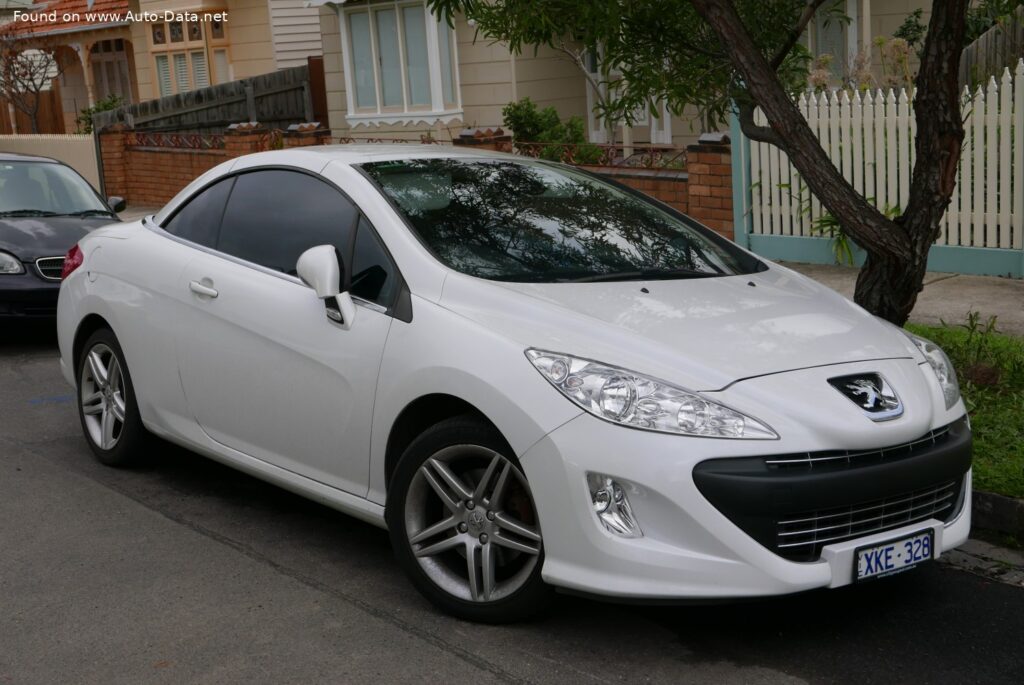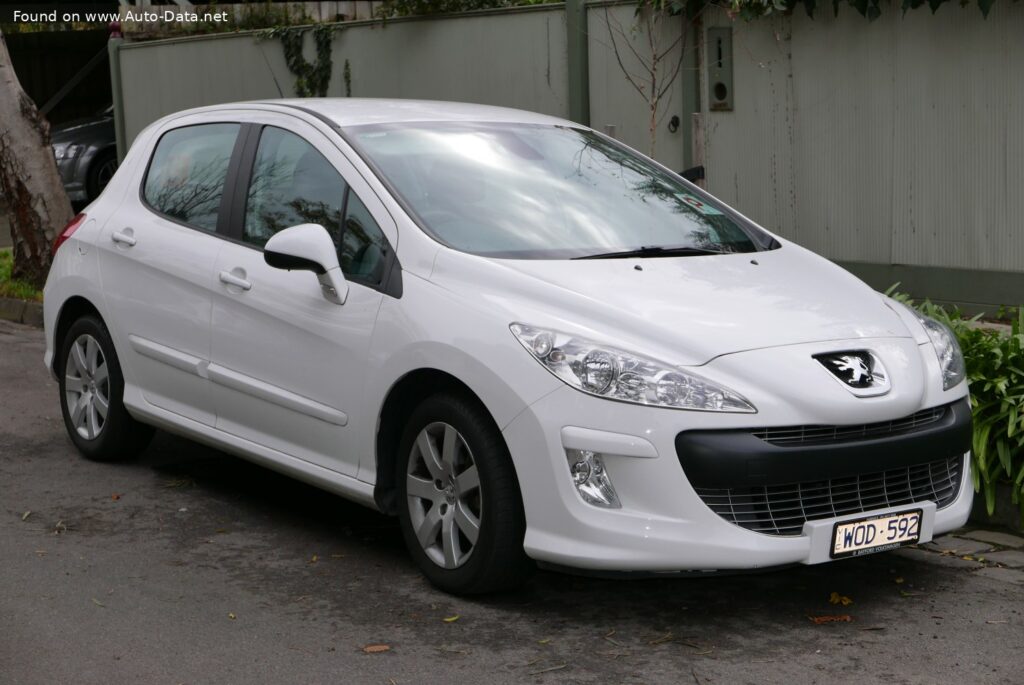
The Peugeot 308 I (Phase I) is a compact hatchback that was produced by the French manufacturer Peugeot between 2007 and 2010. Representing the first generation of the 308 model, it succeeded the Peugeot 307 and aimed to offer a more refined and modern driving experience. This particular variant, the 2.0 HDi 136 FAP Automatic 3-door, was a popular choice in European markets, offering a balance of fuel efficiency, performance, and practicality. While not officially sold in the United States, the 308 I provides a representative example of the European compact car segment, emphasizing diesel power and efficient packaging.
Peugeot 308 I (Phase I): Overview and Market Position
The 308 I was designed to compete with established rivals like the Volkswagen Golf, Ford Focus, and Opel/Vauxhall Astra. Peugeot positioned the 308 as a more premium offering within the compact class, focusing on build quality, interior design, and driving dynamics. The Phase I models, produced from 2007 to 2010, established the core design and engineering principles of the 308 range. The 3-door body style, while less common than the 5-door version, catered to buyers seeking a sportier aesthetic and often a lower price point. The 2.0 HDi engine, coupled with an automatic transmission and a Diesel Particulate Filter (FAP), was a common configuration, prioritizing fuel economy and reduced emissions – key considerations for European consumers.
Engine & Performance
The heart of this 308 variant is the 2.0-liter HDi diesel engine, designated RHR DW10BTED4. This inline-four cylinder engine produces 136 horsepower (Hp) at 4000 rpm and 320 Newton-meters (236.02 lb.-ft.) of torque at 2000 rpm. The high torque output, characteristic of diesel engines, provides strong acceleration and effortless cruising. The engine features a turbocharger and intercooler to enhance performance, and utilizes a Diesel Commonrail fuel injection system for precise fuel delivery. Paired with a 6-speed automatic transmission, the 308 I 2.0 HDi achieves a 0-100 km/h (0-62 mph) time of 10.6 seconds and a maximum speed of 200 km/h (124.27 mph). Fuel economy is a strong point, with combined cycle consumption rated at 6.8 liters per 100 kilometers (34.6 US mpg or 41.5 UK mpg). The inclusion of a Diesel Particulate Filter (FAP) demonstrates Peugeot’s commitment to reducing emissions and meeting stringent Euro 4 standards.
Design & Features
The Peugeot 308 I Phase I features a contemporary hatchback design for its time. The 3-door configuration emphasizes a sportier profile, with a sloping roofline and a relatively short rear overhang. Inside, the cabin is designed with a focus on ergonomics and practicality. The 308 I offers seating for five passengers, although rear space can be limited in the 3-door model. The interior materials and build quality were considered above average for the segment. Key features include a comfortable driving position, a well-designed dashboard, and a range of standard equipment. Safety features, while not as comprehensive as modern vehicles, include ABS (Anti-lock Braking System) and front ventilated disc brakes, with discs also used on the rear. The 308 I’s trunk space offers 348 liters (12.29 cu. ft.) with the rear seats up, expanding to 1201 liters (42.41 cu. ft.) when folded down, providing ample cargo capacity for everyday use.
Technical Specifications
| Brand | Peugeot |
| Model | 308 |
| Generation | 308 I (Phase I, 2007) |
| Type (Engine) | 2.0 HDi (136 Hp) FAP Automatic 3d |
| Start of production | 2007 |
| End of production | 2010 |
| Powertrain Architecture | Internal Combustion engine |
| Body type | Hatchback |
| Seats | 5 |
| Doors | 3 |
| Fuel consumption (urban) | 9.4 l/100 km (25 US mpg, 30.1 UK mpg, 10.6 km/l) |
| Fuel consumption (extra urban) | 5.3 l/100 km (44.4 US mpg, 53.3 UK mpg, 18.9 km/l) |
| Fuel consumption (combined) | 6.8 l/100 km (34.6 US mpg, 41.5 UK mpg, 14.7 km/l) |
| Fuel Type | Diesel |
| Acceleration 0 – 100 km/h | 10.6 sec |
| Acceleration 0 – 62 mph | 10.6 sec |
| Acceleration 0 – 60 mph | 10.1 sec |
| Maximum speed | 200 km/h (124.27 mph) |
| Emission standard | Euro 4 |
| Weight-to-power ratio | 11.1 kg/Hp, 90.1 Hp/tonne |
| Weight-to-torque ratio | 4.7 kg/Nm, 212.1 Nm/tonne |
| Power | 136 Hp @ 4000 rpm |
| Power per litre | 68.1 Hp/l |
| Torque | 320 Nm @ 2000 rpm (236.02 lb.-ft. @ 2000 rpm) |
| Engine layout | Front, Transverse |
| Engine Model/Code | RHR DW10BTED4 |
| Engine displacement | 1997 cm3 (121.86 cu. in.) |
| Number of cylinders | 4 |
| Engine configuration | Inline |
| Cylinder Bore | 85 mm (3.35 in.) |
| Piston Stroke | 88 mm (3.46 in.) |
| Compression ratio | 17.6:1 |
| Number of valves per cylinder | 4 |
| Fuel injection system | Diesel Commonrail |
| Engine aspiration | Turbocharger, Intercooler |
| Valvetrain | DOHC |
| Engine oil capacity | 5.25 l (5.55 US qt | 4.62 UK qt) |
| Coolant | 8.2 l (8.66 US qt | 7.21 UK qt) |
| Kerb Weight | 1509 kg (3326.78 lbs.) |
| Max. weight | 1934 kg (4263.74 lbs.) |
| Max load | 425 kg (936.96 lbs.) |
| Trunk (boot) space – minimum | 348 l (12.29 cu. ft.) |
| Trunk (boot) space – maximum | 1201 l (42.41 cu. ft.) |
| Fuel tank capacity | 60 l (15.85 US gal | 13.2 UK gal) |
| Length | 4276 mm (168.35 in.) |
| Width | 1815 mm (71.46 in.) |
| Height | 1498 mm (58.98 in.) |
| Wheelbase | 2608 mm (102.68 in.) |
| Front track | 1526 mm (60.08 in.) |
| Rear (Back) track | 1521 mm (59.88 in.) |
| Drive wheel | Front wheel drive |
| Number of gears and type of gearbox | 6 gears, automatic transmission |
| Front suspension | Wishbone |
| Rear suspension | Trailing arm |
| Front brakes | Ventilated discs |
| Rear brakes | Disc |
| Steering type | Steering rack and pinion |
| Power steering | Hydraulic Steering |
| Tires size | 195/65R15 91T; 205/55R16 91T; 225/45R17; 225/40R18 |
| Wheel rims size | 6.5Jx15; 7Jx16; 7.5J x 17; 7.5J x 18 |