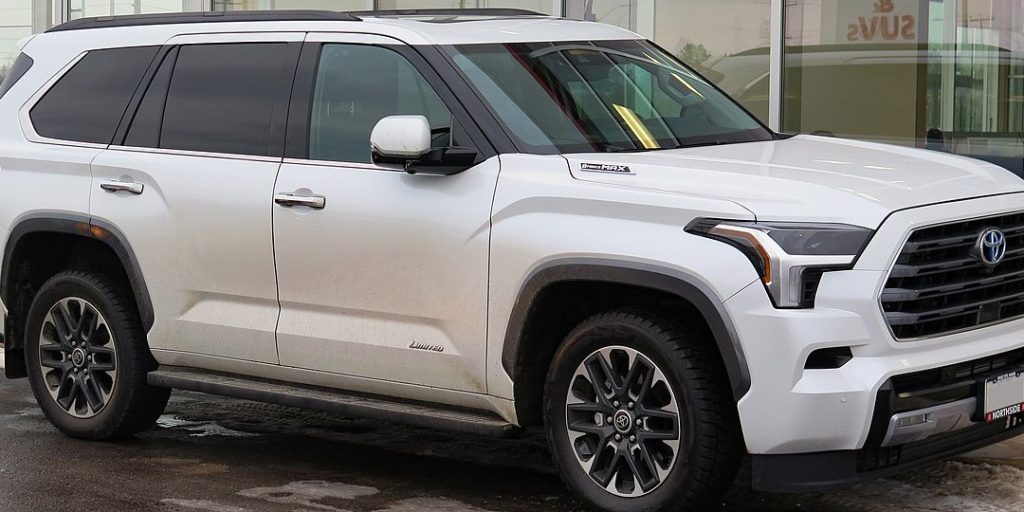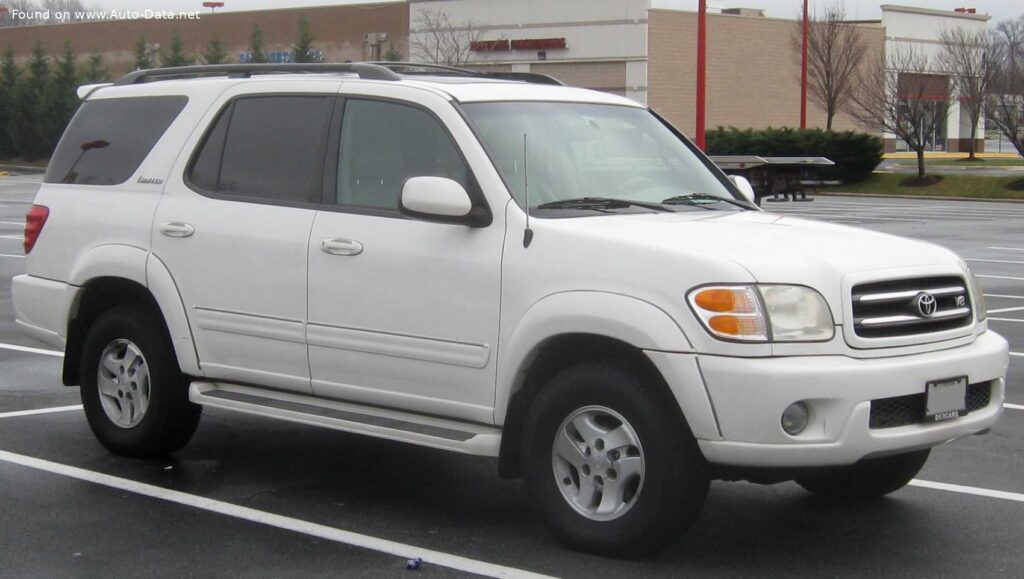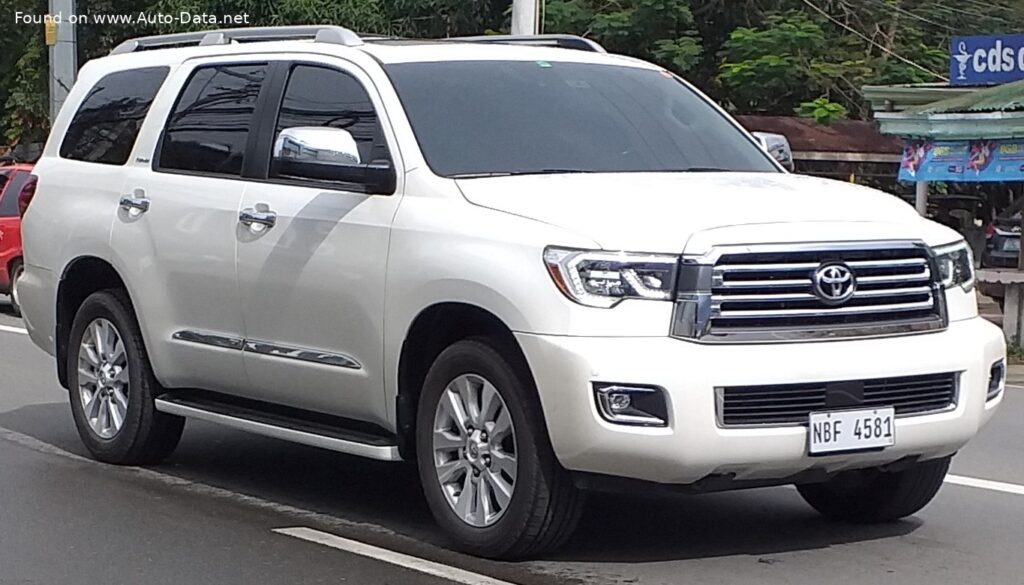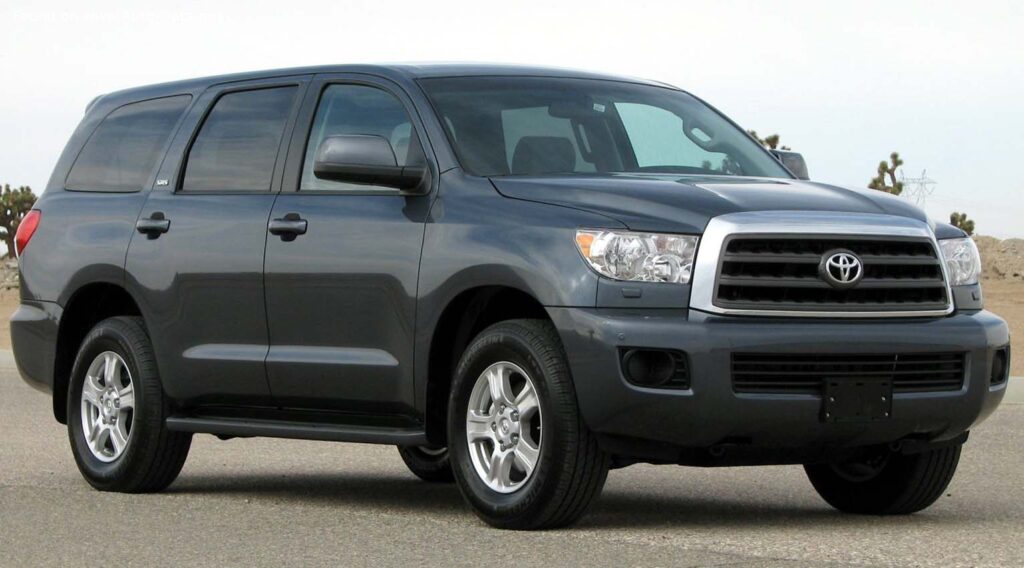
The Toyota Sequoia II, produced between 2009 and 2012, represents the second generation of Toyota’s full-size SUV. Designed primarily for the North American market, the Sequoia II aimed to provide a spacious, comfortable, and reliable alternative to domestic offerings like the Chevrolet Tahoe and Ford Expedition. This generation Sequoia continued the tradition of body-on-frame construction, emphasizing durability and towing capacity. The 4.6 V8 VVT-i (310 Hp) 2WD ECT-i model detailed here represents a key configuration within the Sequoia II lineup, offering a balance of power, efficiency, and affordability.
Toyota Sequoia II 4.6 V8 VVT-i: An Overview
The Sequoia II was a significant update to the original Sequoia, launched in 2001. Toyota focused on improving interior refinement, increasing standard features, and enhancing the vehicle’s overall capability. The 4.6-liter V8 engine, equipped with Variable Valve Timing with intelligence (VVT-i), was a cornerstone of this model, providing ample power for both daily driving and demanding tasks like towing. The ECT-i (Electronic Controlled Transmission – intelligent) automatic transmission further optimized performance and fuel economy. While not a major seller in markets outside of North America, the Sequoia II established Toyota as a credible contender in the full-size SUV segment.
Engine & Performance
The heart of the Toyota Sequoia II 4.6 V8 VVT-i is the 1UR-FE 4.6-liter V8 engine. This naturally aspirated powerplant produces 310 horsepower at 5400 rpm and 443 Nm (326.74 lb.-ft.) of torque at 3400 rpm. The VVT-i system optimizes valve timing based on engine speed and load, resulting in improved fuel efficiency and a broader torque curve. The engine’s configuration – a 90-degree V-engine with a 94 mm bore and 83 mm stroke – contributes to its smooth operation and robust character. The 6-speed ECT-i automatic transmission efficiently delivers power to the rear wheels in this 2WD configuration. The weight-to-power ratio of 8.3 kg/Hp and a weight-to-torque ratio of 5.8 kg/Nm demonstrate a respectable level of performance for a vehicle of this size and class. Fuel economy is rated at 16.8 l/100 km (14 US mpg) in urban conditions and 12.4 l/100 km (19 US mpg) on the highway.
Design & Features
The Toyota Sequoia II maintains the traditional SUV body style, characterized by its boxy shape and high ground clearance. It’s a five-door SUV offering seating for seven to eight passengers, depending on the configuration. The interior prioritizes space and comfort, with ample legroom and headroom in all three rows. Key features of the Sequoia II include a robust suspension system – utilizing coil springs, double wishbones, and transverse stabilizers both front and rear – designed to provide a comfortable ride even when carrying heavy loads or traversing rough terrain. Safety features, crucial for a vehicle of this size, include an Anti-lock Braking System (ABS). The Sequoia II’s large dimensions – 5210 mm (205.12 in.) in length and 2030 mm (79.92 in.) in width – provide a commanding presence on the road. The spacious trunk offers a minimum of 535 liters (18.89 cu. ft.) of cargo space, expanding to a substantial 3401 liters (120.11 cu. ft.) with the rear seats folded down. A 100-liter (26.42 US gal) fuel tank provides a reasonable driving range.
Technical Specifications
| General Information | |
| Brand | Toyota |
| Model | Sequoia |
| Generation | Sequoia II |
| Type (Engine) | 4.6 V8 VVT-i (310 Hp) 2WD ECT-i |
| Start of production | 2009 |
| End of production | 2012 |
| Powertrain Architecture | Internal Combustion engine |
| Body type | SUV |
| Seats | 7-8 |
| Doors | 5 |
| Performance Specs | |
| Fuel consumption (urban) | 16.8 l/100 km (14 US mpg) |
| Fuel consumption (extra urban) | 12.4 l/100 km (19 US mpg) |
| Fuel Type | Petrol (Gasoline) |
| Emission standard | ULEV |
| Weight-to-power ratio | 8.3 kg/Hp |
| Weight-to-torque ratio | 5.8 kg/Nm |
| Engine Specs | |
| Power | 310 Hp @ 5400 rpm |
| Torque | 443 Nm @ 3400 rpm (326.74 lb.-ft. @ 3400 rpm) |
| Engine layout | Front, Longitudinal |
| Engine Model/Code | 1UR-FE |
| Engine displacement | 4608 cm3 (281.2 cu. in.) |
| Number of cylinders | 8 |
| Engine configuration | V-engine |
| Cylinder Bore | 94 mm (3.7 in.) |
| Piston Stroke | 83 mm (3.27 in.) |
| Number of valves per cylinder | 4 |
| Fuel injection system | Multi-port manifold injection |
| Engine aspiration | Naturally aspirated |
| Valvetrain | DOHC |
| Engine oil capacity | 7.5 l (7.93 US qt | 6.6 UK qt) |
| Coolant capacity | 14.8 l (15.64 US qt | 13.02 UK qt) |
| Space, Volume and Weights | |
| Kerb Weight | 2576 kg (5679.11 lbs.) |
| Max. weight | 3175 kg (6999.68 lbs.) |
| Max load | 599 kg (1320.57 lbs.) |
| Trunk (boot) space – minimum | 535 l (18.89 cu. ft.) |
| Trunk (boot) space – maximum | 3401 l (120.11 cu. ft.) |
| Fuel tank capacity | 100 l (26.42 US gal | 22 UK gal) |
| Permitted trailer load with brakes (12%) | 3311 kg (7299.51 lbs.) |
| Dimensions | |
| Length | 5210 mm (205.12 in.) |
| Width | 2030 mm (79.92 in.) |
| Height | 1955 mm (76.97 in.) |
| Wheelbase | 3100 mm (122.05 in.) |
| Front track | 1725 mm (67.91 in.) |
| Rear track | 1755 mm (69.09 in.) |
| Ride height (ground clearance) | 251 mm (9.88 in.) |
| Minimum turning circle | 11.9 m (39.04 ft.) |
| Approach angle | 27° |
| Departure angle | 20° |
| Drivetrain, Brakes and Suspension | |
| Drivetrain Architecture | Rear wheel drive, Internal Combustion engine |
| Drive wheel | Rear wheel drive |
| Number of gears | 6 |
| Gearbox type | Automatic transmission ECT-i |
| Front suspension | Coil spring, Double wishbone, Transverse stabilizer |
| Rear suspension | Double wishbone, Transverse stabilizer, Coil spring |
| Assisting systems | ABS (Anti-lock braking system) |
| Steering type | Steering rack and pinion |
| Power steering | Hydraulic Steering |
| Tires size | 275/65 R18 |
| Wheel rims size | 8J x 18 |