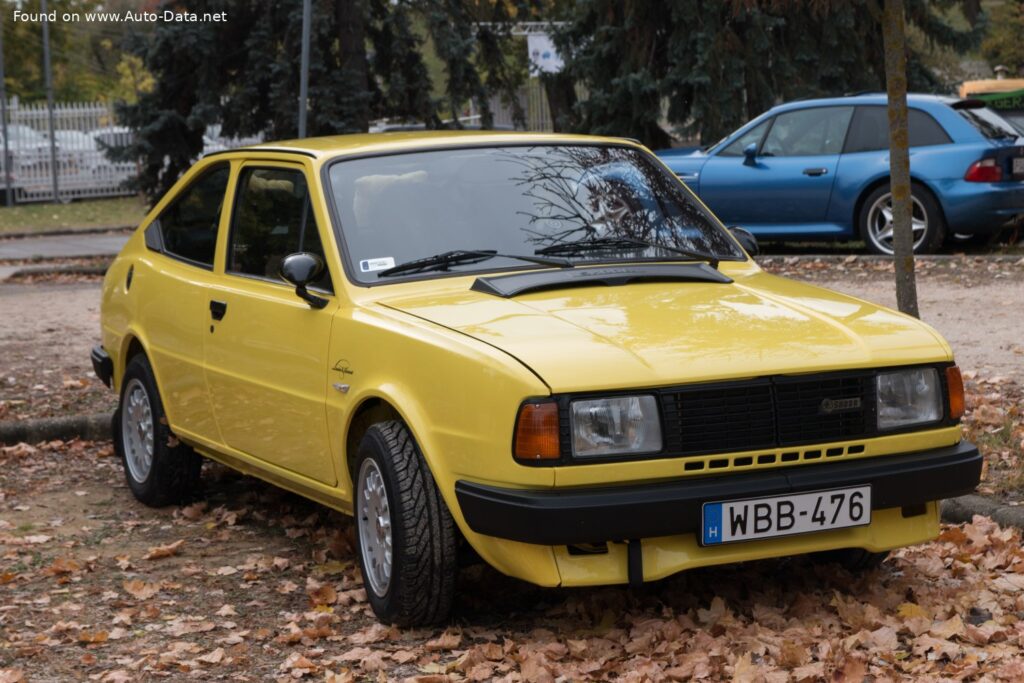
The Skoda Rapid 130G, produced between 1987 and 1990, represents a high-performance variant of the rear-engined, rear-wheel-drive Skoda Rapid coupe. While largely unknown in the North American market, the Rapid held a significant position as a sporty and relatively affordable vehicle within Czechoslovakia and other Eastern European countries during the late 1980s. It was positioned as a competitor to other small, nimble coupes of the era, offering a unique driving experience due to its unconventional engine placement and lightweight construction. The 130G designation signified a more powerful engine and upgraded components compared to the standard Rapid models, making it a desirable choice for enthusiasts.
Skoda Rapid 130G: A Legacy of Rear-Engine Performance
The Skoda Rapid’s lineage traces back to the 1984 introduction of the Rapid 120G, which itself was an evolution of the earlier Skoda 105/120 series. Skoda, under state ownership within Czechoslovakia, focused on refining existing platforms rather than developing entirely new models. The Rapid capitalized on the proven mechanicals of its predecessors, but with a more modern and sporty aesthetic. The 130G, and later the 135G, represented the pinnacle of this development, offering increased power and improved handling. The car’s appeal lay in its affordability, relative reliability, and engaging driving dynamics – a combination that resonated with buyers in its target market.
Engine & Performance
The heart of the Skoda Rapid 130G is its 1.3-liter, naturally aspirated four-cylinder engine, designated the 743. This engine produced 53 horsepower, a notable increase over the standard Rapid 120G. While this output may seem modest by modern standards, it was sufficient to provide brisk acceleration for a lightweight coupe of its size. The engine featured a single overhead camshaft and a two-barrel carburetor, contributing to its improved performance. The rear-engine, rear-wheel-drive layout provided a unique handling characteristic, with a tendency towards oversteer that required skilled driving. The 130G benefited from upgrades to the suspension and brakes compared to earlier models, enhancing its stability and stopping power. The engine’s relatively simple design contributed to its reliability, although maintenance was required to keep it running optimally. The 130G’s performance was further enhanced by its relatively low weight, allowing it to achieve a respectable power-to-weight ratio for its time. The engine was mated to a four-speed manual transmission, providing direct control over the vehicle’s power delivery.
Design & Features
The Skoda Rapid 130G boasts a distinctive coupe body style with two doors. The design, while influenced by contemporary European trends, retained a uniquely Skoda aesthetic. The car’s body was constructed primarily of steel, with a focus on simplicity and cost-effectiveness. The exterior featured a relatively flat profile, with a sloping roofline and a small rear window. The headlights were rectangular, and the front grille was relatively understated. Inside, the Rapid 130G offered a basic but functional interior. The seats were typically upholstered in cloth, and the dashboard featured a simple instrument cluster. Creature comforts were limited, reflecting the car’s affordable price point. However, the interior was reasonably spacious for a coupe of its size. Safety features were also minimal by modern standards, consisting primarily of seatbelts. The car’s design prioritized practicality and affordability over luxury or advanced features. The rear-engine layout necessitated a small front trunk, while the rear seats folded down to provide additional storage space. The 130G’s design was a product of its time and market, reflecting the constraints and priorities of the Czechoslovakian automotive industry.
Technical Specifications
| Brand | Skoda |
| Model | Rapid |
| Generation | Rapid (120G, 130G, 135G) |
| Type (Engine) | 1.3 (130G) (53 Hp) |
| Start of production | 1987 |
| End of production | 1990 |
| Powertrain Architecture | Internal Combustion engine |
| Body type | Coupe |
| Doors | 2 |
| Fuel Type | Petrol (Gasoline) |
| Power | 53 Hp |
| Engine Model/Code | 743 |
| Engine aspiration | Naturally aspirated engine |
| Engine oil capacity | 4 l (4.23 US qt | 3.52 UK qt) |
| Coolant capacity | 11.5 l (12.15 US qt | 10.12 UK qt) |
The Skoda Rapid 130G, while not widely known outside of Eastern Europe, represents a fascinating chapter in automotive history. It showcased Skoda’s ability to extract performance from a relatively simple and affordable platform. The car’s unique rear-engine layout and engaging driving dynamics made it a popular choice among enthusiasts in its home market. Although production ceased in 1990, the Rapid 130G remains a cherished classic among collectors and a testament to Skoda’s engineering ingenuity. Its legacy continues to influence Skoda’s design and engineering philosophy, as the brand has evolved into a major player in the European automotive market. The 130G serves as a reminder of a time when affordability, reliability, and driving enjoyment were paramount considerations in automotive design.
Today, surviving examples of the Skoda Rapid 130G are increasingly sought after by collectors, particularly those interested in Eastern European automotive history. The car’s relative rarity and unique character contribute to its appeal. Restoration projects are common, as owners seek to preserve these examples of a bygone era. The Skoda Rapid 130G stands as a symbol of Czechoslovakian automotive engineering and a reminder of the ingenuity and resourcefulness of the automotive industry during the Cold War period.