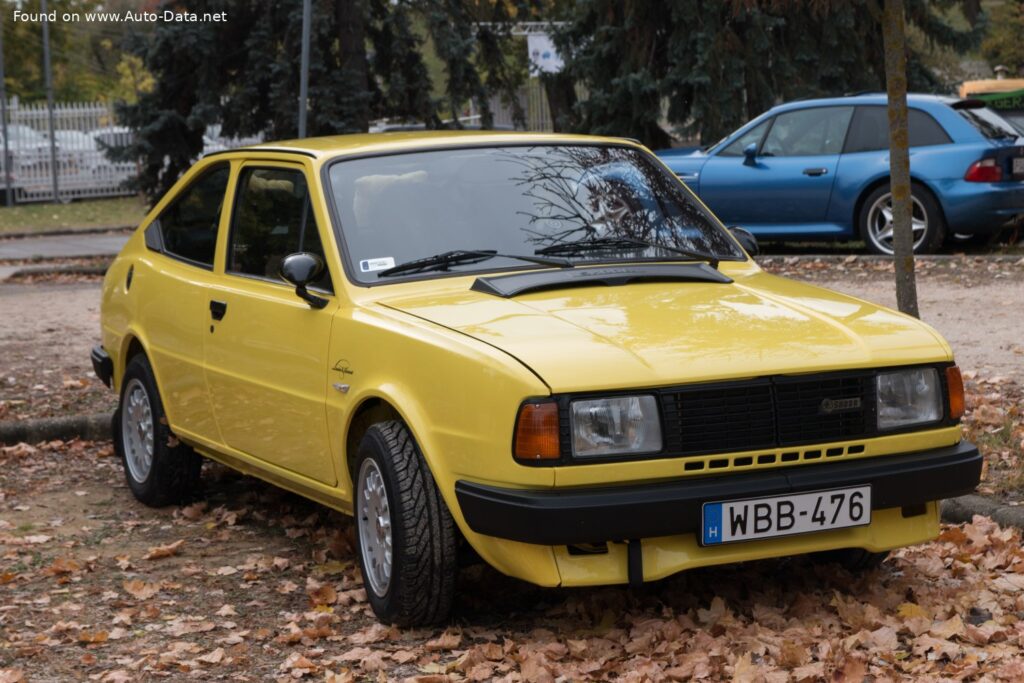
The Škoda Rapid 120G, 130G, and 135G series represents a significant, though often overlooked, chapter in the history of Czech automotive engineering. Produced between 1984 and 1988, the Rapid was Škoda’s attempt to modernize and offer a more sporting alternative to their existing lineup, primarily for the Eastern European market. While not officially sold in the United States, the Rapid provides a fascinating case study in adapting Western design trends within the constraints of a centrally planned economy. It was positioned as a coupe, offering a more stylish and performance-oriented option compared to the more utilitarian sedans Škoda was known for.
Škoda Rapid: A Rear-Wheel Drive Coupe
The Rapid series, encompassing the 120G, 130G, and 135G models, was based heavily on the Škoda 105/120 platform, but with substantial modifications to the body and interior. The most visually striking change was the adoption of a two-door coupe body style, a departure from Škoda’s traditionally more conservative designs. This was achieved through a re-engineered front end and a completely new rear section, giving the Rapid a sleeker, more modern appearance. The “G” designation indicated a higher trim level and, in the case of the 130G and 135G, more powerful engine options. The Rapid aimed to appeal to a younger demographic and those seeking a more dynamic driving experience.
Engine & Performance
The 130G variant, the focus of this article, was powered by a 1.3-liter, inline-four cylinder engine. This engine, designated the 743, produced 62 horsepower at 5000 rpm and 100 Nm (73.76 lb-ft) of torque at 3000 rpm. While these figures may seem modest by modern standards, they represented a significant improvement over the engines found in earlier Škoda models. The engine was longitudinally mounted at the rear of the vehicle, driving the rear wheels. This rear-wheel-drive configuration, while becoming less common in Western Europe by the 1980s, was a hallmark of Škoda’s engineering heritage. The 130G could accelerate from 0 to 62 mph (0-100 km/h) in approximately 14 seconds, reaching a top speed of 95.07 mph (153 km/h). Fuel economy was reasonable for the time, achieving around 42.8 US mpg (51.4 UK mpg) on the extra-urban cycle and 29 US mpg (34.9 UK mpg) in urban conditions.
Design & Features
The Škoda Rapid 130G’s design was heavily influenced by contemporary Western European coupes, particularly those from Italy and Germany. The car featured a relatively long hood, a sloping roofline, and a short rear deck. The interior was more modern than previous Škoda offerings, with improved seating and a more ergonomically designed dashboard. While not equipped with the advanced safety features found in modern vehicles, the Rapid did offer features considered standard for the era, such as disc brakes on the front wheels and a steering rack and pinion system. The car’s relatively light weight (1240 kg or 2733.73 lbs) contributed to its handling characteristics. Trunk space was a practical 400 liters (14.13 cu. ft.). The car’s appeal rested largely on its styling and the perception of being a more sophisticated and desirable vehicle than other offerings from the Eastern Bloc.
Technical Specifications
| Brand | Škoda |
| Model | Rapid |
| Generation | Rapid (120G, 130G, 135G) |
| Type (Engine) | 1.3 (130G) (62 Hp) |
| Start of production | 1985 |
| End of production | 1988 |
| Powertrain Architecture | Internal Combustion engine |
| Body type | Coupe |
| Seats | 4 |
| Doors | 2 |
| Fuel consumption (urban) | 8.1 l/100 km (29 US mpg, 34.9 UK mpg, 12.3 km/l) |
| Fuel consumption (extra urban) | 5.5 l/100 km (42.8 US mpg, 51.4 UK mpg, 18.2 km/l) |
| Fuel Type | Petrol (Gasoline) |
| Acceleration 0 – 100 km/h | 14 sec |
| Acceleration 0 – 62 mph | 14 sec |
| Acceleration 0 – 60 mph | 13.3 sec |
| Maximum speed | 153 km/h (95.07 mph) |
| Weight-to-power ratio | 20 kg/Hp, 50 Hp/tonne |
| Weight-to-torque ratio | 12.4 kg/Nm, 80.6 Nm/tonne |
| Power | 62 Hp @ 5000 rpm |
| Power per litre | 48.1 Hp/l |
| Torque | 100 Nm @ 3000 rpm (73.76 lb.-ft. @ 3000 rpm) |
| Engine layout | Rear, Longitudinal |
| Engine Model/Code | 743 |
| Engine displacement | 1289 cm3 (78.66 cu. in.) |
| Number of cylinders | 4 |
| Engine configuration | Inline |
| Cylinder Bore | 75.5 mm (2.97 in.) |
| Piston Stroke | 72 mm (2.83 in.) |
| Compression ratio | 9.7:1 |
| Number of valves per cylinder | 2 |
| Fuel injection system | Carburettor |
| Engine aspiration | Naturally aspirated engine |
| Valvetrain | OHV |
| Engine oil capacity | 4 l (4.23 US qt | 3.52 UK qt) |
| Coolant | 11.5 l (12.15 US qt | 10.12 UK qt) |
| Kerb Weight | 1240 kg (2733.73 lbs.) |
| Max. weight | 1590 kg (3505.35 lbs.) |
| Max load | 350 kg (771.62 lbs.) |
| Trunk (boot) space – minimum | 400 l (14.13 cu. ft.) |
| Fuel tank capacity | 37 l (9.77 US gal | 8.14 UK gal) |
| Length | 4200 mm (165.35 in.) |
| Width | 1610 mm (63.39 in.) |
| Height | 1380 mm (54.33 in.) |
| Wheelbase | 2400 mm (94.49 in.) |
| Front track | 1390 mm (54.72 in.) |
| Rear (Back) track | 1350 mm (53.15 in.) |
| Drivetrain Architecture | The Internal combustion engine (ICE) drives the rear wheels of the vehicle. |
| Drive wheel | Rear wheel drive |
| Number of gears and type of gearbox | 5 gears, manual transmission |
| Front suspension | Coil spring, Double wishbone |
| Rear suspension | Trailing arm, Coil spring |
| Front brakes | Disc |
| Rear brakes | Drum |
| Steering type | Steering rack and pinion |
| Tires size | 175/70 R13 |
| Wheel rims size | 5J x 13 |
The Škoda Rapid 130G, while not a high-performance sports car, represented a significant step forward for Škoda. It offered a blend of style, practicality, and reasonable performance that appealed to a growing segment of the Eastern European market. Though largely unknown in the West, the Rapid remains a fondly remembered and increasingly collectible classic, showcasing a unique chapter in automotive history.