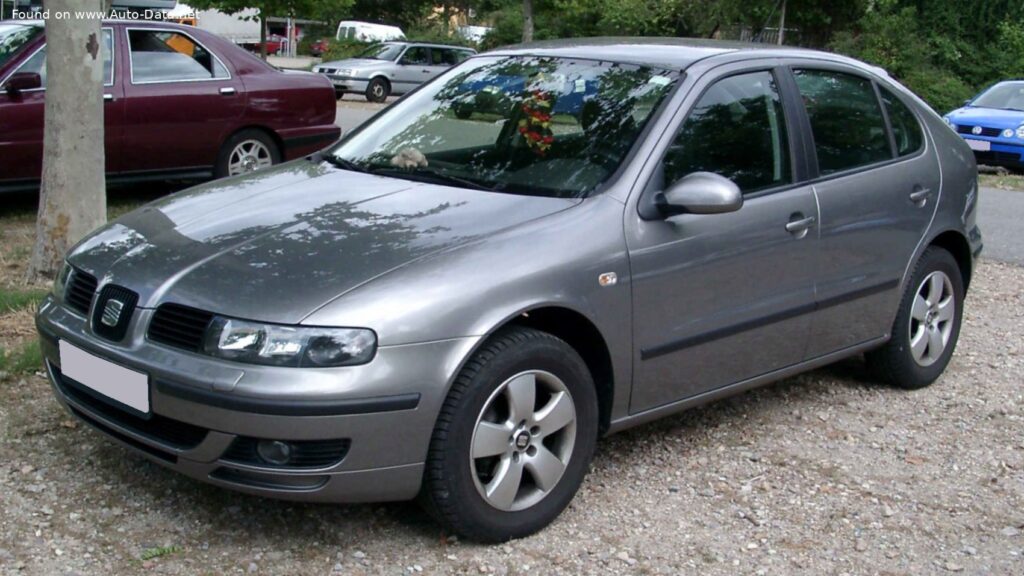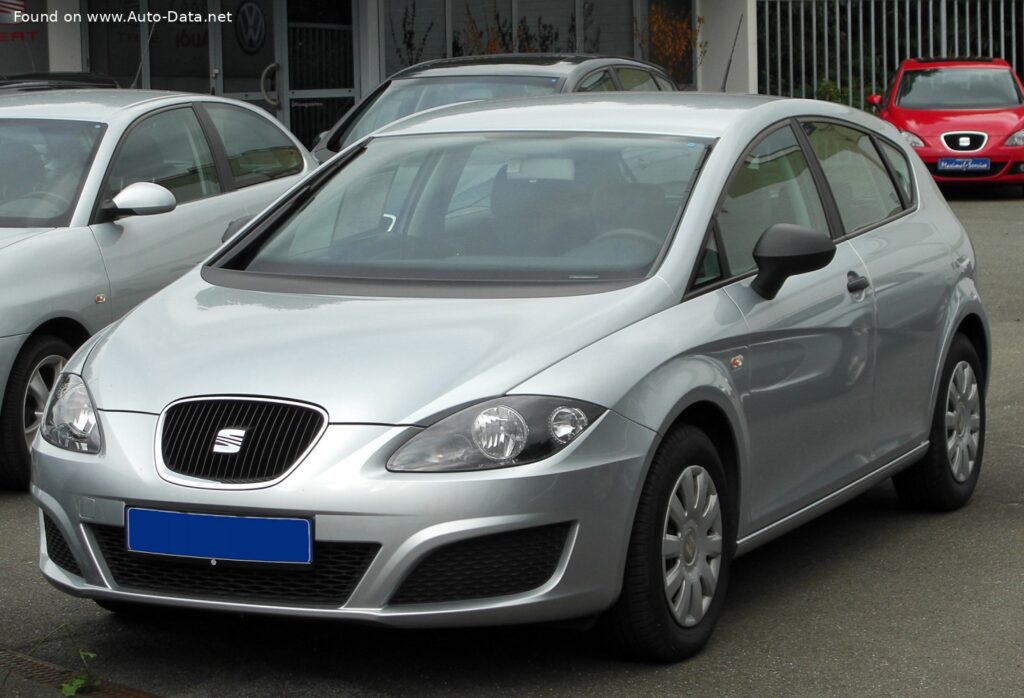
The Seat Leon II (1P) facelift of 2009, specifically the 1.9 TDI PD (90 Hp) variant, represents a significant iteration of Seat’s compact hatchback. Introduced as a refresh to the original Leon II, this model aimed to enhance the vehicle’s appeal with updated styling, improved equipment, and refined engine options. Primarily sold in the European market, the Leon II competed directly with vehicles like the Volkswagen Golf, Ford Focus, and Opel Astra, offering a blend of sporty handling, practical space, and value for money. The 1.9 TDI PD engine was a mainstay of the Volkswagen Group’s diesel lineup, known for its fuel efficiency and robust performance. This version of the Leon targeted buyers seeking economical transportation without sacrificing driving enjoyment.
Seat Leon II (1P, facelift 2009) 1.9 TDI PD (90 Hp): Overview
The Leon II, launched in 2005, was Seat’s first foray into the lower-medium family car segment with a distinct focus on dynamic driving characteristics. The 2009 facelift brought subtle but effective changes to the exterior, including revised headlights, a new front grille, and updated bumpers. Inside, improvements were made to the interior trim and available technology. The 1.9 TDI PD (90 Hp) model occupied a key position in the Leon II range, offering a balance between performance and fuel economy. It was particularly popular in countries where diesel fuel was favored due to its lower cost and higher efficiency.
Engine & Performance
The heart of the Seat Leon II 1.9 TDI PD (90 Hp) is the 1.9-liter inline-four cylinder diesel engine, designated BXF. This engine utilizes pump-nozzle (unit injector) technology, a system known for its precise fuel delivery and contribution to the engine’s efficiency. Producing 90 horsepower at 4000 rpm and 210 Nm (154.89 lb.-ft.) of torque at 1800 rpm, the engine provides adequate performance for everyday driving. While not exceptionally quick, with a 0-100 km/h (0-62 mph) acceleration time of 13.3 seconds, it delivers a respectable top speed of 174 km/h (108.12 mph). The engine’s turbocharger and intercooler enhance its power output and responsiveness. The engine displaces 1896 cm3 (115.7 cu. in.) and features a compression ratio of 19:1. The front-wheel-drive configuration, coupled with a five-speed manual transmission, ensures efficient power delivery. The weight-to-power ratio of 14.3 kg/Hp and weight-to-torque ratio of 6.1 kg/Nm contribute to a reasonably agile driving experience.
Design & Features
The Seat Leon II is a five-door hatchback, offering a practical and versatile body style. Its design, penned by Walter de Silva, aimed for a sporty and modern aesthetic. The 2009 facelift refined the original design, giving the car a more contemporary look. The interior of the Leon II is functional and well-built, with a focus on ergonomics. The 1.9 TDI PD model typically came equipped with features such as air conditioning, power windows, and a basic audio system. Safety features included ABS (Anti-lock Braking System) as standard. The Leon II offered a comfortable ride, with independent suspension systems at both the front (McPherson strut) and rear (multi-link). Trunk space is a practical 341 liters (12.04 cu. ft.) with the rear seats up, expanding to 1166 liters (41.18 cu. ft.) when folded down. The fuel tank capacity is 55 liters (14.53 US gal).
Technical Specifications
| Brand | Seat |
| Model | Leon |
| Generation | Leon II (1P, facelift 2009) |
| Type (Engine) | 1.9 TDI PD (90 Hp) |
| Start of production | July, 2009 |
| End of production | 2010 |
| Powertrain Architecture | Internal Combustion engine |
| Body type | Hatchback |
| Seats | 5 |
| Doors | 5 |
| Fuel Type | Diesel |
| Acceleration 0 – 100 km/h | 13.3 sec |
| Acceleration 0 – 62 mph | 13.3 sec |
| Acceleration 0 – 60 mph | 12.6 sec |
| Maximum speed | 174 km/h (108.12 mph) |
| Weight-to-power ratio | 14.3 kg/Hp |
| Weight-to-torque ratio | 6.1 kg/Nm |
| Power | 90 Hp @ 4000 rpm |
| Power per litre | 47.5 Hp/l |
| Torque | 210 Nm @ 1800 rpm (154.89 lb.-ft. @ 1800 rpm) |
| Engine layout | Front, Transverse |
| Engine Model/Code | BXF |
| Engine displacement | 1896 cm3 (115.7 cu. in.) |
| Number of cylinders | 4 |
| Engine configuration | Inline |
| Cylinder Bore | 79.5 mm (3.13 in.) |
| Piston Stroke | 95.5 mm (3.76 in.) |
| Compression ratio | 19:1 |
| Number of valves per cylinder | 2 |
| Fuel injection system | Pump-nozzle (Unit Injector) |
| Engine aspiration | Turbocharger, Intercooler |
| Engine oil capacity | 4.3 l (4.54 US qt | 3.78 UK qt) |
| Coolant | 5.6 l (5.92 US qt | 4.93 UK qt) |
| Kerb Weight | 1290 kg (2843.96 lbs.) |
| Max. weight | 1868 kg (4118.24 lbs.) |
| Max load | 578 kg (1274.27 lbs.) |
| Trunk (boot) space – minimum | 341 l (12.04 cu. ft.) |
| Trunk (boot) space – maximum | 1166 l (41.18 cu. ft.) |
| Fuel tank capacity | 55 l (14.53 US gal | 12.1 UK gal) |
| Max. roof load | 75 kg (165.35 lbs.) |
| Permitted trailer load with brakes (8%) | 1500 kg (3306.93 lbs.) |
| Permitted trailer load with brakes (12%) | 1400 kg (3086.47 lbs.) |
| Permitted trailer load without brakes | 680 kg (1499.14 lbs.) |
| Length | 4315 mm (169.88 in.) |
| Width | 1768 mm (69.61 in.) |
| Height | 1458 mm (57.4 in.) |
| Wheelbase | 2578 mm (101.5 in.) |
| Front track | 1533 mm (60.35 in.) |
| Rear (Back) track | 1517 mm (59.72 in.) |
| Front overhang | 949 mm (37.36 in.) |
| Rear overhang | 788 mm (31.02 in.) |
| Minimum turning circle (turning diameter) | 10.7 m (35.1 ft.) |
| Drive wheel | Front wheel drive |
| Number of gears and type of gearbox | 5 gears, manual transmission |
| Front suspension | Independent, type McPherson with coil spring and anti-roll bar |
| Rear suspension | Independent multi-link suspension |
| Front brakes | Ventilated discs |
| Rear brakes | Disc |
| Assisting systems | ABS (Anti-lock braking system) |
| Steering type | Steering rack and pinion |
| Power steering | Hydraulic Steering |
| Tires size | 205/55 R16 |
| Wheel rims size | 6.5J x 16 |