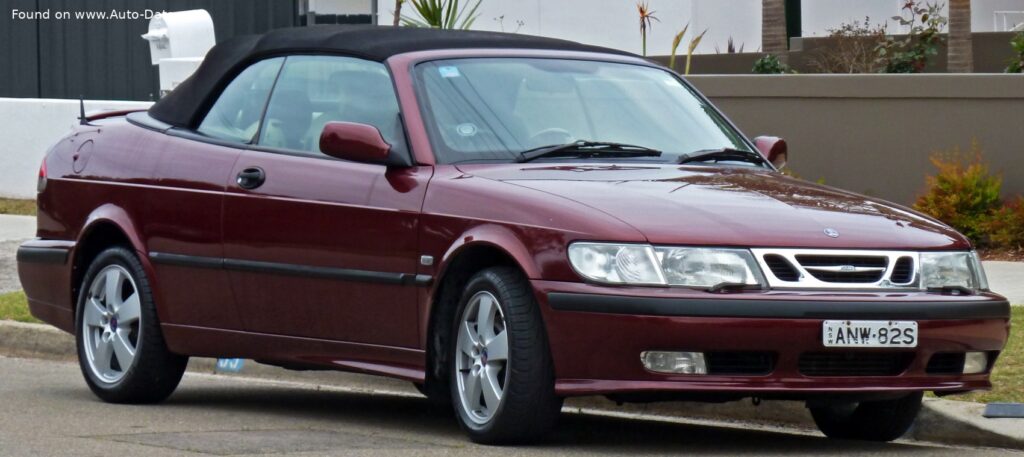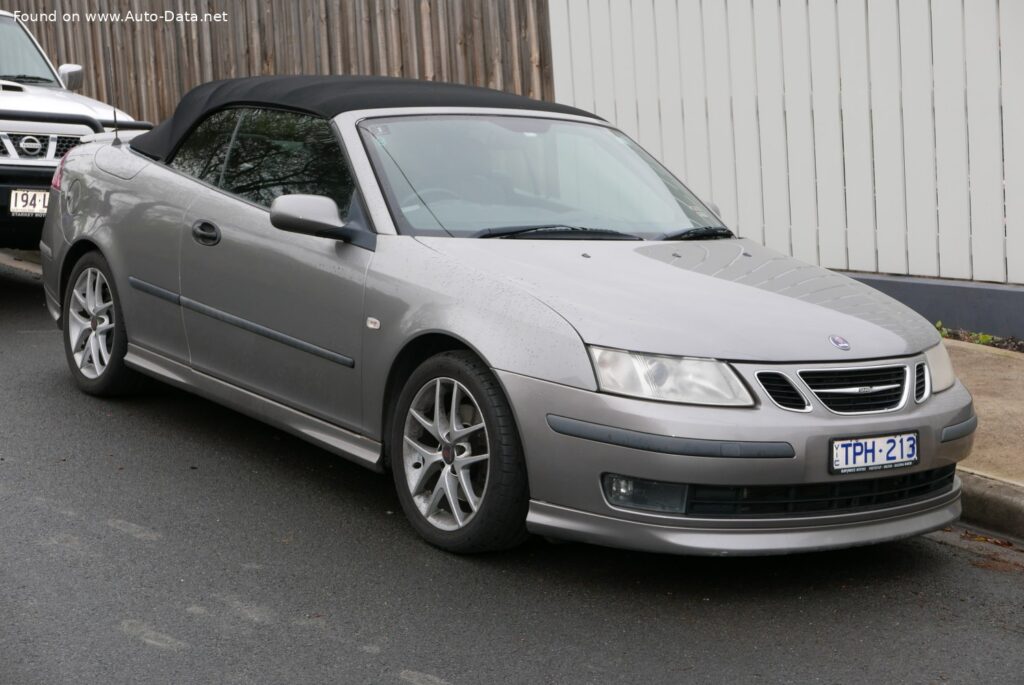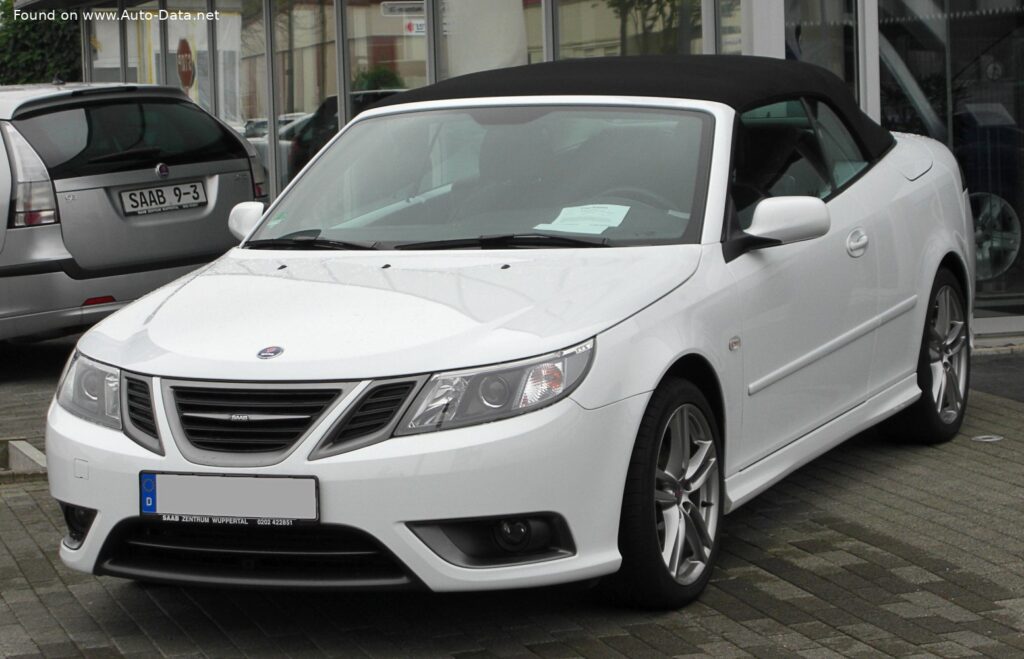
The Saab 9-3 Convertible II, particularly the facelifted version introduced in September 2007, represents a compelling blend of Scandinavian design and turbocharged performance. Positioned within the premium compact convertible segment, the 9-3 Convertible aimed to offer an alternative to established rivals like the BMW 3 Series Convertible and Audi A4 Cabriolet. The 2.0t BioPower variant, producing 200 horsepower, was a significant offering, especially in European markets where flexible-fuel vehicles were gaining traction. Production continued until December 2010, marking the end of an era for Saab as an independent automaker.
Saab 9-3 Convertible II (2007-2010): A Detailed Overview
The 9-3 Convertible II facelift brought subtle but important changes to the original model, refining the aesthetics and enhancing the driving experience. While Saab’s US presence was limited during this period, the 9-3 Convertible held a niche appeal for those seeking a distinctive and sophisticated open-top vehicle. The BioPower engine, capable of running on gasoline or a blend of gasoline and ethanol (E85), underscored Saab’s commitment to alternative fuels and environmental responsibility.
Engine & Performance
At the heart of the 2.0t BioPower model lies a 1.998-liter inline-four cylinder engine, turbocharged and intercooled. This engine delivers a peak output of 200 horsepower at 5300 rpm and 300 Newton-meters (221.27 lb.-ft.) of torque between 2500 and 4000 rpm. The BioPower designation signifies the engine’s ability to operate on gasoline or E85, a fuel blend containing up to 85% ethanol. Utilizing E85 can increase power output slightly, though this was not a primary focus of the 2.0t variant. Power is delivered to the front wheels via a six-speed manual transmission. Performance figures include a 0-100 km/h (0-62 mph) acceleration time of 8.2 seconds and a 0-60 mph time of 7.8 seconds, with a maximum speed of 225 km/h (139.81 mph). The engine’s power-to-weight ratio is 8.3 kg/Hp, and the torque-to-weight ratio is 5.5 kg/Nm.
Design & Features
The Saab 9-3 Convertible II is a two-door, four-seater cabriolet. Its design language is characterized by clean lines, a wraparound cabin, and a distinctive front grille. The facelifted model featured revised headlights, a redesigned front bumper, and updated interior trim. The convertible top is a fully automatic, multi-layered fabric roof designed for all-weather usability. Inside, the 9-3 Convertible offered a driver-focused cockpit with comfortable seating and a range of features for the era. Safety features included ABS (Anti-lock Braking System) and ventilated disc brakes on all four wheels (302mm front, 292mm rear). The interior prioritized a comfortable and refined experience, with attention paid to ergonomics and build quality. Trunk space ranges from 258 liters (9.11 cu. ft.) with the roof up to 352 liters (12.43 cu. ft.) with the roof down.
Technical Specifications
| Brand | Saab |
| Model | 9-3 |
| Generation | 9-3 Convertible II (facelift 2007) |
| Type (Engine) | 2.0t BioPower (200 Hp) |
| Start of production | September, 2007 |
| End of production | December, 2010 |
| Powertrain Architecture | Internal Combustion engine |
| Body type | Cabriolet |
| Seats | 4 |
| Doors | 2 |
| Fuel consumption (urban) | 11.8 l/100 km (19.9 US mpg, 23.9 UK mpg) |
| Fuel consumption (extra urban) | 6.6 l/100 km (35.6 US mpg, 42.8 UK mpg) |
| Fuel consumption (combined) | 8.5 l/100 km (27.7 US mpg, 33.2 UK mpg) |
| CO2 emissions | 203 g/km |
| Fuel Type | Petrol / Ethanol – E85 |
| Acceleration 0 – 100 km/h | 8.2 sec |
| Acceleration 0 – 62 mph | 8.2 sec |
| Acceleration 0 – 60 mph | 7.8 sec |
| Maximum speed | 225 km/h (139.81 mph) |
| Emission standard | Euro 4 |
| Weight-to-power ratio | 8.3 kg/Hp |
| Weight-to-torque ratio | 5.5 kg/Nm |
| Power | 200 Hp @ 5300 rpm |
| Torque | 300 Nm @ 2500-4000 rpm (221.27 lb.-ft.) |
| Engine layout | Front, Transverse |
| Engine Model/Code | B207M |
| Engine displacement | 1998 cm3 (121.93 cu. in.) |
| Number of cylinders | 4 |
| Engine configuration | Inline |
| Cylinder Bore | 86 mm (3.39 in.) |
| Piston Stroke | 86 mm (3.39 in.) |
| Compression ratio | 9.5:1 |
| Number of valves per cylinder | 4 |
| Fuel injection system | Multi-port manifold injection |
| Engine aspiration | Turbocharger, Intercooler |
| Valvetrain | DOHC |
| Engine oil capacity | 6 l (6.34 US qt | 5.28 UK qt) |
| Coolant capacity | 7.5 l (7.93 US qt | 6.6 UK qt) |
| Kerb Weight | 1650-1835 kg (3637.63 – 4045.48 lbs.) |
| Max. weight | 2040-2140 kg (4497.43 – 4717.89 lbs.) |
| Max load | 305-390 kg (672.41 – 859.8 lbs.) |
| Trunk (boot) space – minimum | 258 l (9.11 cu. ft.) |
| Trunk (boot) space – maximum | 352 l (12.43 cu. ft.) |
| Fuel tank capacity | 62 l (16.38 US gal | 13.64 UK gal) |
| Permitted trailer load with brakes (12%) | 1600 kg (3527.4 lbs.) |
| Permitted trailer load without brakes | 750 kg (1653.47 lbs.) |
| Length | 4647 mm (182.95 in.) |
| Width | 1780 mm (70.08 in.) |
| Width including mirrors | 2038 mm (80.24 in.) |
| Height | 1437 mm (56.57 in.) |
| Wheelbase | 2675 mm (105.31 in.) |
| Front track | 1524 mm (60 in.) |
| Rear track | 1506 mm (59.29 in.) |
| Front overhang | 981 mm (38.62 in.) |
| Rear overhang | 991 mm (39.02 in.) |
| Minimum turning circle | 11.4 m (37.4 ft.) |
| Drivetrain | Front wheel drive |
| Number of gears | 6 gears, manual transmission |
The Saab 9-3 Convertible II (2007-2010) represents a final flourish of Saab’s independent spirit. While the brand ultimately faced financial difficulties, the 9-3 Convertible remains a desirable vehicle for enthusiasts who appreciate its unique blend of style, performance, and Scandinavian design.