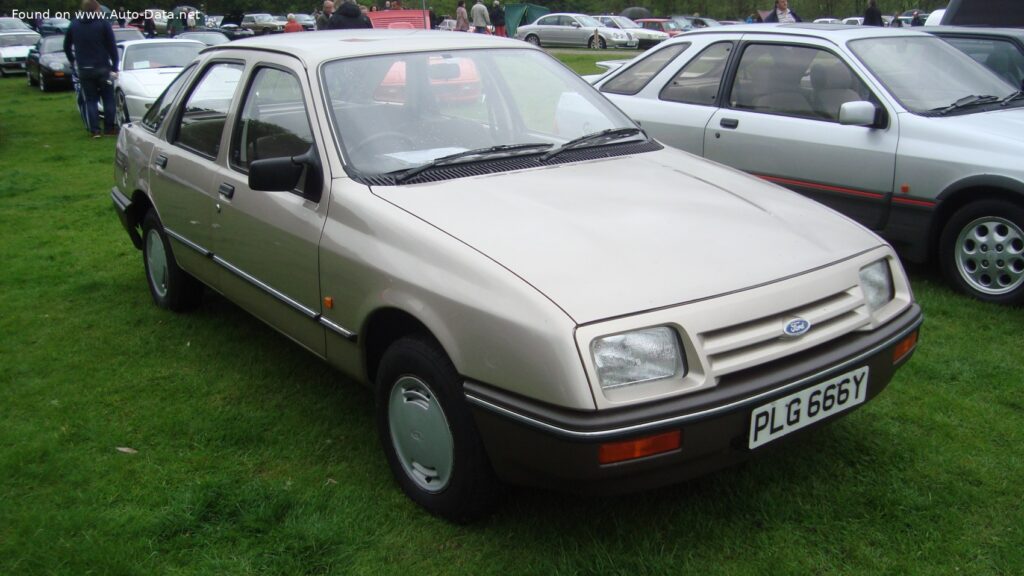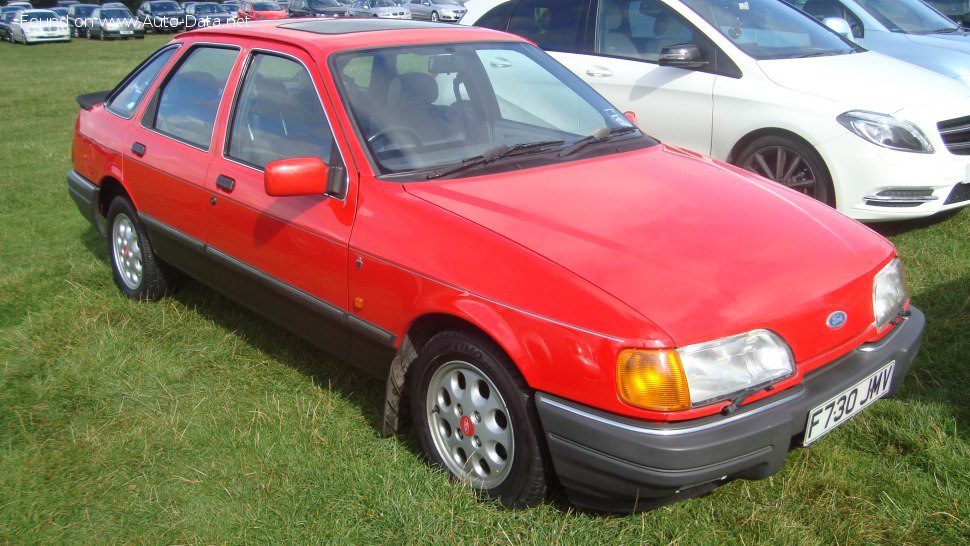
The Ford Sierra, launched in 1982, represented a significant departure from its predecessor, the Cortina, and marked Ford of Britain’s entry into the modern, aerodynamic era of automotive design. The Ford Sierra Hatchback II 2.0 (105 Hp) Automatic, produced from 1987 to 1993, was a key iteration of this model, offering a practical and relatively affordable family car option. While not officially sold in the United States, the Sierra was immensely popular in Europe, becoming a staple of the British and German automotive landscapes. It competed with vehicles like the Opel/Vauxhall Astra, Volkswagen Jetta, and Peugeot 305, offering a blend of practicality, affordability, and a surprisingly sporty driving experience, particularly in its higher-powered variants.
The Ford Sierra Hatchback II: A European Success Story
The Sierra was Ford’s first entirely new design for the mid-size family car segment in over a decade. The second generation, introduced in 1986, brought refinements to the original’s already modern design, improving build quality and addressing some of the criticisms leveled at the initial release. The hatchback body style, particularly, proved popular due to its versatility and ease of use. The 2.0-liter engine option, paired with an automatic transmission, aimed to provide a comfortable and convenient driving experience for those prioritizing ease of use over outright performance. The Sierra’s impact extended beyond just sales figures; it introduced new manufacturing techniques and a more contemporary design philosophy to Ford’s European lineup.
Engine & Performance
The Ford Sierra Hatchback II 2.0 Automatic was powered by Ford’s N8C or NES inline-four cylinder engine, displacing 1993 cubic centimeters (121.62 cubic inches). This engine produced 105 horsepower at 5200 rpm and 157 Newton-meters (115.8 lb.-ft.) of torque at 3500 rpm, resulting in a power-to-litre ratio of 52.7 hp/l. While not a high-performance engine by modern standards, it provided adequate power for comfortable cruising and everyday driving. The engine featured a single overhead camshaft (OHC) valvetrain with two valves per cylinder and utilized a carburetor fuel injection system – a common feature for the era. The engine’s longitudinal front-engine layout and rear-wheel drive configuration were characteristic of many European cars of the time, offering a balanced driving experience. The four-speed automatic transmission provided smooth gear changes, making it an ideal choice for urban driving and long journeys. Engine oil capacity was 3.8 liters (4.02 US quarts / 3.34 UK quarts), and the cooling system required 8 liters (8.45 US quarts / 7.04 UK quarts) of coolant.
Design & Features
The Sierra Hatchback II was a five-door, five-seat hatchback, offering a practical and spacious interior for a family car of its time. Its aerodynamic design, a key feature of the original Sierra, was further refined in the second generation, contributing to improved fuel efficiency and reduced wind noise. The interior was functional and relatively basic, reflecting the car’s price point. Safety features were limited by the standards of the 1980s, but typically included seatbelts and a collapsible steering column. The Sierra’s design prioritized practicality and affordability, making it a popular choice for families and commuters. The car’s relatively lightweight construction, combined with its rear-wheel drive layout, contributed to a surprisingly engaging driving experience. The 60-liter (15.85 US gallons / 13.2 UK gallons) fuel tank provided a reasonable driving range.
Technical Specifications
| Brand | Ford |
| Model | Sierra |
| Generation | Sierra Hatchback II |
| Type (Engine) | 2.0 (105 Hp) Automatic |
| Start of production | 1987 |
| End of production | 1993 |
| Powertrain Architecture | Internal Combustion engine |
| Body type | Hatchback |
| Seats | 5 |
| Doors | 5 |
| Fuel Type | Petrol (Gasoline) |
| Power | 105 Hp @ 5200 rpm |
| Power per litre | 52.7 Hp/l |
| Torque | 157 Nm @ 3500 rpm / 115.8 lb.-ft. @ 3500 rpm |
| Engine layout | Front, Longitudinal |
| Engine Model/Code | N8C, NES |
| Engine displacement | 1993 cm3 / 121.62 cu. in. |
| Number of cylinders | 4 |
| Engine configuration | Inline |
| Cylinder Bore | 90.8 mm / 3.57 in. |
| Piston Stroke | 77 mm / 3.03 in. |
| Number of valves per cylinder | 2 |
| Fuel injection system | Carburettor |
| Engine aspiration | Naturally aspirated engine |
| Valvetrain | OHC |
| Engine oil capacity | 3.8 l / 4.02 US qt | 3.34 UK qt |
| Coolant | 8 l / 8.45 US qt | 7.04 UK qt |
| Fuel tank capacity | 60 l / 15.85 US gal | 13.2 UK gal |
| Length | 4425 mm / 174.21 in. |
| Width | 1694 mm / 66.69 in. |
| Height | 1407 mm / 55.39 in. |
| Wheelbase | 2608 mm / 102.68 in. |
| Front track | 1452 mm / 57.17 in. |
| Rear (Back) track | 1468 mm / 57.8 in. |
| Minimum turning circle (turning diameter) | 10 m / 32.81 ft. |
| Drivetrain Architecture | The Internal combustion engine (ICE) drives the rear wheels of the vehicle. |
| Drive wheel | Rear wheel drive |
| Number of gears and type of gearbox | 4 gears, automatic transmission |
| Front brakes | Ventilated discs |
| Rear brakes | Drum |
The Ford Sierra Hatchback II 2.0 Automatic, while never officially available in the US market, remains a significant vehicle in European automotive history. It represented a step forward in design, practicality, and driving experience for Ford, and its success helped solidify the company’s position as a leading manufacturer in Europe. Its blend of affordability, practicality, and reasonable performance made it a popular choice for families and commuters alike, and it continues to be fondly remembered by enthusiasts today.