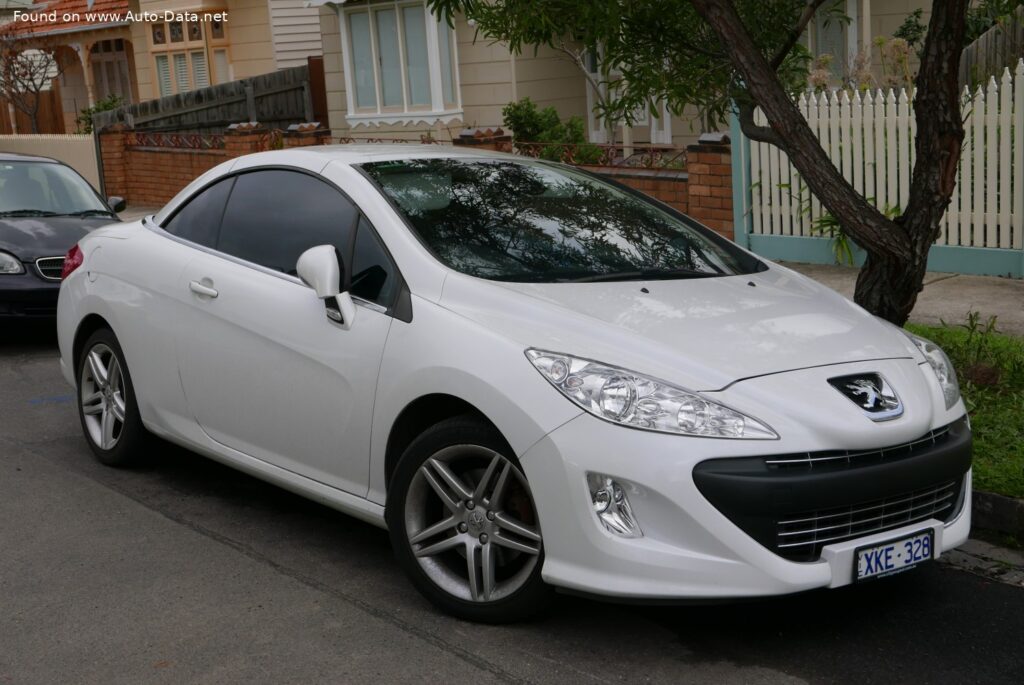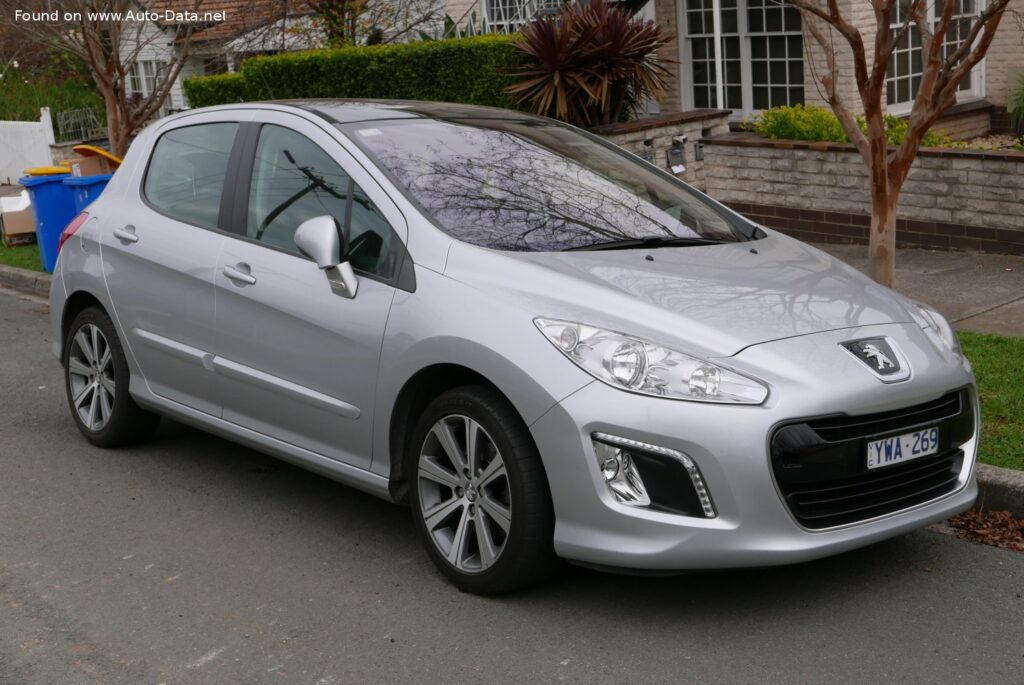
The Peugeot 308 I (Phase II), produced from 2011 to 2013, represents a significant refresh of the first-generation 308, a compact family hatchback designed to compete in the highly competitive European C-segment. While not officially sold in the United States, the 308 was a popular choice for buyers seeking a stylish, practical, and relatively affordable vehicle in Europe. The Phase II update brought revised styling, improved interior quality, and enhanced technology, including the introduction of more efficient engine options. This particular variant, the 1.6 16V THP (156 Hp) with an automatic transmission, aimed to balance performance with fuel economy, catering to drivers prioritizing both aspects.
Peugeot 308 I (Phase II): A European Compact Hatchback
The Peugeot 308, launched in 2007, was intended as a replacement for both the Peugeot 307 and the Peugeot 206. It aimed to offer a more refined and modern alternative in the crowded compact hatchback market. The Phase II update in 2011 focused on enhancing the car’s appeal through cosmetic and technological improvements. The 308’s design language, characterized by a sporty and elegant aesthetic, helped it stand out from competitors. It was positioned as a versatile vehicle suitable for both urban commuting and longer journeys, appealing to families and individuals alike.
Engine & Performance
The 1.6 16V THP engine powering this 308 variant is a turbocharged, direct-injection petrol (gasoline) engine. Producing 156 horsepower at 6000 rpm and 240 Nm (177 lb-ft) of torque at 1400 rpm, it offered a good balance of power and efficiency. The “THP” designation stands for “Turbo High Pressure,” indicating the use of a twin-scroll turbocharger for improved responsiveness and reduced turbo lag. The engine’s direct injection system further enhances efficiency and power output. Coupled with a six-speed automatic transmission, the 308 1.6 THP could accelerate from 0 to 100 km/h (0-62 mph) in 9.1 seconds, reaching a top speed of 212 km/h (131.73 mph). The engine’s power-to-weight ratio of 8.9 kg/Hp and torque-to-weight ratio of 5.8 kg/Nm contributed to a reasonably spirited driving experience. Fuel economy, as measured by the NEDC standard, was rated at 7.7 l/100 km (30.5 US mpg) combined, with CO2 emissions of 176 g/km, placing it within the Euro 5 emission standard.
Design & Features
The Peugeot 308 I (Phase II) is a five-door hatchback, offering a practical and versatile body style. The exterior design featured a revised front grille, headlights, and bumper compared to the original 308, giving it a more contemporary look. Inside, the Phase II model benefited from improved materials and a more refined dashboard layout. The interior was designed to be ergonomic and comfortable, with a focus on driver convenience. Standard features typically included air conditioning, power windows, central locking, and an audio system. Safety features, crucial for a modern family car, included ABS (Anti-lock Braking System), and driver and passenger airbags. The hatchback configuration provided a useful 348 liters (12.29 cu ft) of trunk space, expandable to 1201 liters (42.41 cu ft) with the rear seats folded down. The vehicle’s dimensions – 4276 mm (168.35 in) in length, 1815 mm (71.46 in) in width, and 1498 mm (58.98 in) in height – positioned it squarely within the compact hatchback segment.
Technical Specifications
| Brand | Peugeot |
| Model | 308 |
| Generation | 308 I (Phase II, 2011) |
| Type (Engine) | 1.6 16V THP (156 Hp) Automatic |
| Start of production | 2011 |
| End of production | 2013 |
| Powertrain Architecture | Internal Combustion engine |
| Body type | Hatchback |
| Seats | 5 |
| Doors | 5 |
| Fuel consumption (urban) | 11.2 l/100 km (21 US mpg, 25.2 UK mpg) |
| Fuel consumption (extra urban) | 5.7 l/100 km (41.3 US mpg, 49.6 UK mpg) |
| Fuel consumption (combined) | 7.7 l/100 km (30.5 US mpg, 36.7 UK mpg) |
| CO2 emissions | 176 g/km |
| Fuel Type | Petrol (Gasoline) |
| Acceleration 0 – 100 km/h | 9.1 sec |
| Acceleration 0 – 62 mph | 9.1 sec |
| Acceleration 0 – 60 mph | 8.6 sec |
| Maximum speed | 212 km/h (131.73 mph) |
| Emission standard | Euro 5 |
| Weight-to-power ratio | 8.9 kg/Hp |
| Weight-to-torque ratio | 5.8 kg/Nm |
| Power | 156 Hp @ 6000 rpm |
| Torque | 240 Nm @ 1400 rpm (177.01 lb.-ft. @ 1400 rpm) |
| Engine layout | Front, Transverse |
| Engine Model/Code | EP6CDT |
| Engine displacement | 1598 cm3 (97.52 cu. in.) |
| Number of cylinders | 4 |
| Engine configuration | Inline |
| Cylinder Bore | 77 mm (3.03 in.) |
| Piston Stroke | 85.8 mm (3.38 in.) |
| Compression ratio | 10.5:1 |
| Number of valves per cylinder | 4 |
| Fuel injection system | Direct injection |
| Engine aspiration | Turbocharger, Intercooler |
| Valvetrain | DOHC |
| Engine oil capacity | 4.25 l (4.49 US qt | 3.74 UK qt) |
| Kerb Weight | 1382 kg (3046.79 lbs.) |
| Max. weight | 1870 kg (4122.64 lbs.) |
| Max load | 488 kg (1075.86 lbs.) |
| Trunk (boot) space – minimum | 348 l (12.29 cu. ft.) |
| Trunk (boot) space – maximum | 1201 l (42.41 cu. ft.) |
| Fuel tank capacity | 60 l (15.85 US gal | 13.2 UK gal) |
| Max. roof load | 75 kg (165.35 lbs.) |
| Permitted trailer load with brakes (12%) | 1650 kg (3637.63 lbs.) |
| Permitted trailer load without brakes | 720 kg (1587.33 lbs.) |
| Permitted towbar download | 70 kg (154.32 lbs.) |
| Length | 4276 mm (168.35 in.) |
| Width | 1815 mm (71.46 in.) |
| Width including mirrors | 2038 mm (80.24 in.) |
| Height | 1498 mm (58.98 in.) |
| Wheelbase | 2608 mm (102.68 in.) |
| Front track | 1526 mm (60.08 in.) |
| Rear track | 1521 mm (59.88 in.) |
| Front overhang | 926 mm (36.46 in.) |
| Rear overhang | 742 mm (29.21 in.) |
| Drag coefficient (Cd) | 0.28 |
| Minimum turning circle | 10.7 m (35.1 ft.) |
| Drivetrain Architecture | Front wheel drive |
| Number of gears and type of gearbox | 6 gears, automatic transmission |
| Front suspension | Independent type McPherson |
| Rear suspension | Elastic beam |
| Front brakes | Ventilated discs |
| Rear brakes | Disc |
| Assisting systems | ABS (Anti-lock braking system) |
| Steering type | Steering rack and pinion |
| Power steering | Hydraulic Steering |
| Tires size | 225/45 R17; 225/40 R18 |
| Wheel rims size | 7.5J x 17; 7.5J x 18 |