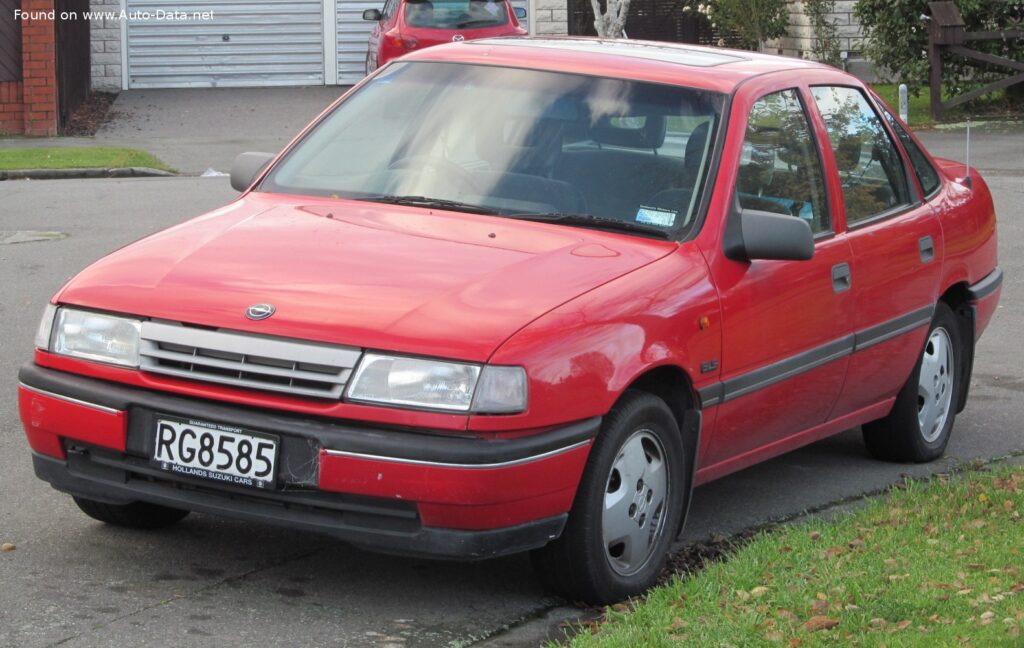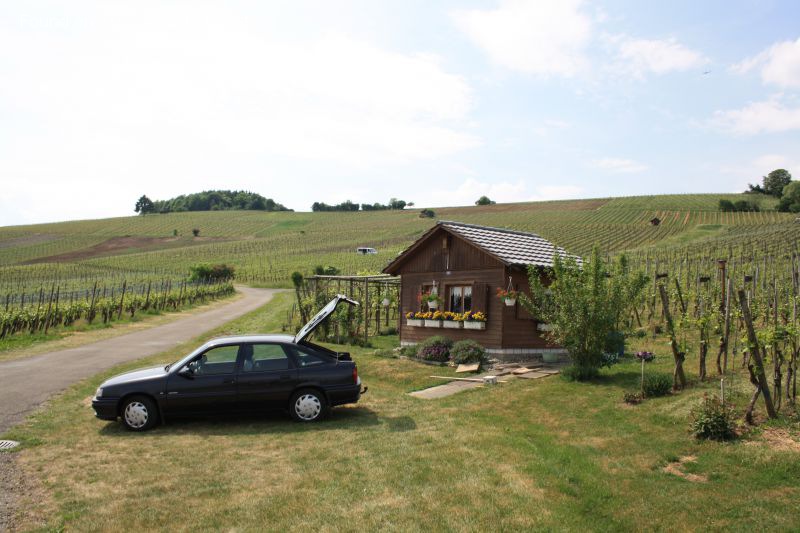
The Opel Vectra A CC (facelift 1992) 2.0i CAT represents a significant evolution in Opel’s mid-size offerings. Introduced in August 1992 and continuing through July 1995, this model was a key component of the Vectra A series, a car designed to replace the aging Ascona and Manta. The “CC” designation stands for “Comfort and Communication,” highlighting Opel’s focus on providing a well-equipped and modern vehicle for the European market. While not officially sold in the United States, the Vectra A competed with vehicles like the Ford Mondeo, Volkswagen Passat, and Peugeot 405, offering a blend of practicality, comfort, and performance in the family car segment.
Opel Vectra A CC (facelift 1992): An Overview
The Vectra A was Opel’s attempt to create a globally competitive vehicle, and the facelifted 1992 model brought with it revised styling, improved interior appointments, and updated engine options. The 2.0i CAT variant, powered by a 2.0-liter inline-four engine producing 115 horsepower, was a popular choice for buyers seeking a balance between fuel efficiency and performance. This model was primarily aimed at the European market, where hatchbacks were – and continue to be – a dominant body style. The Vectra A’s design and engineering influenced subsequent Opel/Vauxhall models and laid the groundwork for the brand’s continued success in the mid-size segment.
Engine & Performance
At the heart of the Vectra A CC 2.0i CAT lies the C20NE engine, a 1998 cc (121.93 cubic inches) inline-four cylinder powerplant. This naturally aspirated engine utilizes multi-port fuel injection and an overhead camshaft (OHC) valvetrain with two valves per cylinder. It generates a peak power output of 115 horsepower at 5400 rpm and 170 Nm (125.39 lb-ft) of torque at 2600 rpm. This configuration provides a reasonable level of performance for everyday driving, with a 0-100 km/h (0-62 mph) acceleration time of 10.5 seconds and a top speed of 198 km/h (123.03 mph). The engine’s power-to-weight ratio of 10.1 kg/Hp and torque-to-weight ratio of 6.8 kg/Nm contribute to a responsive driving experience. The engine requires 4 liters (4.23 US quarts) of engine oil and 7.2 liters (7.61 US quarts) of coolant for optimal operation.
Design & Features
The Opel Vectra A CC (facelift 1992) is a five-door hatchback, offering a practical and versatile body style. Its design, while typical of early 1990s automotive aesthetics, was considered modern for its time, featuring a streamlined silhouette and integrated headlights. The interior was designed with comfort and functionality in mind, offering seating for five passengers. Key features included hydraulic power steering for ease of maneuverability and an Anti-lock Braking System (ABS) to enhance safety. The hatchback configuration provides a generous amount of cargo space, ranging from 460 liters (16.24 cubic feet) with the rear seats up to 1290 liters (45.56 cubic feet) with the rear seats folded down. The vehicle’s kerb weight of 1159 kg (2555.16 lbs) and maximum weight of 1670 kg (3681.72 lbs) contribute to its overall handling characteristics.
Technical Specifications
| Brand | Opel |
| Model | Vectra |
| Generation | Vectra A CC (facelift 1992) |
| Type (Engine) | 2.0i CAT (115 Hp) |
| Start of production | August, 1992 |
| End of production | July, 1995 |
| Powertrain Architecture | Internal Combustion engine |
| Body type | Hatchback |
| Seats | 5 |
| Doors | 5 |
| Fuel consumption (combined) | 7.1 l/100 km |
| Fuel consumption (US mpg) | 33.1 US mpg |
| Fuel consumption (UK mpg) | 39.8 UK mpg |
| Fuel consumption (km/l) | 14.1 km/l |
| Fuel Type | Petrol (Gasoline) |
| Acceleration 0 – 100 km/h | 10.5 sec |
| Acceleration 0 – 62 mph | 10.5 sec |
| Acceleration 0 – 60 mph | 10 sec |
| Maximum speed | 198 km/h (123.03 mph) |
| Weight-to-power ratio | 10.1 kg/Hp |
| Weight-to-torque ratio | 6.8 kg/Nm |
| Power | 115 Hp @ 5400 rpm |
| Power per litre | 57.6 Hp/l |
| Torque | 170 Nm @ 2600 rpm (125.39 lb.-ft. @ 2600 rpm) |
| Engine layout | Front, Transverse |
| Engine Model/Code | C20NE |
| Engine displacement | 1998 cm3 (121.93 cu. in.) |
| Number of cylinders | 4 |
| Engine configuration | Inline |
| Cylinder Bore | 86 mm (3.39 in.) |
| Piston Stroke | 86 mm (3.39 in.) |
| Compression ratio | 9.2:1 |
| Number of valves per cylinder | 2 |
| Fuel injection system | Multi-port manifold injection |
| Engine aspiration | Naturally aspirated engine |
| Valvetrain | OHC |
| Engine oil capacity | 4 l (4.23 US qt | 3.52 UK qt) |
| Coolant | 7.2 l (7.61 US qt | 6.34 UK qt) |
| Kerb Weight | 1159 kg (2555.16 lbs.) |
| Max. weight | 1670 kg (3681.72 lbs.) |
| Max load | 511 kg (1126.56 lbs.) |
| Trunk (boot) space – minimum | 460 l (16.24 cu. ft.) |
| Trunk (boot) space – maximum | 1290 l (45.56 cu. ft.) |
| Fuel tank capacity | 61 l (16.11 US gal | 13.42 UK gal) |
| Length | 4352 mm (171.34 in.) |
| Width | 1706 mm (67.17 in.) |
| Height | 1400 mm (55.12 in.) |
| Wheelbase | 2600 mm (102.36 in.) |
| Front track | 1426 mm (56.14 in.) |
| Rear (Back) track | 1426 mm (56.14 in.) |
| Drivetrain Architecture | Front wheel drive |
| Number of gears and type of gearbox | 5 gears, manual transmission |
| Front suspension | Wishbone |
| Rear suspension | Coil spring |
| Front brakes | Ventilated discs |
| Rear brakes | Disc |
| Assisting systems | ABS (Anti-lock braking system) |
| Power steering | Hydraulic Steering |
| Tires size | 195/60 R14 |
| Wheel rims size | 14 |
The Opel Vectra A CC (facelift 1992) 2.0i CAT, while not a performance icon, represented a solid and reliable choice for European families seeking a practical and comfortable vehicle. Its blend of efficiency, space, and features made it a competitive offering in a crowded market segment, and its influence can be seen in the development of subsequent Opel/Vauxhall models.