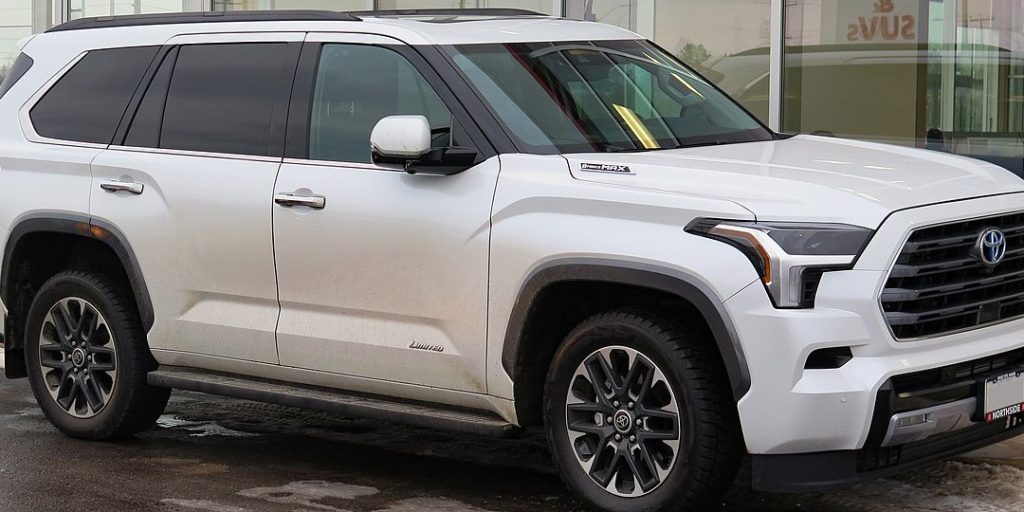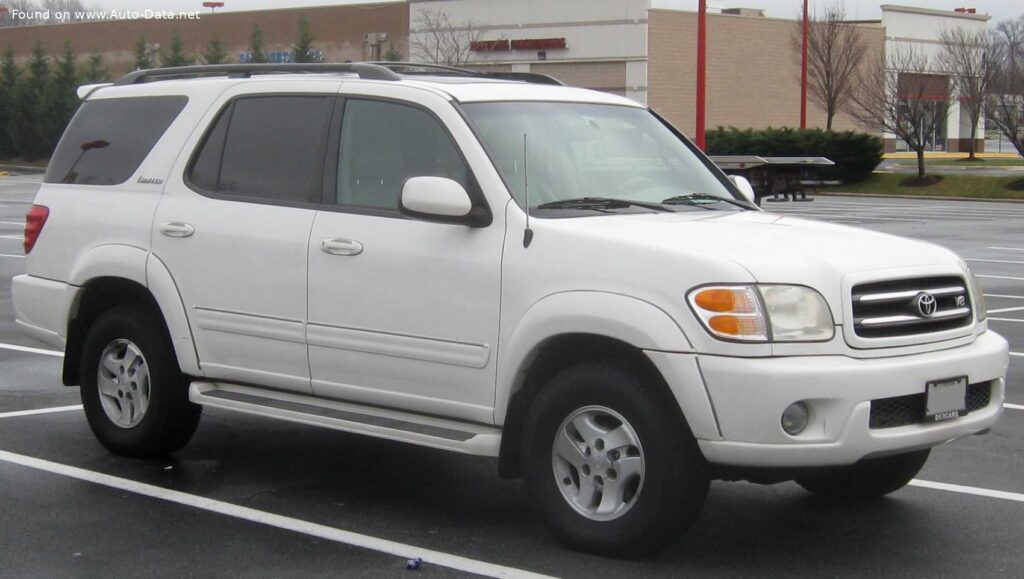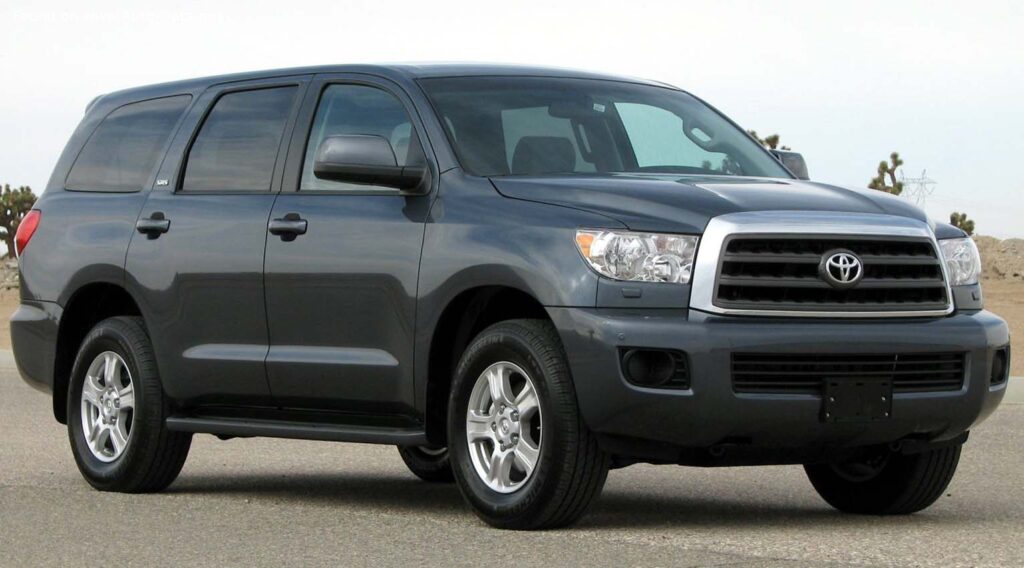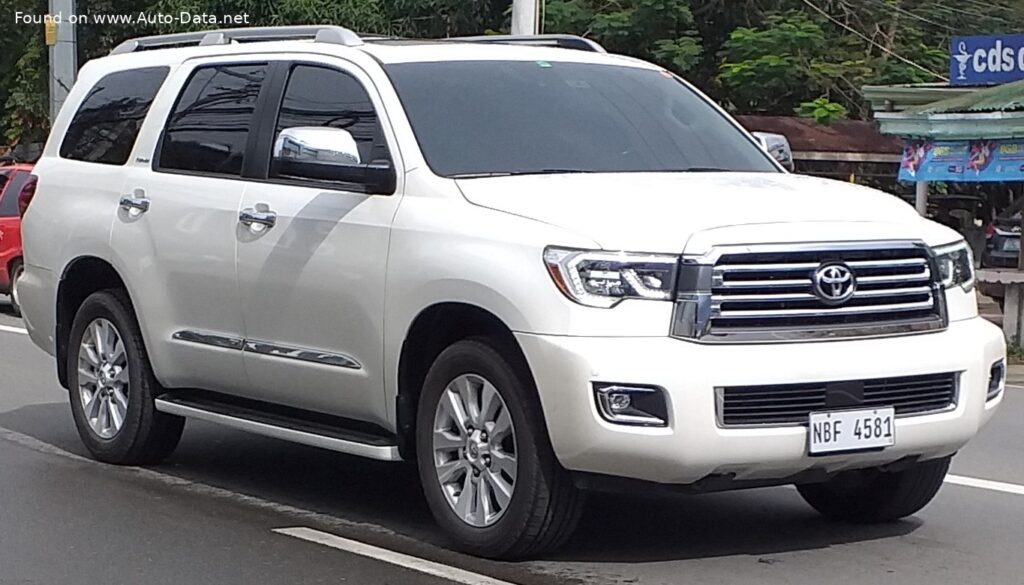
The Toyota Sequoia II, particularly the facelifted version introduced in February 2017, represents Toyota’s full-size SUV offering primarily for the North American market. Positioned above the 4Runner and Highlander in Toyota’s SUV lineup, the Sequoia competes with domestic rivals like the Chevrolet Tahoe, Ford Expedition, and GMC Yukon. The 2017 facelift brought styling updates and enhanced features, but retained the core mechanicals of the second-generation Sequoia, which spanned from 2008 to 2022. This iteration of the Sequoia focused on providing spacious interior accommodations, robust towing capacity, and a comfortable ride, catering to families and those requiring substantial cargo space.
Toyota Sequoia II (2017 Facelift): A Detailed Overview
The Sequoia II facelift, produced from 2017 through June 2022, continued the second generation’s emphasis on a traditional body-on-frame construction, prioritizing durability and towing capability. While not offering the fuel efficiency of newer, unibody SUVs, the Sequoia carved a niche for itself with its reliability and spaciousness. The 5.7-liter V8 engine remained the sole powertrain option throughout this period, delivering substantial power and torque for hauling and everyday driving. The vehicle was primarily sold in the United States and Canada, with limited availability in other markets.
Engine & Performance
The heart of the 2017-2022 Toyota Sequoia is the 3UR-FE 5.7-liter V8 engine. This naturally aspirated powerplant produces 381 horsepower at 5,600 rpm and 401.23 lb-ft of torque at 3,600 rpm. The engine features direct fuel injection and Toyota’s VVT-i (Variable Valve Timing-intelligence) system, optimizing performance and efficiency. Power is delivered to the rear wheels via a six-speed automatic transmission. The powertrain architecture is a traditional front-engine, longitudinal layout. The Sequoia’s weight-to-power ratio is 6.8 kg/Hp, or 146.6 Hp/tonne, while the weight-to-torque ratio is 4.8 kg/Nm, or 209.3 Nm/tonne. Fuel economy is rated at 15.7 l/100 km combined (15 US mpg, 18 UK mpg, 6.4 km/l), with urban consumption at 18.1 l/100 km (13 US mpg, 15.6 UK mpg, 5.5 km/l) and extra-urban consumption at 13.1 l/100 km (18 US mpg, 21.6 UK mpg, 7.6 km/l). The Sequoia meets ULEV-II emission standards.
Design & Features
The Toyota Sequoia II is a five-door SUV offering seating for seven to eight passengers, depending on the configuration. It features a traditional SUV body style with a robust, truck-like appearance. The 2017 facelift included revised front fascia styling, incorporating a bolder grille and updated headlights. The interior prioritizes space and comfort, with ample legroom in all three rows. Standard features typically included a touchscreen infotainment system, rearview camera, and a suite of safety technologies. Higher trim levels offered features such as leather upholstery, premium audio systems, and advanced driver-assistance systems. The Sequoia’s large size provides a substantial cargo area, ranging from 535 liters (18.89 cu. ft.) with all seats in place to a maximum of 3401 liters (120.11 cu. ft.) with the rear seats folded down. The vehicle’s ride height (ground clearance) is 251 mm (9.88 in), providing good visibility and capability on varied terrain. The Sequoia is capable of towing up to 3357 kg (7400.92 lbs) with brakes.
Technical Specifications
| Brand | Toyota |
| Model | Sequoia |
| Generation | Sequoia II (facelift 2017) |
| Type (Engine) | 5.7 V8 (381 Hp) 2WD Automatic |
| Start of production | February, 2017 |
| End of production | June, 2022 |
| Powertrain Architecture | Internal Combustion engine |
| Body type | SUV |
| Seats | 7-8 |
| Doors | 5 |
| Fuel consumption (economy) – urban | 18.1 l/100 km (13 US mpg, 15.6 UK mpg, 5.5 km/l) |
| Fuel consumption (economy) – extra urban | 13.1 l/100 km (18 US mpg, 21.6 UK mpg, 7.6 km/l) |
| Fuel consumption (economy) – combined | 15.7 l/100 km (15 US mpg, 18 UK mpg, 6.4 km/l) |
| Fuel Type | Petrol (Gasoline) |
| Emission standard | ULEV-II |
| Weight-to-power ratio | 6.8 kg/Hp (146.6 Hp/tonne) |
| Weight-to-torque ratio | 4.8 kg/Nm (209.3 Nm/tonne) |
| Power | 381 Hp @ 5600 rpm |
| Power per litre | 67.3 Hp/l |
| Torque | 544 Nm @ 3600 rpm (401.23 lb.-ft. @ 3600 rpm) |
| Engine layout | Front, Longitudinal |
| Engine Model/Code | 3UR-FE |
| Engine displacement | 5663 cm3 (345.58 cu. in.) |
| Number of cylinders | 8 |
| Engine configuration | V-engine |
| Cylinder Bore | 94 mm (3.7 in.) |
| Piston Stroke | 102 mm (4.02 in.) |
| Number of valves per cylinder | 4 |
| Fuel injection system | Direct injection |
| Engine aspiration | Naturally aspirated engine |
| Valvetrain | DOHC, VVT-i |
| Engine oil capacity | 7.5 l (7.93 US qt | 6.6 UK qt) |
| Coolant | 12.4 l (13.1 US qt | 10.91 UK qt) |
| Kerb Weight | 2599-2608 kg (5729.81 – 5749.66 lbs.) |
| Max. weight | 3221 kg (7101.09 lbs.) |
| Max load | 613-622 kg (1351.43 – 1371.28 lbs.) |
| Trunk (boot) space – minimum | 535 l (18.89 cu. ft.) |
| Trunk (boot) space – maximum | 3401 l (120.11 cu. ft.) |
| Fuel tank capacity | 100 l (26.42 US gal | 22 UK gal) |
| Permitted trailer load with brakes (12%) | 3357 kg (7400.92 lbs.) |
| Length | 5210 mm (205.12 in.) |
| Width | 2029 mm (79.88 in.) |
| Height | 1956 mm (77.01 in.) |
| Wheelbase | 3099 mm (122.01 in.) |
| Front track | 1725 mm (67.91 in.) |
| Rear (Back) track | 1755 mm (69.09 in.) |
| Ride height (ground clearance) | 251 mm (9.88 in.) |
| Minimum turning circle (turning diameter) | 11.6 m (38.06 ft.) |
| Approach angle | 27° |
| Departure angle | 20° |
| Drivetrain Architecture | Rear wheel drive. Internal Combustion engine (ICE) |
| Number of gears and type of gearbox | 6 gears, automatic transmission |
| Front suspension | Double wishbone, Independent coil spring |
| Rear suspension | Double wishbone, Independent coil spring |
| Assisting systems | ABS (Anti-lock braking system) |
| Steering type | Steering rack and pinion |
| Power steering | Electric Steering |
| Tires size | 275/65 R18 114T; 275/55 R20 111H |
| Wheel rims size | 8J x 18; 8J x 20 |