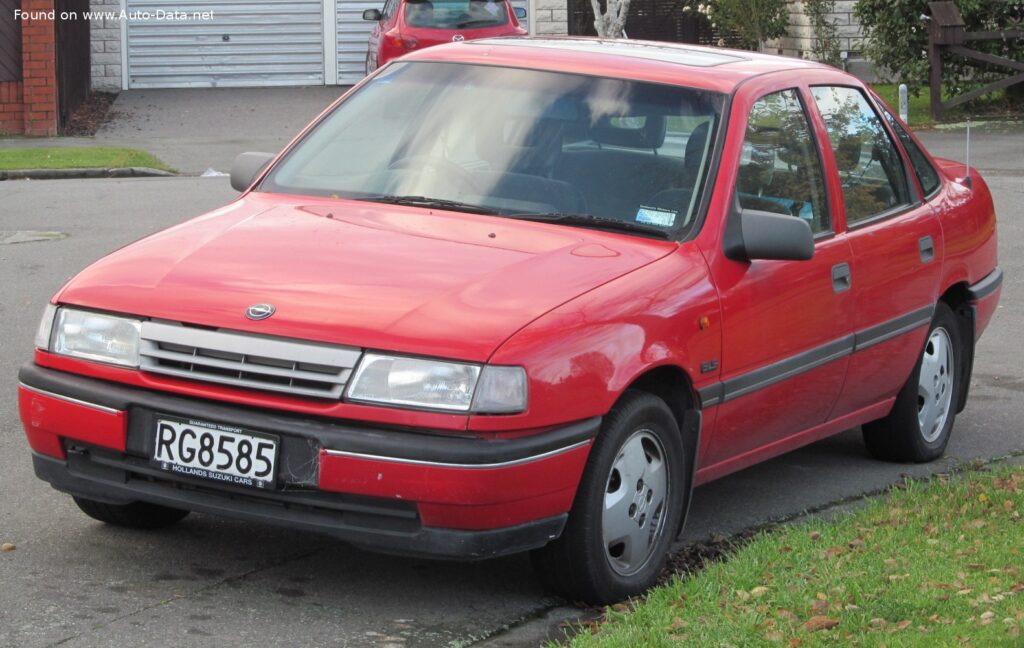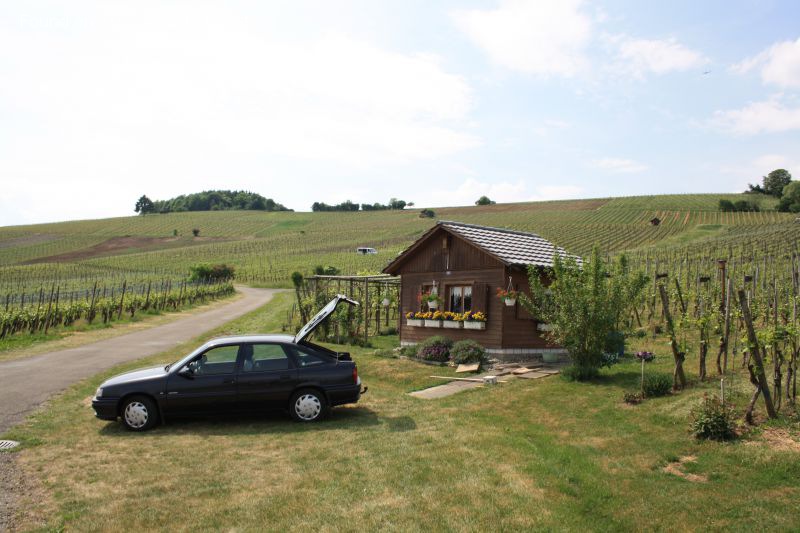
The Opel Vectra A CC (facelift 1992) 2.0i CAT represents a significant evolution in Opel’s mid-size offerings. Introduced in August 1992 and continuing through July 1995, this model was a key component of the Vectra A series, a car designed to replace the aging Ascona and Manta. The “CC” designation stands for “Comfort and Communication,” highlighting Opel’s focus on providing a more refined and technologically equipped vehicle for the European market. While not officially sold in the United States, the Vectra A competed with vehicles like the Ford Mondeo, Volkswagen Passat, and Peugeot 405, offering a blend of practicality, comfort, and performance for family and business users.
Opel Vectra A CC (Facelift 1992): An Overview
The Vectra A was Opel’s attempt to create a modern, globally competitive vehicle. The 1992 facelift brought styling updates and mechanical refinements, improving upon the original 1988 model. The 2.0i CAT variant, equipped with a 2.0-liter inline-four engine and a catalytic converter (“CAT”), was a popular choice, offering a balance between fuel efficiency and respectable performance. The availability of an automatic transmission further broadened its appeal to drivers seeking convenience. The Vectra A’s hatchback body style provided versatility, combining passenger space with a useful cargo area.
Engine & Performance
The heart of the Vectra A CC 2.0i CAT is its 1998 cc (121.93 cu. in.) inline-four cylinder engine, designated the C20NE. This naturally aspirated engine produces 115 horsepower (Hp) at 5400 rpm and 170 Nm (125.39 lb.-ft.) of torque at 2600 rpm. The engine utilizes multi-port fuel injection and an overhead camshaft (OHC) valvetrain with two valves per cylinder. This configuration delivers a power-to-liter ratio of 57.6 Hp/l. Paired with a four-speed automatic transmission, the vehicle achieves a 0-62 mph (0-100 km/h) acceleration time of 12 seconds and a maximum speed of 193 km/h (119.92 mph). The weight-to-power ratio of 10.1 kg/Hp and a weight-to-torque ratio of 6.8 kg/Nm indicate a reasonably efficient powertrain for its time. Fuel consumption is rated at 7.5 liters per 100 kilometers (31.4 US mpg, 37.7 UK mpg).
Design & Features
The Opel Vectra A CC (facelift 1992) is a five-door hatchback, offering a practical and versatile body style. Its design, while typical of early 1990s European cars, was considered modern for its time, with a focus on aerodynamic efficiency. The interior provides seating for five passengers and features a relatively spacious cabin. Key features of this model included hydraulic power steering for ease of maneuverability and an Anti-lock Braking System (ABS) to enhance safety. The hatchback configuration provides a minimum trunk capacity of 460 liters (16.24 cu. ft.), expandable to 1290 liters (45.56 cu. ft.) with the rear seats folded down. The vehicle’s kerb weight is 1159 kg (2555.16 lbs), with a maximum permissible weight of 1670 kg (3681.72 lbs), allowing for a maximum load of 511 kg (1126.56 lbs). The suspension utilizes a wishbone setup at the front and coil springs at the rear, providing a comfortable ride.
Technical Specifications
| Brand | Opel |
| Model | Vectra |
| Generation | Vectra A CC (facelift 1992) |
| Type (Engine) | 2.0i CAT (115 Hp) Automatic |
| Start of production | August, 1992 |
| End of production | July, 1995 |
| Powertrain Architecture | Internal Combustion engine |
| Body type | Hatchback |
| Seats | 5 |
| Doors | 5 |
| Fuel consumption (combined) | 7.5 l/100 km |
| Fuel consumption (US mpg) | 31.4 US mpg |
| Fuel consumption (UK mpg) | 37.7 UK mpg |
| Fuel consumption (km/l) | 13.3 km/l |
| Fuel Type | Petrol (Gasoline) |
| Acceleration 0 – 100 km/h | 12 sec |
| Acceleration 0 – 62 mph | 12 sec |
| Acceleration 0 – 60 mph | 11.4 sec |
| Maximum speed | 193 km/h |
| Maximum speed (mph) | 119.92 mph |
| Weight-to-power ratio | 10.1 kg/Hp |
| Weight-to-torque ratio | 6.8 kg/Nm |
| Power | 115 Hp @ 5400 rpm |
| Power per litre | 57.6 Hp/l |
| Torque | 170 Nm @ 2600 rpm |
| Torque (lb.-ft.) | 125.39 lb.-ft. @ 2600 rpm |
| Engine layout | Front, Transverse |
| Engine Model/Code | C20NE |
| Engine displacement | 1998 cm3 |
| Engine displacement (cu. in.) | 121.93 cu. in. |
| Number of cylinders | 4 |
| Engine configuration | Inline |
| Cylinder Bore | 86 mm |
| Cylinder Bore (in.) | 3.39 in. |
| Piston Stroke | 86 mm |
| Piston Stroke (in.) | 3.39 in. |
| Compression ratio | 9.2:1 |
| Number of valves per cylinder | 2 |
| Fuel injection system | Multi-port manifold injection |
| Engine aspiration | Naturally aspirated engine |
| Valvetrain | OHC |
| Engine oil capacity | 4 l |
| Engine oil capacity (US qt) | 4.23 US qt |
| Engine oil capacity (UK qt) | 3.52 UK qt |
| Coolant | 7 l |
| Coolant (US qt) | 7.4 US qt |
| Coolant (UK qt) | 6.16 UK qt |
| Kerb Weight | 1159 kg |
| Kerb Weight (lbs.) | 2555.16 lbs. |
| Max. weight | 1670 kg |
| Max. weight (lbs.) | 3681.72 lbs. |
| Max load | 511 kg |
| Max load (lbs.) | 1126.56 lbs. |
| Trunk (boot) space – minimum | 460 l |
| Trunk (boot) space – minimum (cu. ft.) | 16.24 cu. ft. |
| Trunk (boot) space – maximum | 1290 l |
| Trunk (boot) space – maximum (cu. ft.) | 45.56 cu. ft. |
| Fuel tank capacity | 61 l |
| Fuel tank capacity (US gal) | 16.11 US gal |
| Fuel tank capacity (UK gal) | 13.42 UK gal |
| Length | 4352 mm |
| Length (in.) | 171.34 in. |
| Width | 1706 mm |
| Width (in.) | 67.17 in. |
| Height | 1400 mm |
| Height (in.) | 55.12 in. |
| Wheelbase | 2600 mm |
| Wheelbase (in.) | 102.36 in. |
| Front track | 1426 mm |
| Front track (in.) | 56.14 in. |
| Rear (Back) track | 1426 mm |
| Rear (Back) track (in.) | 56.14 in. |
| Drivetrain Architecture | Front wheel drive |
| Number of gears and type of gearbox | 4 gears, automatic transmission |
| Front suspension | Wishbone |
| Rear suspension | Coil spring |
| Front brakes | Ventilated discs |
| Rear brakes | Disc |
| Assisting systems | ABS (Anti-lock braking system) |
| Power steering | Hydraulic Steering |
| Tires size | 195/60 R14 |
| Wheel rims size | 14 |
The Opel Vectra A CC (facelift 1992) 2.0i CAT, while not a performance icon, represented a solid and reliable choice for European drivers in the early 1990s. Its blend of practicality, comfort, and reasonable performance made it a popular contender in the competitive mid-size segment.