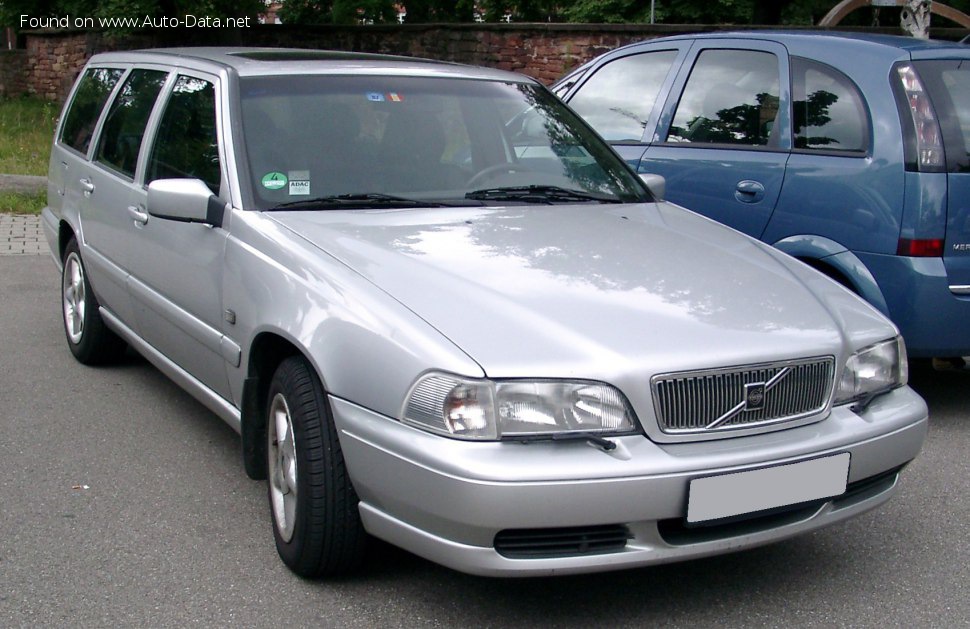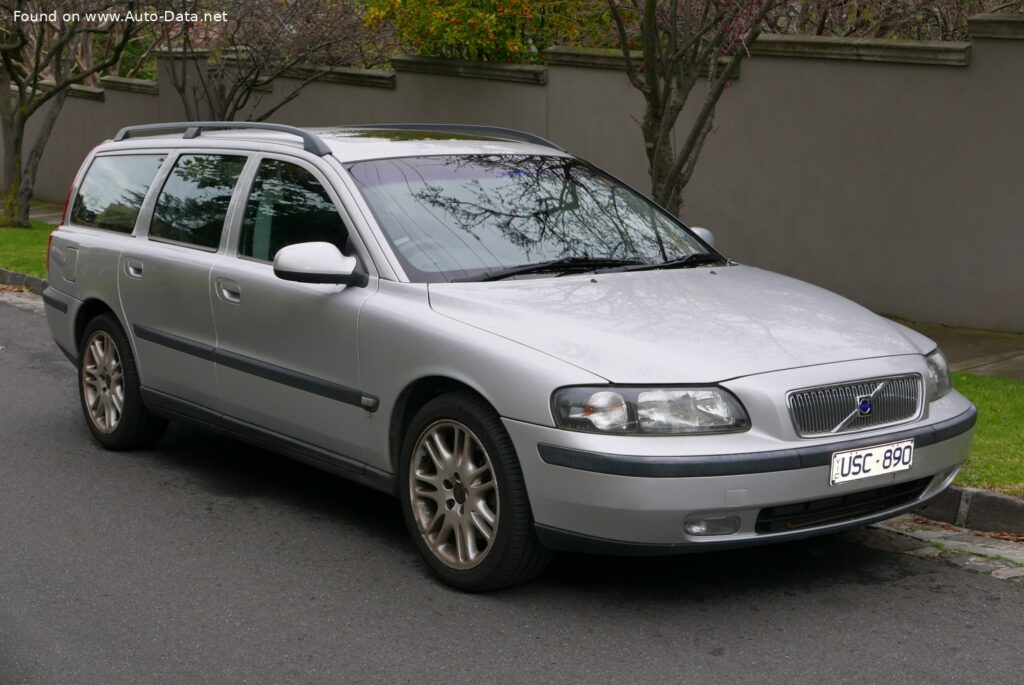
The Volvo V70 II 2.5i 20V, produced from 2003 to 2004, represents the second generation of Volvo’s popular station wagon, the V70. Positioned within the mid-size executive wagon segment, the V70 II aimed to blend practicality, safety, and Scandinavian design. While not initially sold in the United States during this specific generation, the V70 has a long history of appealing to buyers seeking a versatile and refined vehicle. This model, equipped with the 2.5-liter turbocharged inline-five engine, offered a compelling combination of performance and fuel efficiency for the European market, where it was a significant competitor to vehicles like the Audi A6 Avant and BMW 5 Series Touring.
Volvo V70 II 2.5i 20V: A Detailed Overview
The V70 II built upon the success of its predecessor, offering increased space, improved refinement, and enhanced safety features. It was a key model in Volvo’s lineup, embodying the brand’s commitment to passenger protection and functional design. The 2.5i 20V variant, with its 210 horsepower engine, provided a balance between spirited driving and reasonable running costs, making it a popular choice for families and individuals alike.
Engine & Performance
At the heart of the Volvo V70 II 2.5i 20V lies the B5254T2, a 2.5-liter inline-five cylinder gasoline engine. This engine, a hallmark of Volvo’s engineering, is notable for its smooth power delivery and distinctive sound. Equipped with a turbocharger and intercooler, it produces 210 horsepower at 5000 rpm and 320 Nm (236.02 lb.-ft.) of torque at 1500 rpm. This torque output, available from relatively low engine speeds, contributes to strong acceleration and effortless cruising. The engine features multi-port fuel injection and a double overhead camshaft (DOHC) valvetrain with four valves per cylinder. Acceleration from 0 to 100 km/h (0-62 mph) takes 7.4 seconds, while 0 to 60 mph is achieved in approximately 7 seconds. The V70 II 2.5i 20V boasts a maximum speed of 230 km/h (142.92 mph). The engine’s power-to-weight ratio is 7.4 kg/Hp, and the torque-to-weight ratio is 4.8 kg/Nm, contributing to a responsive driving experience.
Design & Features
The V70 II is a five-door station wagon (estate) designed with a focus on practicality and aesthetics. Its long roofline maximizes cargo space, while the sleek profile maintains a sophisticated appearance. The interior is characterized by its comfortable and ergonomically designed cabin, typical of Volvo’s Scandinavian design philosophy. The vehicle seats five passengers and offers a generous 485 liters (17.13 cu. ft.) of trunk space with the rear seats up, expanding to a substantial 1641 liters (57.95 cu. ft.) when the rear seats are folded down. Safety was a paramount concern for Volvo, and the V70 II incorporates a range of safety features, including an Anti-lock Braking System (ABS). The vehicle’s suspension utilizes a wishbone setup at the front and coil springs at the rear, providing a comfortable ride and stable handling. Hydraulic power steering ensures precise and effortless steering control. The standard tire size is 205/55 R16, mounted on 16-inch wheel rims.
Technical Specifications
| Brand | Volvo |
| Model | V70 |
| Generation | V70 II |
| Type (Engine) | 2.5i 20V (210 Hp) |
| Start of production | 2003 |
| End of production | 2004 |
| Powertrain Architecture | Internal Combustion engine |
| Body type | Station wagon (estate) |
| Seats | 5 |
| Doors | 5 |
| Fuel consumption (urban) | 12.6 l/100 km (18.7 US mpg, 22.4 UK mpg) |
| Fuel consumption (extra urban) | 7.5 l/100 km (31.4 US mpg, 37.7 UK mpg) |
| Fuel Type | Petrol (Gasoline) |
| Acceleration 0 – 100 km/h | 7.4 sec |
| Acceleration 0 – 62 mph | 7.4 sec |
| Acceleration 0 – 60 mph | 7 sec |
| Maximum speed | 230 km/h (142.92 mph) |
| Weight-to-power ratio | 7.4 kg/Hp |
| Weight-to-torque ratio | 4.8 kg/Nm |
| Power | 210 Hp @ 5000 rpm |
| Torque | 320 Nm @ 1500 rpm (236.02 lb.-ft. @ 1500 rpm) |
| Engine layout | Front, Transverse |
| Engine Model/Code | B5254T2 |
| Engine displacement | 2521 cm3 (153.84 cu. in.) |
| Number of cylinders | 5 |
| Engine configuration | Inline |
| Cylinder Bore | 83 mm (3.27 in.) |
| Piston Stroke | 93.2 mm (3.67 in.) |
| Compression ratio | 9:1 |
| Number of valves per cylinder | 4 |
| Fuel injection system | Multi-port manifold injection |
| Engine aspiration | Turbocharger, Intercooler |
| Valvetrain | DOHC |
| Engine oil capacity | 5.5 l (5.81 US qt | 4.84 UK qt) |
| Kerb Weight | 1550 kg (3417.17 lbs.) |
| Max. weight | 2100 kg (4629.71 lbs.) |
| Max load | 550 kg (1212.54 lbs.) |
| Trunk (boot) space – minimum | 485 l (17.13 cu. ft.) |
| Trunk (boot) space – maximum | 1641 l (57.95 cu. ft.) |
| Fuel tank capacity | 70 l (18.49 US gal | 15.4 UK gal) |
| Length | 4710 mm (185.43 in.) |
| Width | 1804 mm (71.02 in.) |
| Height | 1465 mm (57.68 in.) |
| Wheelbase | 2755 mm (108.46 in.) |
| Front track | 1563 mm (61.54 in.) |
| Rear (Back) track | 1560 mm (61.42 in.) |
| Drivetrain Architecture | Front wheel drive |
| Number of gears and type of gearbox | 5 gears, manual transmission |
| Front suspension | Wishbone |
| Rear suspension | Coil spring |
| Front brakes | Ventilated discs |
| Rear brakes | Disc |
| Assisting systems | ABS (Anti-lock braking system) |
| Steering type | Steering rack and pinion |
| Power steering | Hydraulic Steering |
| Tires size | 205/55 R16 |
| Wheel rims size | 16 |
The Volvo V70 II 2.5i 20V remains a well-regarded vehicle, appreciated for its blend of practicality, safety, and refined driving experience. While no longer in production, it continues to be a popular choice among enthusiasts seeking a versatile and reliable station wagon.